
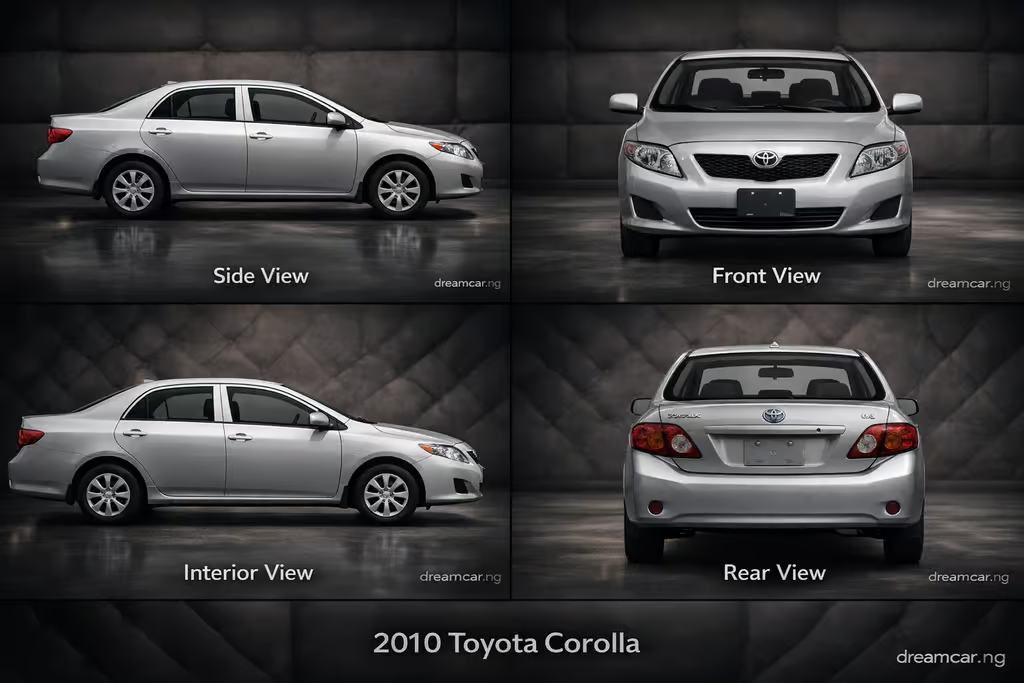
Performance, Safety, Interior, Pros & Cons
The Toyota Corolla 2010 offers Nigerian buyers a more premium driving experience while keeping ownership demands reasonable. It is often chosen by buyers seeking a newer look, improved cabin feel, and smoother ride quality without stepping into premium car pricing. This model is common among used imports and locally driven units, providing tangible ownership data within Nigeria.
On the road, the Corolla 2010 delivers composed handling and improved noise control compared to earlier years. Petrol engines maintain steady fuel use during traffic heavy city driving and longer journeys between states. Maintenance routines stay familiar, supported by strong parts circulation and experienced technicians across the country.
This E140/E150 generation Toyota Corolla 2010 buyer review provides a detailed Nigerian market perspective. It explores used car prices, engine behavior, fuel and service expenses, seating and interior comfort, protective equipment available on common trims, and frequently reported mechanical issues. The aim is to help buyers judge if the Corolla 2010 fits their driving needs and budget expectations.
See also: Toyota Corolla 2011 Review
₦15M
₦11.5M
₦9.5M

For the 2010 model, pricing steps up compared to earlier years because many buyers prefer 2010 series Corollas as a balance between age and modern usability. Tokunbo examples often fetch around ₦9.5 million up to roughly ₦12.5 million, and especially nice examples with low mileage and clean paperwork can push above typical ranges.
Nigerian used cars of this year might trade somewhere around ₦8 million to ₦9 million, with condition, mileage, and recent servicing heavily influencing price.
Mileage sensitivity is visible in almost every listing as cars that have covered less distance and come with documented maintenance attract buyers more quickly and list nearer the top of price bands. Dealer listings include a bit of markup for checks and minor fixes, while private sellers often start pricing slightly lower to allow negotiating room.
Across Nigerian states, you’ll notice that Lagos and Abuja ads sit at the higher pricing end, reflecting stronger traffic in that market. A clean 2010 model is often a strong choice for resale value because the Corolla nameplate holds trust among taxi, rideshare, and family buyers alike.
Recommended: Toyota Corolla 2009 Buyer’s Guide
Inline-4 petrol
Automatic & Manual
Sedan
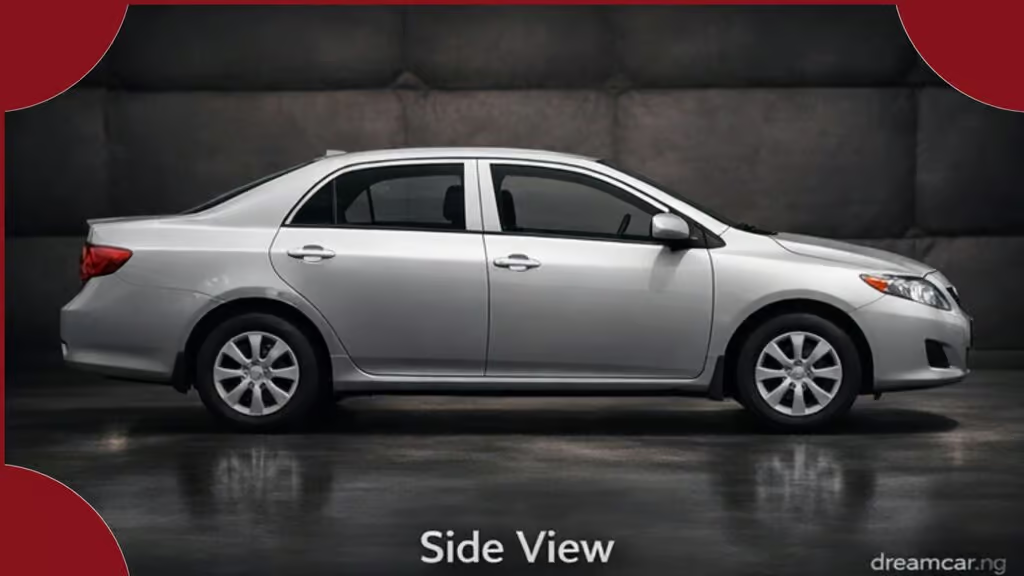
The 2010 Corolla retains the proven 1.8 litre petrol engine widely seen in Nigerian used imports. With around 132 horsepower and torque near 174 Nm, it delivers balanced everyday performance.
Front wheel drive is standard, paired with either manual or automatic transmission. Ground clearance remains roughly 150 mm, suitable for urban routes. Throttle input feels clean and immediate, especially in manual variants.
On highways, engine speed stays low at cruising pace, aiding long distance comfort. On rough roads, the chassis feels firm enough to absorb bumps without excessive body movement.
Front-Wheel Drive
City Driving: 10.8 km/L
Highway: 15.9 km/L
City: 25.5 MPG
Highway: 37 MPG
The 2010 Toyota Corolla uses regular unleaded petrol and most models are powered by a 1.8 L 4-cylinder engine, with EPA city/highway estimates around 26-30 mpg city and 34-38 mpg highway depending on transmission and trim. This equates to roughly 10.8 – 15.9 L/100 km combined in real Nigerian conditions.
In Nigerian conditions with an average petrol cost, a typical driver covering about 800 km per month might spend roughly ₦90,000–₦120,000 on petrol, though this varies with traffic and speed. Routine maintenance like oil and filter changes, spark plugs, and belts in local workshops may range ₦15,000 to ₦30,000 per service, while more significant interventions such as brake jobs, clutch work, or dashboard issues timing could reach ₦80,000 to ₦150,000 or more depending on parts quality.
Spare parts for this year are very widely available in Nigeria, including OEM and aftermarket, and prices are highly competitive. Mechanics across Lagos, Abuja, and Port Harcourt, Onitsha and Owerri are very familiar with the 10th-generation Corolla, meaning quicker diagnostics and generally lower labour costs for routine work and troubleshooting which is a strong advantage for buyers seeking reliability without sudden expensive breakdown
Radio / CD / Aux
Five Seaters
450 Liters
The 2010 Corolla presents a cleaner and better cabin feel, clearly aimed at comfort focused drivers. Seating is for five people, with improved rear space that makes longer trips more pleasant. Seats are fabric covered, softer and more supportive than previous years.
Front legroom is generous, and rear passengers enjoy better knee clearance. Headroom remains ample across the cabin. The dashboard hosts a radio and CD system, commonly paired with auxiliary input in Nigerian imports. Manual climate control cools the cabin efficiently, even under harsh sun.
Noise inside feels better controlled, especially wind sound at speed. Boot space remains around 450 litres, neatly shaped for suitcases and shopping. Rear seats can be folded down, allowing longer loads when needed. Interior materials feel robust, handling years of use without rapid wear.
2-4, Varies by trim
Yes
Yes
The 2010 Corolla builds on the improvements introduced a year earlier. Airbag coverage expanded, with side and curtain airbags becoming more common across trims. ABS was effectively standard, while stability control appeared more frequently, though still absent on some base models sold locally.
Brake hardware delivers strong, repeatable stopping performance, even under load. Chassis strength is a standout feature, with excellent occupant cell integrity in frontal and side impacts. Body panels remain light, yet the structure underneath distributes crash forces efficiently. Suspension durability suits Nigerian roads, with minimal long-term structural stress when properly maintained.
Crash safety reputation is solid, backed by good ratings in frontal and side evaluations. Highway stability is improved, offering better control during overtaking and emergency maneuvers. Poor-road endurance remains high, with minimal body flex reported even after years of use. For Nigerian buyers prioritizing structural safety without complex electronics, the 2010 Corolla is a strong contender.
As cars age past 10 years, electrical gremlins increase. For the 2010 Corolla, dashboard warning lights for ABS or traction control may be illuminated due to corroded wheel speed sensor connectors or worn tooth rings. Confirm these systems engage correctly during test drives.
Mechanical complaints highlight premature exhaust system rusting in humid climates; inspect the pipe and muffler joints especially if the car has lived near coastal areas. Engine mounts also tend to dry out, causing vibration on gear changes.
Automatic transmissions of this era can show shift hesitations at mid-range RPMs due to solenoid or valve body wear; if you detect that, budget for a fluid service or a possible valve pack.
Dreamcar.ng reviews are produced by a research team with direct exposure to auto market across Nigerian cities. Our analysis is based on dealership interactions, discussions with mechanics, observed market pricing patterns, and independent research. Each review reflects real Nigerian ownership conditions including fuel quality, road conditions, spare parts accessibility, maintenance realities, and long-term running costs, to help buyers make informed and practical decisions. While vehicle specifications and experiences can vary by trim level, our reviews focus primarily on the most common and widely circulated trims on Nigerian roads, reflecting what the average buyer is most likely to encounter.