
Performance, Safety, Interior, Pros & Cons
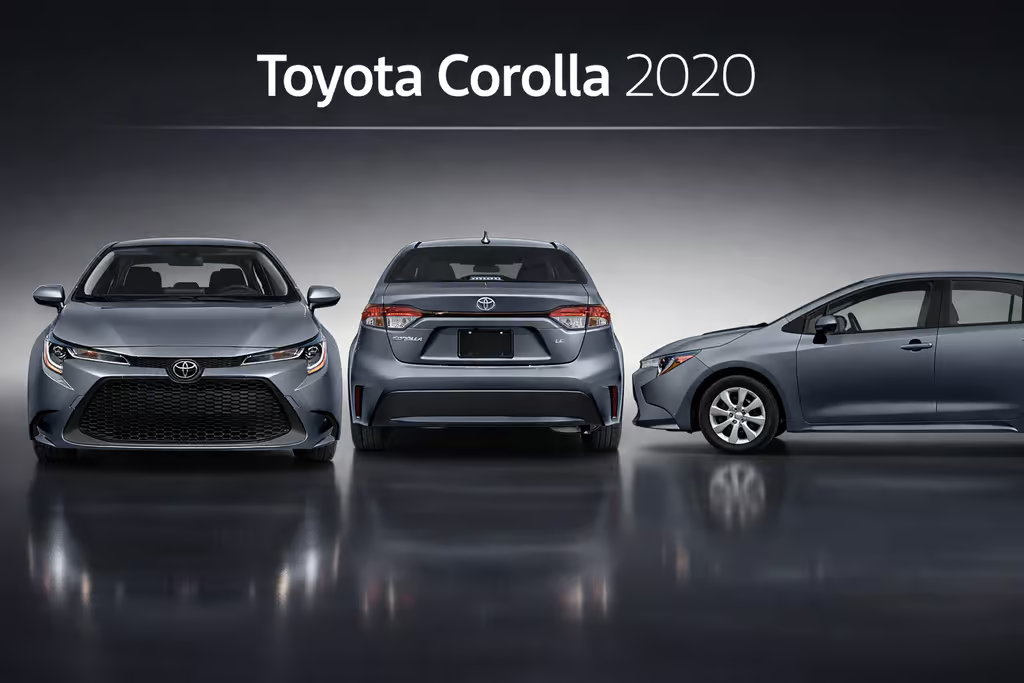
The Toyota Corolla 2020 represents a clear evolution in how the Corolla feels and behaves on the road, especially when compared with older generations commonly found in Nigeria. This model adopts a more planted driving feel, improved suspension tuning, and a cabin that feels better thought out for daily use.
For many Nigerian buyers, the 2020 Corolla sits in a practical middle ground, offering newer design, better ride control, and more modern features without stepping into the higher ownership demands of larger or more complex sedans.
This 2026 review and guide for buyers of the Toyota Corolla 2020 looks closely at the details that affect long term ownership in Nigeria. It breaks down used market pricing across different conditions, engine performance in traffic and open roads, fuel consumption under everyday driving, servicing and repair needs, seating and cabin comfort during regular use, safety features available on Nigerian spec cars, and problems commonly reported by owners and mechanics.
The pros and cons are drawn from conversations with Lagos, Abuja, Port – Harcourt and other dealers across the country both only and physically together with real driving and maintenance experience from active users, allowing you to assess how the Toyota Corolla 2020 performs in Nigerian conditions. Which is better than relying on advertised specifications.
Also Check: Toyota Corolla 2021 Review
₦41.5M
₦24.5M
₦18M
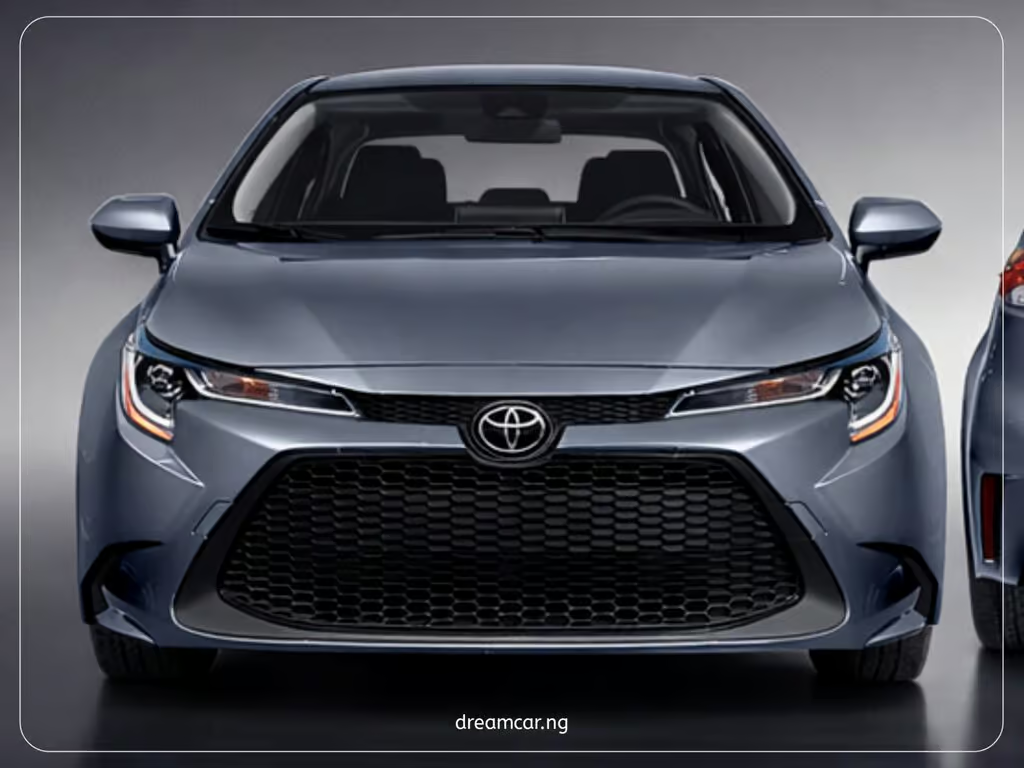
Current pricing data for the 2020 Toyota Corolla suggests standard Tokunbo listings between ₦23 million and ₦26 million, with average prices reported around ₦24.5 million for the foreign used units. Nigerian used examples that have lived in the local market a few years are often seen around ₦18 million up to ₦21 million depending on condition.
The story for buyers is simple: this year’s model feels closer to a semi-new purchase than a classic used car, and prices reflect that vibe. Dealers selling 2020 models often build prices around recent import costs and local demand for cars that still look fresh on the road.
A clean 2020 Corolla with neat interiors can command pricing at the top of the band, especially if it has good tyres, no major dents, and strong paperwork. Nigerian used examples sit lower, but the difference isn’t huge because buyers know this year still has lots of useful life left. Highway run cars and those with better documented service work hold stronger price appeal.
Inline-4 petrol
Automatic (CVT)
Sedan
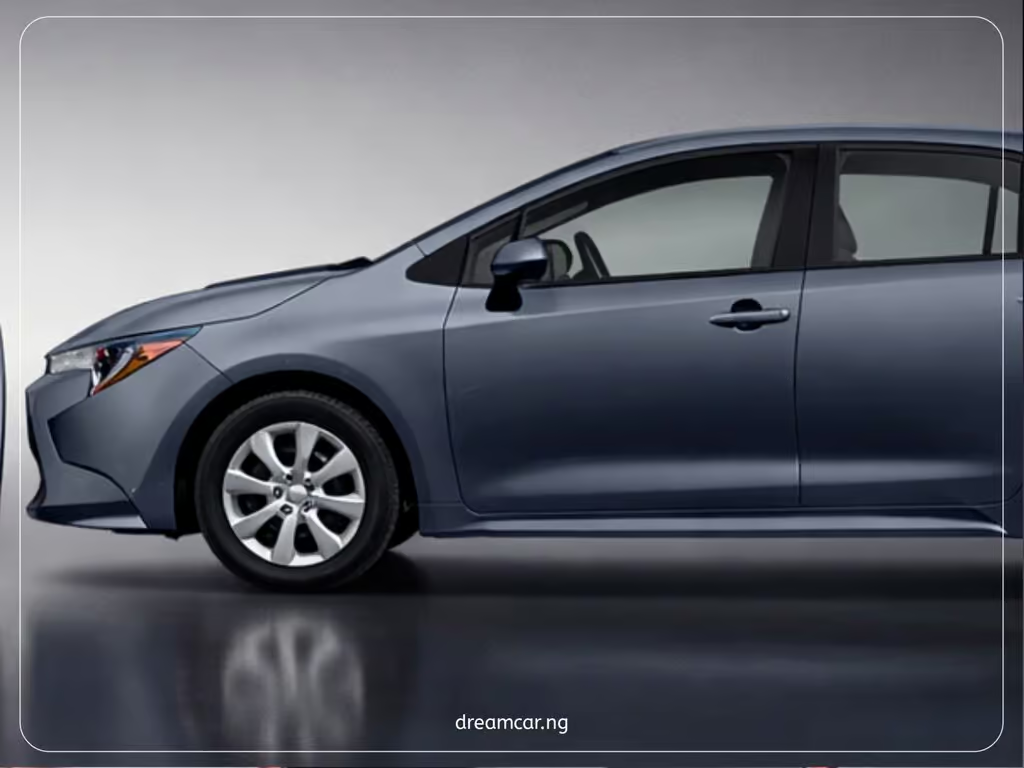
The 2020 Corolla builds on the newer platform and is seen in Nigeria mainly with the 1.8 litre or 2.0 litre naturally aspirated petrol engines. The 1.8 litre produces around 139 horsepower, while the 2.0 litre delivers up to 169 horsepower with higher torque output.
Front wheel drive remains standard, paired with a CVT automatic gearbox. Ground clearance stays modest but manageable for city conditions. Acceleration response is sharp and well controlled, particularly on the larger engine, making highway merging easier.
On expressways, the Corolla holds speed with ease and feels well planted during long drives. On rough roads, suspension tuning offers better control over uneven surfaces than older models, though deep potholes still require slow and careful navigation to avoid underbody impact.
Front-Wheel Drive
City Driving: 11.8 km/L
Highway: 16.9 km/L
City: 27.7 MPG
Highway: 40 MPG
The 2020 Corolla introduces a more fuel efficient and modern petrol engine lineup and optional hybrid (rare in Nigeria). Petrol variants average 27-29mpg city and 38-41 mpg highway, equating to 11-13 km/L city and maxing at 18 km/L highway locally .
Monthly fuel spending is lower than older Corollas, making it attractive for salaried workers and well-to-do but prudent group. Routine servicing costs are still affordable, though slightly higher due to obvious reasons like recency, increased electronics and sensor systems.
Major maintenance expenses, such as suspension or CVT servicing, are moderate but manageable. Spare parts availability is strong across major Nigerian cities, though body and electronic parts cost more than pre-2019 models. Parts affordability is fair, and mechanic familiarity is high, though proper diagnostics matter more with this model year.
Touchscreen / CarPlay
Five Seaters
470 Liters
The 2020 Corolla kept the footprint of the 2019 cabin but made the interior feel more modern and user-friendly. Seating for five remains accommodating with firm cloth seats that push back fatigue on longer highway hauls around Nigeria. Leg and headroom in the rear suit most adults reasonably well, though very tall passengers might still want extra stretch breaks.
Infiniti Cottage style layouts in this model give slightly more refined placement of storage bins and cupholders, making the interior feel more thoughtful. Infotainment moved ahead with a standard 7-inch screen on base models and 8-inch on others, and Toyota’s Entune 3.0 system now includes Apple CarPlay, Android Auto and voice control, so streaming your playlists and using your phone’s maps feels much easier.
Manual air conditioning stays effective, but dual-zone automatic climate is available on higher trims, keeping backseat passengers cool during city heat or long inter-state travel. The boot space stays traditional in size, practical for luggage, market hauls, or a weekend trip and the 60/40 folding rear seat gives space flexibility when carrying longer items. Physical knobs for AC and volume remain in reach, designed to be used easily even when traffic is heavy.
8-10, Varies by trim
Yes
Yes
The 2020 Corolla builds on the strong foundation laid in 2019 with further refinement of active safety systems. Airbag coverage is comprehensive, while ABS and advanced stability systems are standard. Brake performance is excellent, benefiting from improved electronic assistance and hardware tuning.
The chassis is exceptionally rigid, offering superior occupant protection in severe impacts. Body panels remain light but are supported by a highly reinforced frame. Suspension durability is good, though Nigerian buyers must watch for low ground clearance on rough roads.
Crash safety reputation is among the best in its class, supported by top ratings and advanced collision avoidance systems. Highway behavior is stable and composed, even during sudden maneuvers. Structural endurance remains strong, making the 2020 Corolla a top tier option for safety focused Nigerian buyers.
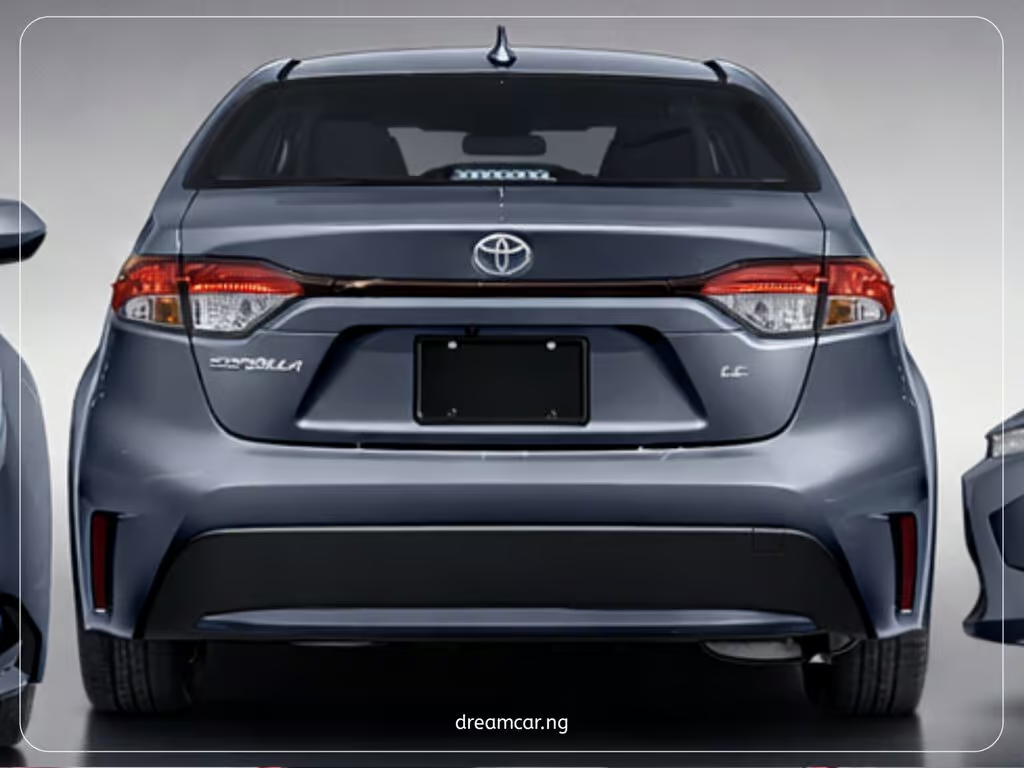
The 2020 Corolla enters a new generation with improved technology and safety equipment, but early owners report various minor faults like noticeable cabin and road noise at higher speeds.
Some door drain holes can clog and trap rainwater, leading to water buildup inside doors and possible rust around inner panels, so verify door bottoms and flush drain points.
Sensors related to Toyota Safety Sense systems may throw errors if wiring or modules have previously been tampered with. Scan for active codes and ensure adaptive cruise or lane assist features work if equipped.
Thermostat and cooling control issues have been flagged in owner discussions. Watch for engine temperature fluctuations during test drives on longer runs. Test AC performance thoroughly, too, as hissing noises or poor cooling can show only once the car has been running for several minutes.
Electrical faults such as tyre pressure sensor warnings, USB port failures and sporadic maintenance messages appear in used owner reports; check these repeatedly before buying
Dreamcar.ng reviews are produced by a research team with direct exposure to auto market across Nigerian cities. Our analysis is based on dealership interactions, discussions with mechanics, observed market pricing patterns, and independent research. Each review reflects real Nigerian ownership conditions including fuel quality, road conditions, spare parts accessibility, maintenance realities, and long-term running costs, to help buyers make informed and practical decisions. While vehicle specifications and experiences can vary by trim level, our reviews focus primarily on the most common and widely circulated trims on Nigerian roads, reflecting what the average buyer is most likely to encounter.