
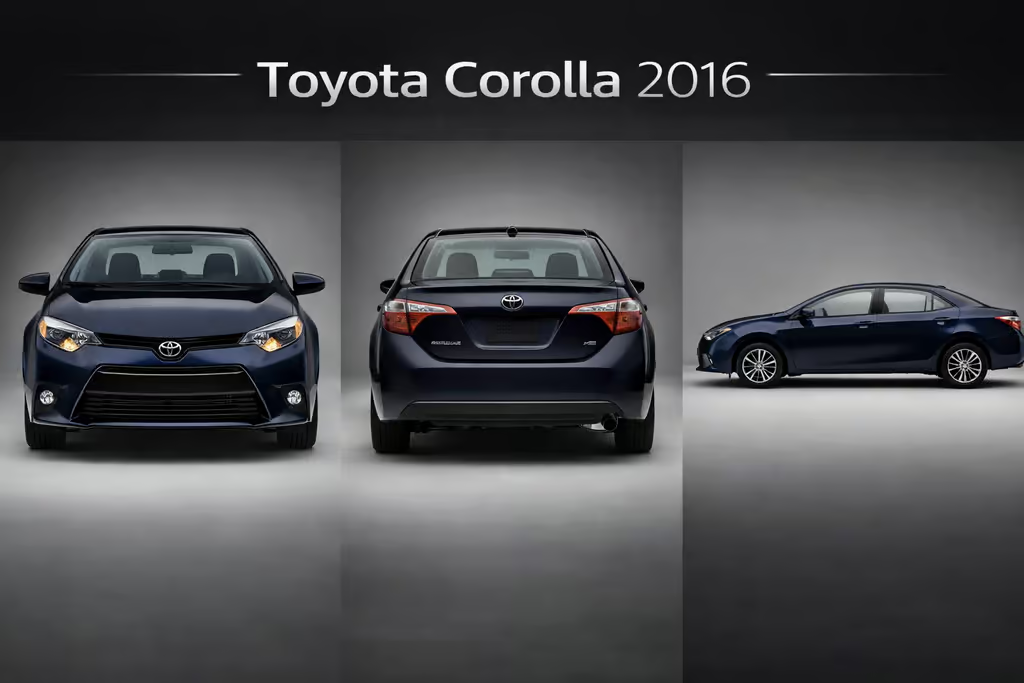
Performance, Safety, Interior, Pros & Cons
The Toyota Corolla 2016 is one of the more refined options within the eleventh generation, offering buyers a mix of modern styling and familiar engineering. This facelifted model gained updated exterior details and improved interior features, making it appealing to buyers seeking a newer look without entering higher price brackets.
According to Edmunds.com, The 2016 Toyota Corolla is described as a small sedan that competently covers all the basics
It is commonly used in Nigeria as a daily commuter car and family sedan. Trims such as L, LE, S, and XSE are widely available, with the XSE trim offering sport inspired styling.
With this Toyota Corolla 2016 review and buyer guide, you’ll be able to discover how the car performs under Nigerian conditions plus other buying metrics like the average 2026 prices for new and tokunbo, engine response, fuel use, service requirements, seating comfort, safety features, and common mechanical problems.
The 2016 corolla review also highlights advantages and limitations based on long term usage across Nigerian roads. This approach allows buyers to understand ownership expectations clearly before making a purchase decision.
Compare with 2017 Toyota Corolla
₦27M
₦16.5M
₦14M
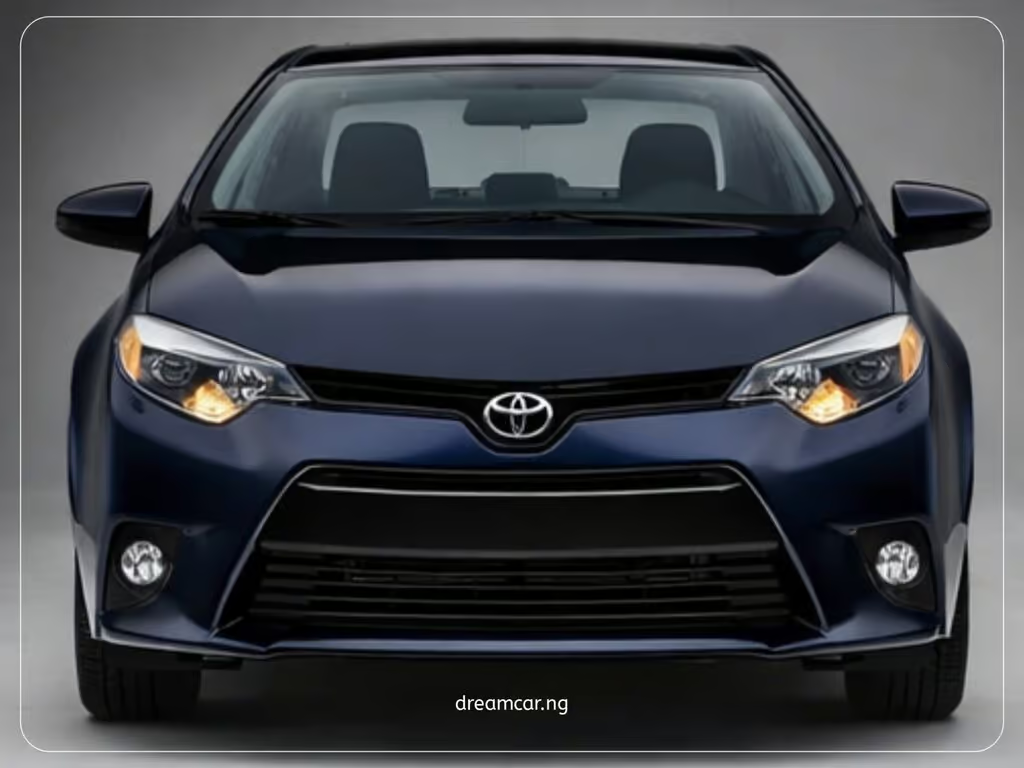
In Nigeria’s used car space, the 2016 Corolla is priced as a safe middle ground car. It is not old enough to scare buyers, yet not new enough to feel overpriced. Tokunbo units dominate listings for this year, and dealers usually quote figures between ₦15 million and ₦18 million.
These numbers rise fast when the car looks untouched, sounds smooth on cold start, and shows clean paperwork. Nigerian used examples trade lower, commonly advertised between ₦12.5 million and ₦15.5 million, especially when the car has done years of daily commuting.
Buyers treat mileage on this year emotionally. A lower reading makes people believe the car still has many years left, while a high figure triggers bargaining even if the engine sounds fine. Condition decides how hard sellers can stand their ground. Faded paint, noisy suspension, or tired seats quickly pull prices down.
In Lagos and Abuja, prices sit higher because buyers move fast and sellers know it. Smaller cities show softer asking figures because market doesn’t move as fast. Dealers usually push prices upward by including servicing and inspections, while private sellers list lower to attract cash buyers. Resale stays strong because this year fits family use and personal driving without heavy ownership stress.
Check out: Toyota Corolla 2015
Inline-4 petrol
Automatic & Manual
Sedan
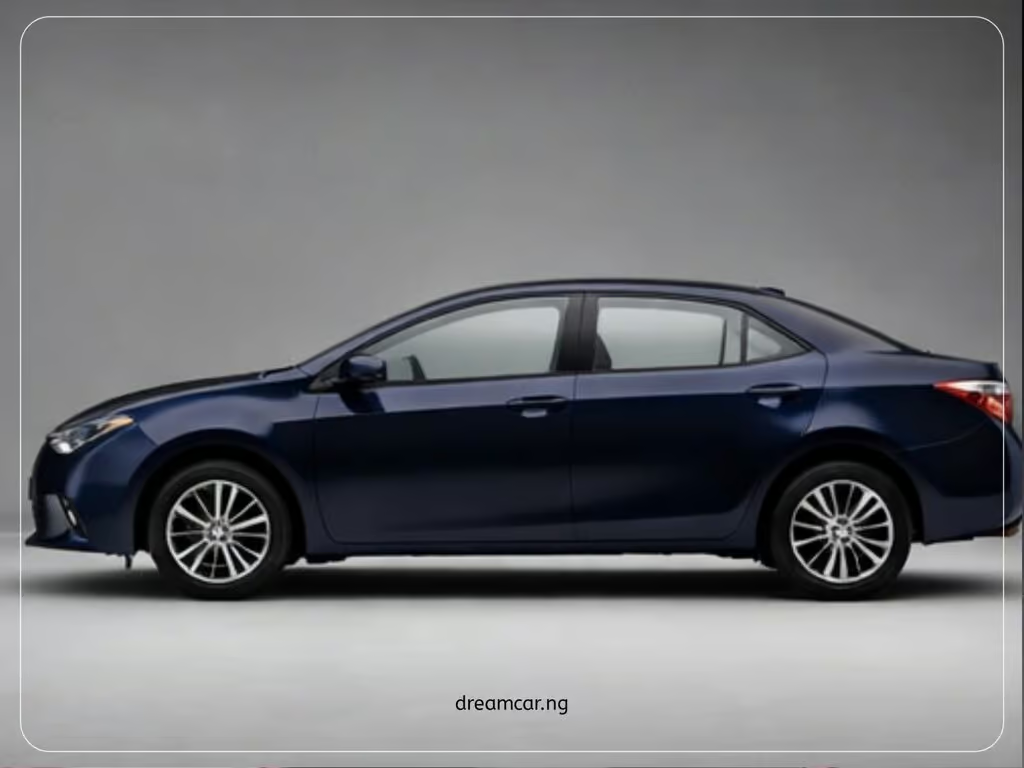
The 2016 Toyota Corolla seen in Nigeria still relies heavily on the 1.8 litre inline four petrol engine paired with front wheel drive. Power output stays around 132 horsepower, supported by roughly 174 Nm of torque. Most units come with a CVT automatic transmission, while manual versions appear mostly in private imports.
Ground clearance remains in the 150mm range, which suits city driving and maintained highways. Acceleration is linear and smooth, with the transmission keeping engine revs controlled during normal driving. On expressways, the car maintains cruising speed comfortably and responds well to gentle throttle input when overtaking slower vehicles.
Engine noise stays low during steady motion. On rough roads, the suspension handles uneven surfaces with good composure, although care is still needed on deeply damaged sections to avoid underbody contact and suspension strain.
Front-Wheel Drive
City Driving: 11.4 km/L
Highway: 17.8 km/L
City: 26.8 MPG
Highway: 42 MPG
The 2016 Toyota Corolla sold in Nigeria is petrol-powered only, commonly using the 1.6L or 1.8L naturally aspirated four-cylinder engine paired with either a CVT or manual transmission. Official fuel economy for the 1.8L petrol variant stands at 26–28mpg city and 39–42 mpg highway, translating to an average real-world Nigerian consumption of 11 to 11.9 km/L in traffic and 16.5 t o 17.8km/L on open roads, depending on driving habits and vehicle condition .
Monthly fuel spend is moderate by Nigerian standards, especially for daily commuters. Routine servicing is inexpensive, with oil changes, filters, and plugs widely available. Major maintenance such as suspension rebuilds or transmission servicing is affordable due to strong parts circulation.
Spare parts availability is excellent, with both genuine and aftermarket options flooding Nigerian markets. Parts are also affordable and almost every roadside and dealership mechanic is deeply familiar with this generation, making diagnosis and repairs straightforward.
What makes 2016 unique is its balance of simplicity and efficiency, as it lacks complex electronics, making it cheaper to own long term than newer Corollas.
Touchscreen / Bluetooth
Five Seaters
470 Liters
In 2016, the Corolla cabin feels familiar yet well balanced for daily life. Five people fit without fuss in the sedan configuration, and the seats are styled to give a good mix of comfort and support even if you’re on the road for hours. Cloth remains the prevalent seat covering, good for heat and easier to keep tidy when you’re carrying kids or shopping loads.
Front passengers have generous legroom and adequate headroom, and the rear cabin continues to offer reasonable space for adults. The infotainment layout remains straightforward with an audio system, USB and screen interaction in some trims for phones and media.
Thecarconnection.com highlighted that the 2016 Toyota Corolla has good front seats, pleasing interior materials, and a remarkable amount of cabin room.
The 2016 Toyota Corolla features both manual and automatic climate control systems, depending on the trim level. Boot space stays around the same range of 470l as the previous year, which is perfect for travel luggage or daily runs. Rear seats can be folded which is a great way to manage larger cargo, and firm interior materials handle everyday use with few rattles.
5-8, Varies by trim
Yes
Yes
The 2016 Corolla benefits from incremental safety refinements and stronger use of high strength steel in its core structure. Airbag availability improved, with side and curtain airbags present on many trims entering Nigeria. ABS was standard, while stability systems appeared on more variants, enhancing control during sudden maneuvers. Brake performance is consistent, with good pedal feedback and improved resistance to fade.
Chassis construction focuses on energy distribution, helping protect occupants during serious impacts. Body panels remain thin but are supported by a reinforced frame that limits cabin distortion. Suspension durability continues to suit rough roads, though worn bushings can affect braking feel. Crash reputation is strong, supported by both formal testing and real-world survival reports.
Highway behavior is predictable, with improved straight line tracking compared to earlier years. On poor roads, the structure resists stress well, maintaining door alignment and interior integrity over time. For Nigerian buyers seeking balanced safety without excessive electronics, the 2016 Corolla stands out as a mature, well engineered option.
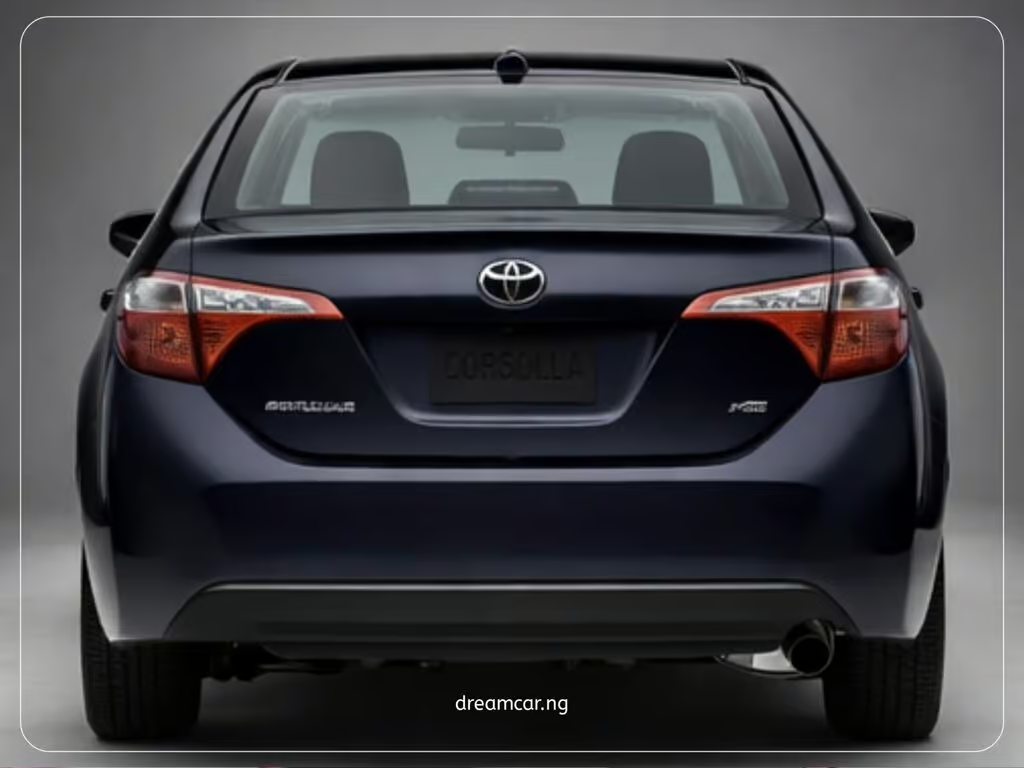
The 2016 Corolla generally scores well in reliability surveys, though owners still report a few common wear and fault points. Suspension bushings and bearings can age prematurely on rough surfaces, so check carefully for squeaks and knocks at slow speeds.
Engine oil leaks around the timing chain area are occasionally cited by owners, and if the PCV valve sticks, it can cause minor oil consumption and rough idle. On a test drive, listen for unusual noises and watch oil level over a couple of days.
For automatic transmissions, confirm that any software updates or service campaigns recommended by Toyota were completed, because older software could cause rough gear engagement or hesitation.
Electrical system checks should include repeated testing of cabin electronics, infotainment functions and sensor warnings. Ensure traction and ABS lights extinguish after startup, as persistent warnings may indicate wheel speed sensor or control module faults.
Dreamcar.ng reviews are produced by a research team with direct exposure to auto market across Nigerian cities. Our analysis is based on dealership interactions, discussions with mechanics, observed market pricing patterns, and independent research. Each review reflects real Nigerian ownership conditions including fuel quality, road conditions, spare parts accessibility, maintenance realities, and long-term running costs, to help buyers make informed and practical decisions. While vehicle specifications and experiences can vary by trim level, our reviews focus primarily on the most common and widely circulated trims on Nigerian roads, reflecting what the average buyer is most likely to encounter.