
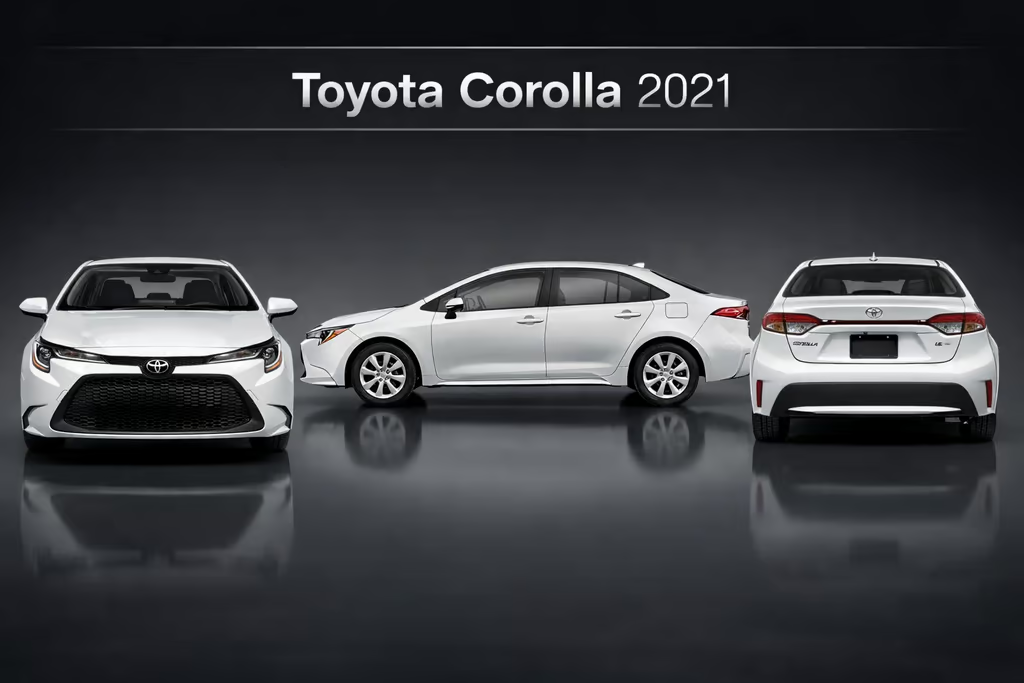
Performance, Safety, Interior, Pros & Cons
The Toyota Corolla 2021 entered the Nigerian car market at a time when buyers were paying closer attention to design, fuel spending, and daily driving ease. As part of the 12th generation, this model came with sharp exterior styling and a more planted road feel that appeals to professionals and small households.
On Nigerian roads, it is often seen as a personal daily car rather than a fleet vehicle, especially in trims such as LE, SE, and XSE. The SE trim stands out for its sport inspired look which is not so popular among Nigerian users, while the LE attracts most buyers since most Nigerians are focused on calm driving and lower service demands.
This review approaches the Corolla 2021 by looking at how it fits Nigerian ownership patterns with market price trends, engine response in traffic, fuel use during weekly driving, interior comfort during long trips, driver assist systems, and common service concerns being examined.
We we’re able to draw insights from the 2021 Corolla Official brochure while strengths and drawbacks are discussed using typical Nigerian ownership feedback. This guide helps buyers understand how the 2021 Corolla behaves when driven daily on Nigerian roads.
Recommended: Toyota Corolla Full Review For 2022
₦45M
₦26M
₦19.5M
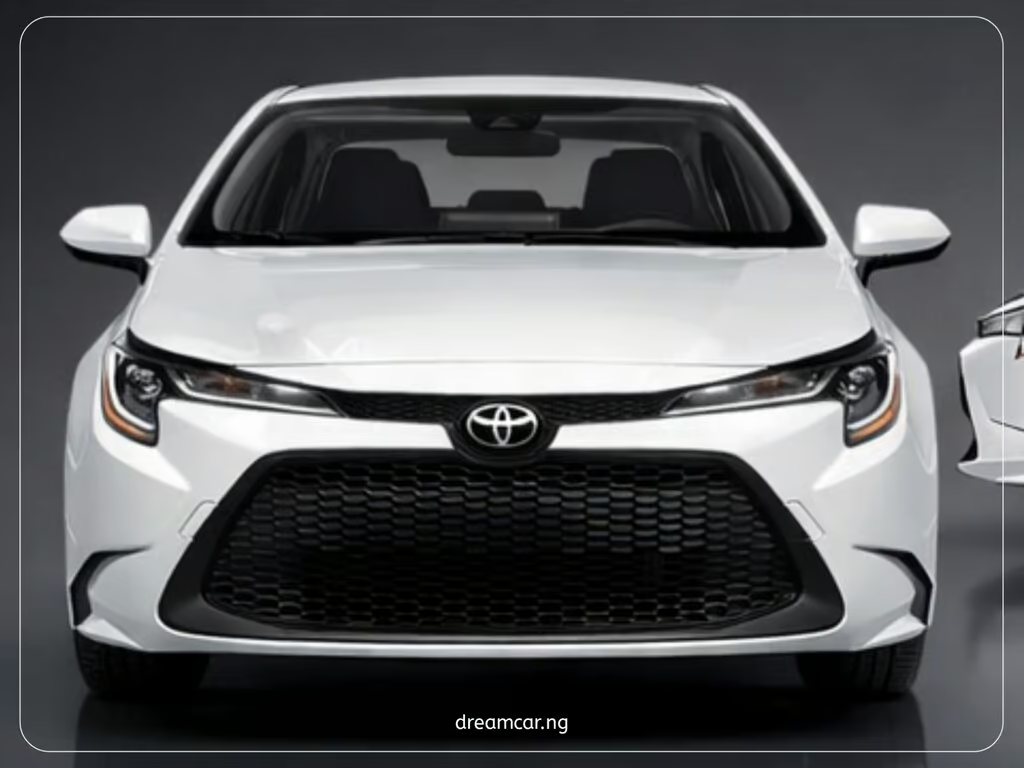
For 2021 Corollas, listed price in Nigeria often creeps higher because many buyers now see it as a near modern used choice that still feels desirable for daily and business use. Listings on marketplaces and forums suggest these cars often fetch mid-twenty million naira figures on dealer platforms, with some clean Tokunbo examples listed above that and private offerings closer to the lower end of the band.
A 2021 Corolla with tidy interior panels, working infotainment, and smooth gear transitions often holds a premium because it checks both practical and aspirational boxes for many buyers.
Private sellers might start at slightly lower asking figures to drum up attention, but in major markets that can change quickly as seriously interested buyers submit offers.
This year also sits well for resale because many younger drivers and small business owners perceive it as a car with long useful life ahead, so demand supports the high asking prices.
Also check: Toyota Corolla 2020 Price In Nigeria
Inline-4 petrol
Automatic (CVT)
Sedan
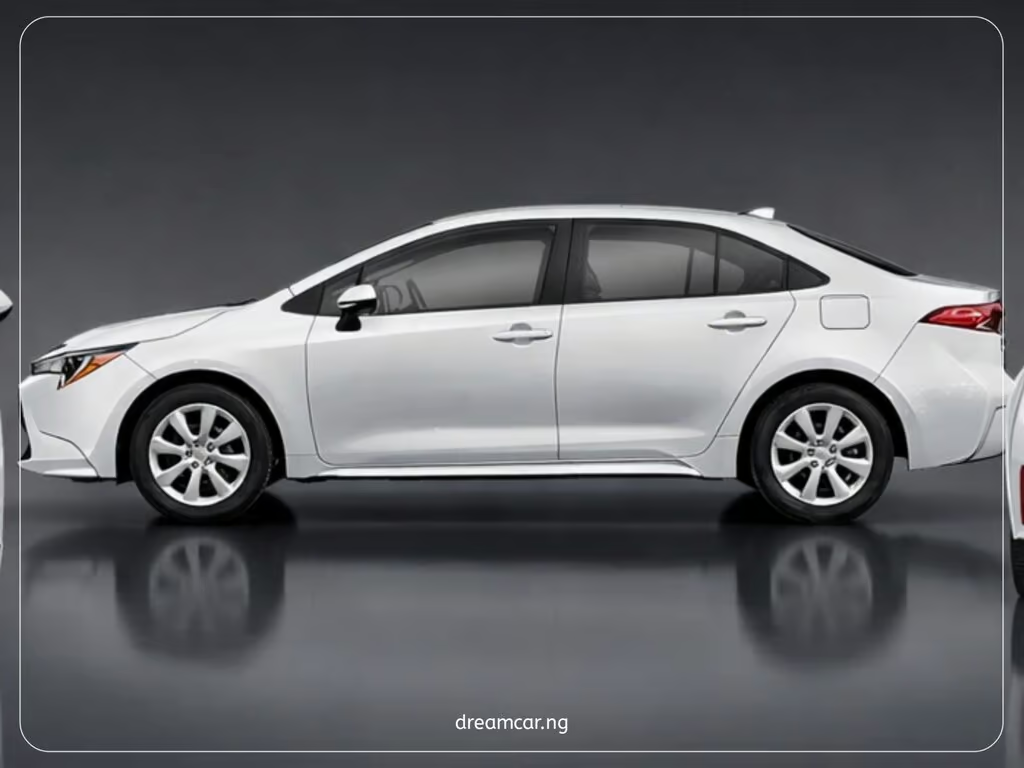
The 2021 Toyota Corolla on Nigerian roads is mostly imported with two petrol engine choices, a 1.8 litre inline four and a stronger 2.0 litre inline four. Both engines are naturally aspirated and drive the front wheels. The 1.8 litre unit produces about 139 horsepower with torque close to 171 Nm, while the 2.0 litre version delivers around 169 horsepower and about 205 Nm of torque.
Power delivery is managed through a CVT automatic gearbox that prioritizes smooth speed buildup. Ground clearance sits around the mid one hundred forty millimeter range, which suits paved city roads better than deeply damaged surfaces. Throttle response feels quick during light input and becomes firmer as speed increases.
On highways, the car sustains cruising speed easily without frequent engine strain. During rough road use, suspension tuning handles patched asphalt and uneven city roads well, though caution is still required on sharp potholes common across Nigerian cities.
Front-Wheel Drive
City Driving: 11.8 km/L
Highway: 16.9 km/L
City: 27.7 MPG
Highway: 40 MPG
The 2021 Corolla continues with petrol power as the dominant Nigerian option, still relying on the 1.8-liter engine and CVT transmission. Fuel economy improves slightly through refined engine tuning and transmission response. Average fuel consumption in Nigerian cities average at 12 km/L in heavy traffic and highway efficiency reaching 17-18 km/L during long trips.
Monthly fuel expenses are among the lowest in the non-hybrid compact sedan segment. Routine servicing stays predictable, covering engine oil, filters, spark plugs, and brake servicing at reasonable costs. Major maintenance costs can rise when suspension components or electronic sensors fail, but these issues are not frequent.
Spare parts are always available at major Nigerian markets particularly for mechanical components, while electronic parts are more expensive and sometimes imported on request. Parts affordability is moderate but not cheap. Mechanic familiarity is high for engine and suspension work.
Advanced diagnostics may however require specialized workshops and expertise on the side of the mechanic. The defining trait of the Corolla is smoother fuel delivery and consistency in being reliable year by year. The 2021 corolla is especially great for users who always have to deal with traffic and congestions most of the time.
Touchscreen / CarPlay
Five Seaters
470 Liters
In 2021, Toyota reinforced what worked well in 2020 but gave the Corolla interior a bit more user-centric focus. Five-person seating stayed the norm, and cloth remains prevalent with optional leatherette in higher trims that wipes clean easily, a practical feature when driving family or ride hail passengers around.
Front and rear legroom stayed similar, providing decent comfort for adults on long journeys across states such as Lagos to Ibadan or Port Harcourt to Bayelsa. One of the most welcomed updates was the expanded driver-assistance suite and tech integration, including Android Auto as standard alongside Apple CarPlay, and the dashboard gained a more responsive interface.
You’ll find USB ports and Bluetooth connectivity that blend with modern phone needs, plus steering wheel controls that reduce distraction. Climate control stays effective, pushing cool air evenly across seats. Boot space remains competitive, and rear seats continue to fold for larger items. Noise insulation improved slightly versus older generations, so conversations at higher speeds are easier on the ears.
8-10, Varies by trim
Yes
Yes
The 2021 Corolla carries the traditional Toyota focus on occupant protection, offering a set of multiple airbags including front, side and curtain bags across most trims, plus a driver knee airbag that helps protect lower limbs in impact. Anti-lock brakes (ABS) and electronic stability control are standard on all trims, and traction control assists on slippery Nigerian roads.
Braking feel and modulation are generally solid for everyday traffic, though hard emergency stops are constrained more by tyre grip than system power. The chassis is based on the established E210 platform, which has lightweight efficiency and reasonably strong crash resistance, but doesn’t have many advanced reinforcements beyond basic crumple zones.
On rough rural surfaces common in many Nigerian states, the suspension can be firm but durable, resisting common pot-hole strikes without serious damage if driven sensibly. Owners have sometimes mentioned panel gaps and trim fitment feeling average, which suggests that body panel thickness and finish are functional rather than premium. In short, it’s a safe urban and highway car with dependable basic protection, without the newest active assist systems found on newer models.
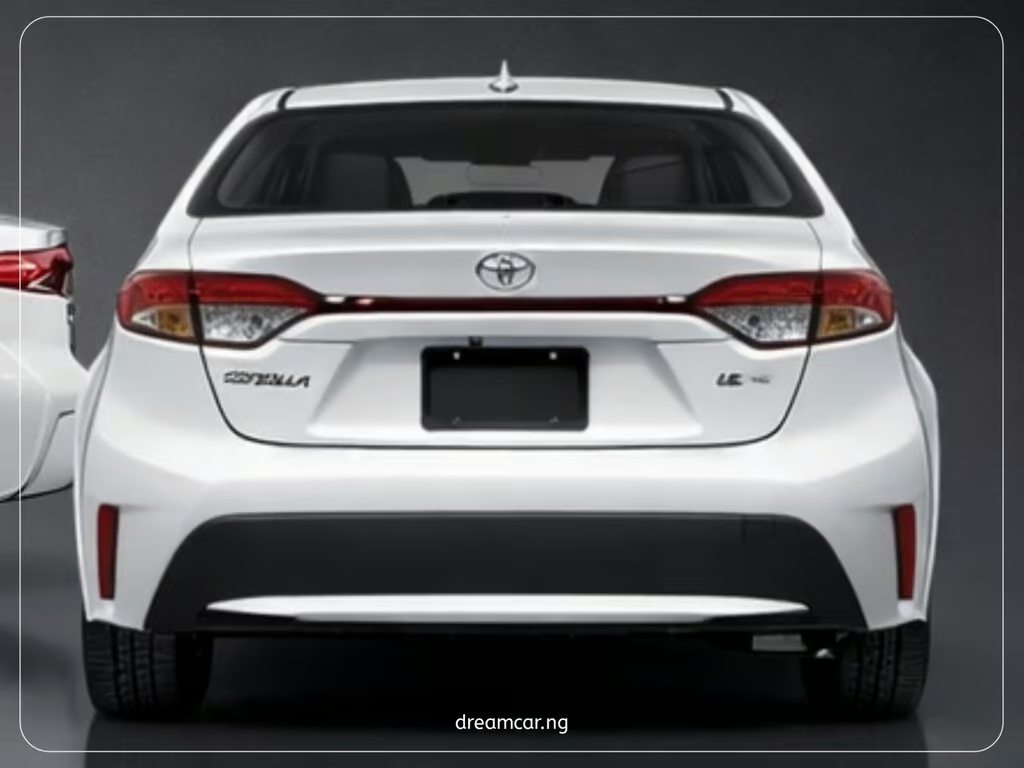
For the 2021 Corolla, many owners report electrical and infotainment hiccups, such as freezing screens, glitchy Bluetooth, and inconsistent warning light behavior. These may not disable the car but can be annoying and costly to fix, so check all electronics thoroughly and test each function during daylight and night driving.
Some owners also experienced jerky or hesitant shifting with the CVT transmission, noticeable when accelerating from a stop or overtaking at lower road speeds, suggesting the transmission control might need software updates or fluid attention. Reports show occasional cooling system odd behavior, such as temperature swings during long drives, so inspect hoses, thermostat operation and radiator condition.
Brake feel should be tested carefully for any firmness or softness, as some owners felt unusual pedal behavior after long commuting. In hot climates and heavy go slow traffic common in Nigerian cities like Lagos, also check for minor oil leaks around the valve cover and inspect the 12-volt ancillary battery for corrosion or weak charge. A full service history and visual inspection under the hood and underbody will help spot early wear before you buy.
Dreamcar.ng reviews are produced by a research team with direct exposure to auto market across Nigerian cities. Our analysis is based on dealership interactions, discussions with mechanics, observed market pricing patterns, and independent research. Each review reflects real Nigerian ownership conditions including fuel quality, road conditions, spare parts accessibility, maintenance realities, and long-term running costs, to help buyers make informed and practical decisions. While vehicle specifications and experiences can vary by trim level, our reviews focus primarily on the most common and widely circulated trims on Nigerian roads, reflecting what the average buyer is most likely to encounter.