
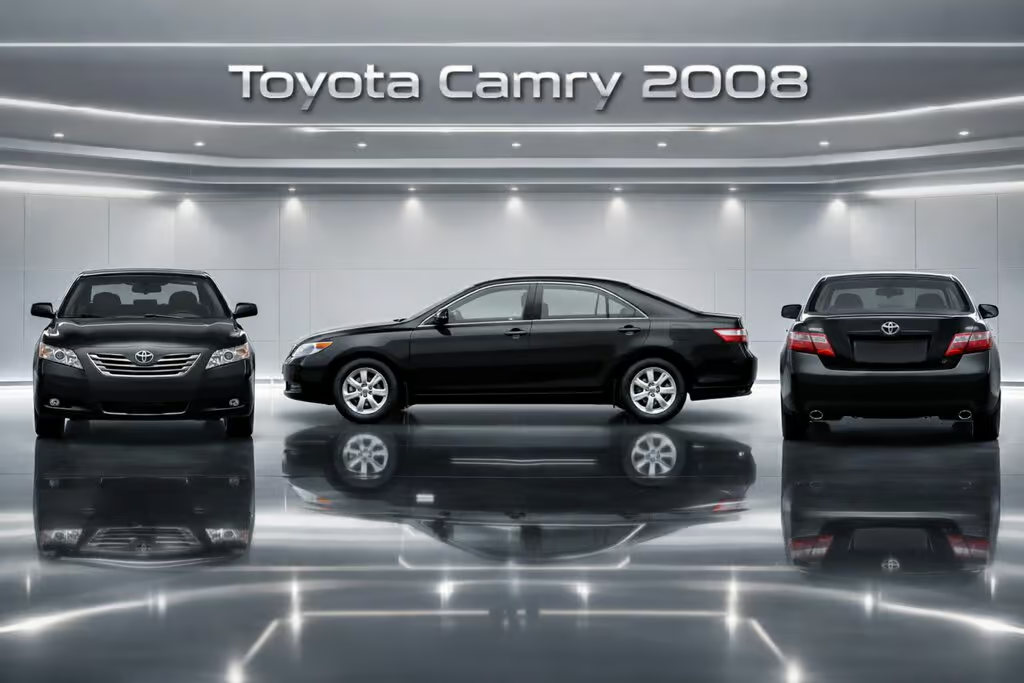
Performance, Safety, Interior, Pros & Cons
The Toyota Camry 2008 continued under the Toyota Camry (XV40) with no major structural changes from the 2007 redesign. It maintained the same platform, body design, and overall mechanical setup.
As a midsize five-seater sedan with front-wheel drive, the 2008 Camry emphasized ride comfort and interior space. The suspension system remained tuned for smooth road performance, making it practical for daily commuting and longer trips. Its size and engine strength placed it clearly above the Corolla in Toyota’s lineup.
Engine options remained a 2.4-liter four-cylinder and a 3.5-liter V6. The hybrid version also continued, combining a 2.4-liter petrol engine with an electric motor system and eCVT transmission. Standard petrol models came with a 5-speed manual (limited markets), 5-speed automatic (4-cylinder), or 6-speed automatic (V6).
The interior layout remained spacious, with good rear legroom and improved dashboard design compared to the previous generation. The 2008 model is commonly found in Nigeria due to its balance of updated styling and mechanical simplicity.
For 2008, the Toyota Camry sees modest but meaningful updates after its 2007 redesign. First, vehicle stability control and traction control become standard on more trims, strengthening safety compliance in key export markets. In addition, side curtain airbags are fitted more widely across the range. Audio systems gain auxiliary input support on additional grades, improving device connectivity.
The SE receives revised wheel designs and subtle interior trim accents that sharpen its sportier identity. Hybrid variants benefit from minor battery management software recalibration, delivering smoother transitions between electric and petrol power. Toyota also introduces new exterior color options to refresh showroom appeal.
In several markets, tire pressure monitoring becomes standard on higher trims in response to evolving regulations. Mechanically, however, the engines, transmissions, and suspension remain unchanged. Buyers in Nigeria typically encounter these models with upgraded radios and broader compatibility, distinguishing them slightly from early production units.
The 2008 Camry continued with CE, LE, SE, XLE, and Hybrid trims, keeping a balance between economy, comfort, and hybrid efficiency.
₦10M
₦6.8M
The 2008 Toyota Camry remains a popular choice in Nigeria, and its pricing reflects sustained demand for mid size sedans. Foreign used units typically sell between ₦9,000,000 and ₦11,000,000 depending on trim level, mileage and overall condition. Higher trims with leather interiors and lower mileage attract premium pricing. Nigerian used units are generally priced between ₦6,000,000 and ₦7,500,000, with values influenced by maintenance quality, accident history and interior condition.
Vehicles with documented service history and minimal refurbishment command higher prices. Exchange rate movements strongly affect import pricing, alongside customs duties and shipping costs. Lagos remains the most competitive market due to higher inventory turnover, while places like Benin or Abuja prices are often higher due to reduced supply.

Petrol
Automatic & CVT
Sedan
The 2008 Toyota Camry retained the same engine lineup, with the 2.4-litre four-cylinder producing around 155–158 horsepower and the 3.5-litre V6 delivering 268 horsepower and 248 lb-ft.
The four-cylinder engine is efficient but offers modest acceleration, while the V6 provides brisk performance. The 2.4-litre engine is responsive and willing to rev, contributing to a smooth driving experience.
Ride quality remains a key strength. The suspension is soft and absorbs rough roads effectively, while the cabin stays quiet. Steering is precise but very light, emphasizing ease of driving over feedback.
In urban Nigerian traffic, the Camry feels serene and easy to control. It absorbs potholes without disturbing passengers, and even under hard acceleration, cabin noise remains low. The 5-speed automatic transmission shifts smoothly, though it does not offer a manual mode.
City: 21, Hwy: 31
8.9km/L
13.2km/L
The 2008 Toyota Camry base trim delivers 8.9km/l in city traffic and 13.2km/l on the expressway, mirroring the previous year. With petrol priced around ₦850 per litre, covering 1,500km monthly will cost roughly ₦144,000 in predominantly urban driving or about ₦97,000 when most trips are on open highways. Nigerian stop and go traffic, extended idling, and frequent short trips typically reduce efficiency toward the city figure.
Regular oil servicing costs between ₦30,000 and ₦45,000 depending on oil grade and workshop standards. Suspension maintenance, wheel alignment, and brake servicing are recurring ownership expenses due to road conditions. Sensible driving habits and consistent maintenance are essential to prevent fuel consumption from rising beyond the expected range.
Check: EPA fuel economy by trims
Low
High
Very High
The 2008 Camry retains the 2.4 litre 2AZ FE and 3.5 litre 2GR FE engines with similar service requirements. Regular oil and filter changes are essential in Nigeria, alongside routine brake service and cooling system inspection. The four cylinder may exhibit oil consumption on heavily used units, requiring careful monitoring. The V6 demands consistent maintenance of ignition coils, water pump, and cooling components.
Both engines use timing chains designed for long service life. The five speed automatic transmission performs reliably with scheduled fluid replacement. Nigerian road conditions place strain on suspension bushings, stabilizer links, and shock absorbers, making periodic replacement common.
Spare parts supply remains strong nationwide, covering engine sensors, suspension parts, and gearbox components through both genuine and reputable aftermarket channels and local mechanics are deeply experienced with this model, making fault tracing and repairs efficient and predictable.
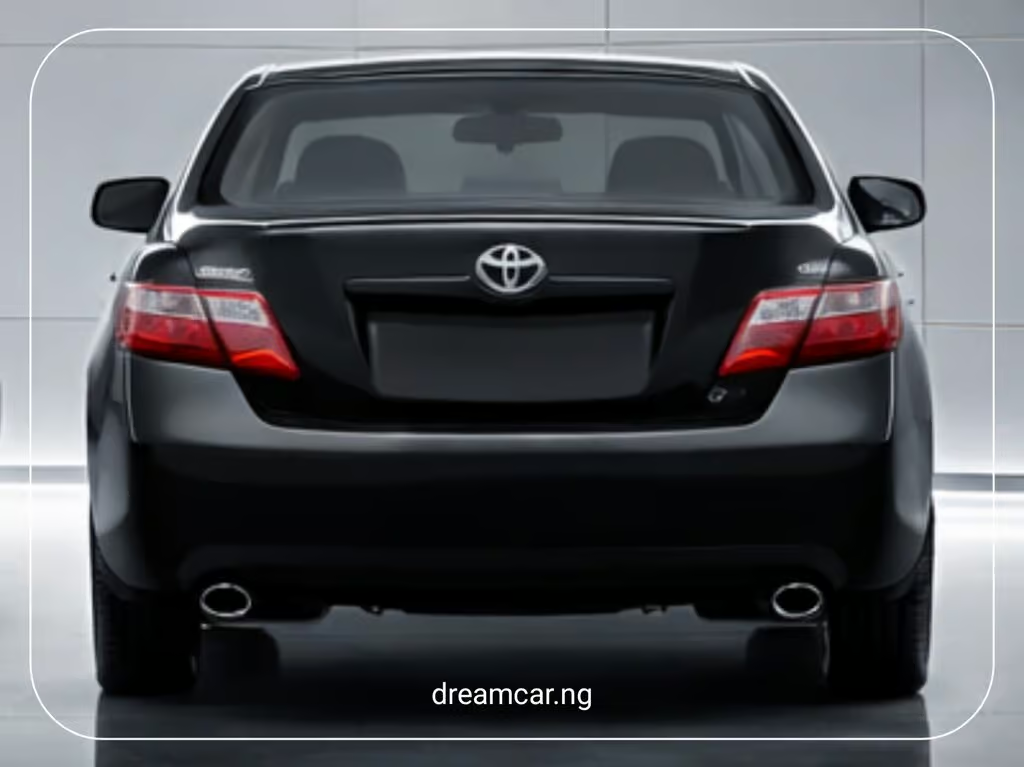
4.4/5
Radio / CD
The 2008 Camry has an angled instrument cluster, soft touch upper dash and durable lower plastics with optional simulated wood or metallic accents. Base trims use durable cloth seats while LE and XLE offer leather trimmed seating; SE provides sportier cloth and firmer bolstering. Front seats balance cushion breadth and lateral support with manual or power adjustments.
Rear seating preserves generous legroom and a flat floor for three occupant practicality. Materials include polyester woven cloth, leather trimmed seats, soft touch urethane steering surfaces and polypropylene lower panels. Noise isolation is good at highway speeds though tyre and suspension noise rises on rough Nigerian roads.
Automatic climate control cools effectively in high ambient temperatures and rear vents aid comfort. Infotainment ranges from AM FM radio with CD and auxiliary input to optional premium multi speaker systems; storage includes centre console, door bins, a wide trunk opening and rear map pockets plus a lockable glovebox.
6-10
Yes
Some Trims
Reinforced side sills were added to the 2008 Camry to further protect occupant space during a side impact. In independent testing, the car scored Good ratings in moderate overlap frontal and side crash tests, but only when it was equipped with side curtain and seat mounted side airbags.
Braking systems were more widely standardised, with four wheel antilock brakes commonly included. Electronic Brakeforce Distribution and Brake Assist were integrated into the ABS system, improving braking performance. Stability control and traction control were still dependent on trim levels in the early years, although they became standard on higher trims.
The passive safety system was well rounded, featuring dual stage front airbags, seatbelt pretensioners, load limiters, seat mounted side airbags and full length curtain airbags to protect both the head and torso. Over time, the car has proven durable in Nigerian conditions, especially the stamped steel cabin. However, some issues tend to show up, such as corrosion at subframe mounting points and fatigue in suspension mounts due to repeated pothole impacts.
View: IIHS safety rating

For both foreign used imports and Nigerian-used units, the biggest red flag on the 2008 Camry is excessive oil consumption on the 2.4L engine. Many cars burn oil due to worn piston rings, and if the previous owner didn’t monitor oil levels, it can lead to catalytic converter damage, misfires, or low compression.
During inspection, check the dipstick, look for blue smoke on acceleration, and listen for engine knock. Imported cars with unknown service history are especially risky. Dashboard melting and sticky surfaces are also common, particularly in cars exposed to intense heat.
On Nigerian roads, suspension parts like control arm bushings and strut mounts wear quickly, causing front-end noise and uneven tyre wear. Brake vibration under light braking is common and may require rotor replacement. The automatic transmission is generally strong, but harsh or delayed shifts often point to neglected fluid changes.
Below is a balanced breakdown of the key advantages and drawbacks of the Toyota Camry, based on real Nigerian ownership, performance expectations, and typical use cases.
Dreamcar.ng reviews are produced by a research-driven team with direct exposure to auto market across Nigerian cities. Our analysis is based on dealership interactions, discussions with mechanics, observed market pricing patterns, and independent research. Each review reflects real Nigerian ownership conditions including fuel quality, road conditions, spare parts accessibility, maintenance realities, and long-term running costs, to help buyers make informed and practical decisions.” add this seamlessly “everythin depends on trim level but we talk more on the more rampant trims on Nigerian road.