

Performance, Safety, Interior, Pros & Cons
The Toyota Camry 2013 continues the XV50 generation with no major structural redesign, building on the improvements introduced in 2012. Toyota focused on feature packaging, and consistency across trim levels. It retains its front wheel drive midsize sedan configuration with a spacious cabin and substantial rear legroom. Ride quality remains comfort oriented, with suspension calibration designed to manage uneven road surfaces smoothly. Steering response is light, making the vehicle easy to maneuver in urban traffic.
Engine options include the 2.5 liter four cylinder engine and the 3.5 liter V6 engine, along with a hybrid version in selected markets. Both petrol engines are paired with a 6 speed automatic transmission, while the hybrid uses an electronic continuously variable transmission.
Interior updates for 2013 focus on infotainment enhancements and minor trim improvements. The cabin layout remains clean and practical, with logically positioned controls and adequate storage compartments. It continues to serve well as a family sedan or corporate transport vehicle. The 2013 Camry is often valued for combining updated generation styling with proven mechanical stability in the Nigeria’s Automobile market.
The 2013 Camry carries over largely unchanged from the fully redesigned 2012 model, but Toyota made a few targeted updates. The most notable change is the introduction of the Entune multimedia system to more trims, expanding access to smartphone connected services such as Bing, Pandora, and iHeartRadio, which improves infotainment usability for drivers with compatible devices.
The SE trim received minor refinements to suspension tuning aimed at sharpening handling response without compromising ride comfort. Interior materials saw slight improvements in select trims, particularly in soft touch surfaces and stitching detail, enhancing perceived quality. Toyota also standardized additional convenience features across trims, including updated audio systems and minor adjustments to available packages.
There were no changes to engine options, as the 2.5 litre four cylinder and 3.5 litre V6 carried over unchanged, and the hybrid system remained the same.
The 2013 Camry kept L, LE, SE, XLE, plus Hybrid LE and Hybrid XLE trims, focusing on comfort and improved efficiency.
₦13.5M
₦9.5M
The current Nigerian market price for the 2013 Toyota Camry reflects its strong reputation and continued demand in the midsize sedan segment. Foreign used units, commonly called Tokunbo, typically sell around ₦13,500,000, driven by import duty, exchange rate volatility, and shipping costs. Nigerian used examples generally average about ₦9,500,000, depending heavily on maintenance history, mileage, and accident record.
Higher trims such as XLE and V6 variants command noticeable premiums due to additional features and stronger engines. Imports with lower mileage and intact original components attract higher resale values. Official dealership listings, when available, tend to exceed ₦13,000,000 due to refurbishment, documentation, and warranty inclusion, while independent dealers dominate the market with more competitive pricing.
Lagos and Abuja markets often show slightly higher prices (which is also somewhat neutralized by competition) due to demand concentration and logistics costs, whereas prices in Port Harcourt and other regions may be marginally lower but still influenced by exchange rate movements and vehicle condition.
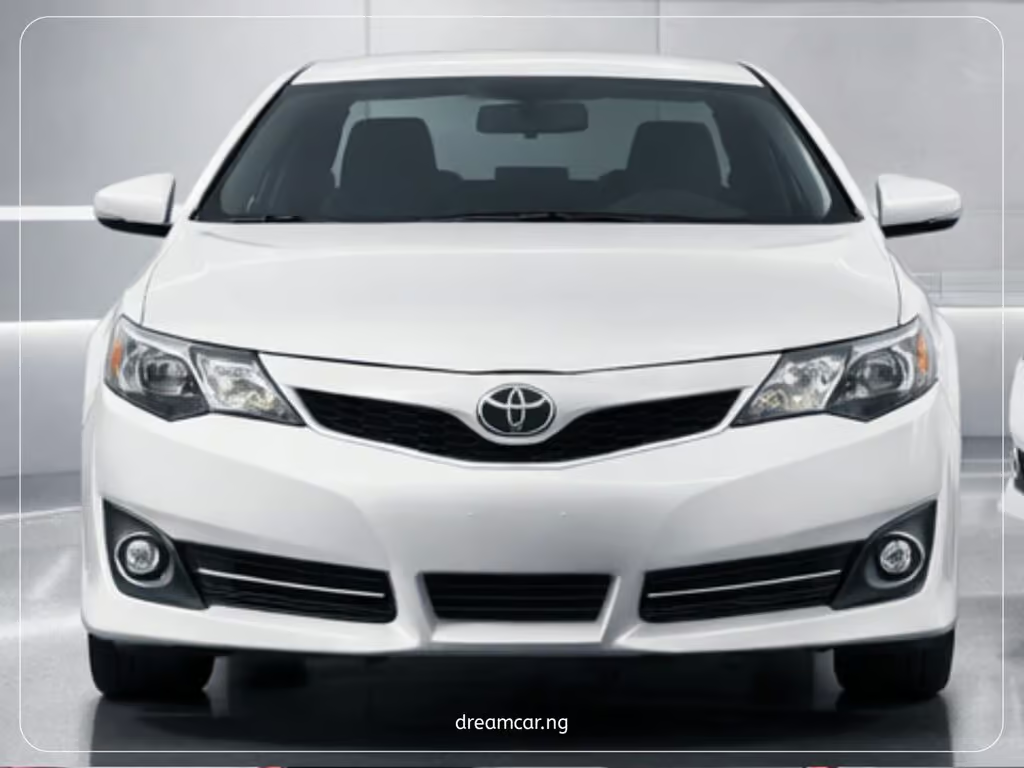
Petrol
Automatic & CVT
Sedan
The 2013 Camry is a spacious and well behaved sedan that delivers smooth power and cushioned ride suit the varied conditions of Nigerian roads. It continued with the 2.5L I4 (178 hp/170 lb-ft) and hybrid powertrain (200 hp total) from the 2012 model. Performance remained steady while the 4 cylinder offers moderate acceleration suited to everyday use, while the hybrid adds strong low‑end thrust.
The suspension and ride tuning were largely unchanged. As before, the Camry’s ride is tuned for comfort so that bumps are absorbed quickly, and body control is secure, especially in non-sport trims. Steering still feels light and numb.
This means the 2013 Camry maintains its ease of drive: it cruises highways with poise and maneuvers city traffic without strain while the engines deliver reliable, linear power and remain cool in heavy traffic in Nigeria.
City: 25, Hwy: 34
10.6km/L
14.4km/L
The 2013 Toyota Camry base model with the 2.5 litre four cylinder engine averages about 10.6km/l in Nigerian city driving and roughly 14.4km/l on a free expressway under steady speeds. In real world conditions across Lagos and Abuja where traffic congestion is common, most owners should expect figures close to the city rating.
With petrol around ₦850 per litre, covering 1,500km monthly will require approximately ₦125,000 in heavy urban use and about ₦88,000 if most driving occurs on open highways. Running costs are relatively affordable for a midsize sedan in this class. Routine servicing, brake components, tyres, and suspension parts form the bulk of ownership expenses.
Poor road surfaces, extended idling, aggressive acceleration, and inconsistent fuel quality can reduce achievable km/l figures and increase monthly fuel expenditure.
Check: EPA fuel economy by trims
Low
High
Very High
The 2013 Camry continues with the 2.5 litre 2AR FE four cylinder and 3.5 litre 2GR FE V6, both engineered with timing chains and built for long service life when maintained properly. In Nigeria, routine care focuses on consistent engine oil and filter changes, brake servicing, coolant system checks, and close inspection of suspension components due to uneven road surfaces.
The 2.5 litre engine is known for stable long term reliability when oil quality is maintained, while the V6 benefits from proactive attention to ignition coils, spark plugs, and cooling components. The six speed automatic transmission is durable provided fluid servicing is not neglected. Suspension bushings, links, and dampers often require periodic renewal under local conditions.
Spare parts are widely available nationwide, including genuine Toyota components and quality aftermarket alternatives. Nigerian mechanics understand this generation well, and diagnosis is typically efficient using standard diagnostic equipment.
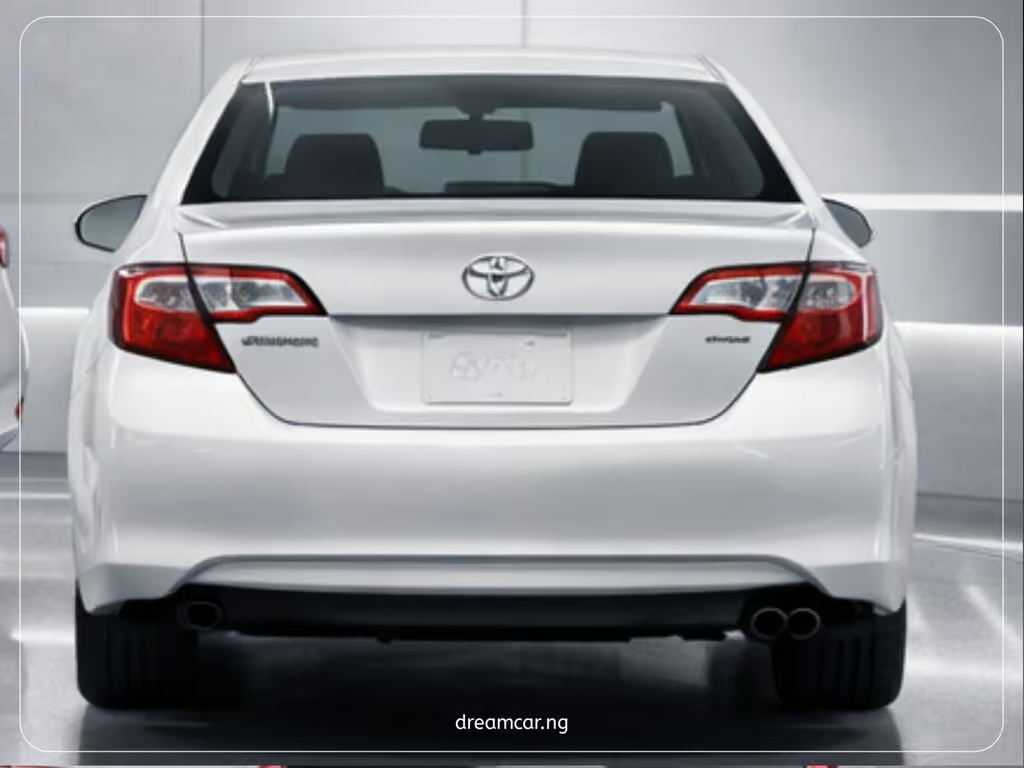
4.3/5
Entune Gen 1, Touchscreen, Bluetooth
The 2013 Camry cabin uses soft touch upper dash materials and tightly fitted lower plastics; seat coverings vary by trim with LE and XLE with woven fabric, SE with fabric and SofTex® trimmed supports and higher XLE and Limited trims offering leather trimmed seating. Toyota specifies SofTex® synthetic leather and UltraSuede® on some sport editions.
Front seats include eight way power adjustment and heated seats on higher trims. Dashboard layout is horizontal with clear instrument cluster and simulated wood trim on XLE. Build quality shows consistent panel fit. Acoustic measures include high density dash silencer and improved windshield acoustic glazing on later 2013 hybrids reducing cabin noise; tyre and suspension noise increase on rough Nigerian roads.
Dual zone automatic climate control cools effectively in high ambient temperatures; rear vents aid passenger comfort. Infotainment ranges from AM/FM CD with auxiliary input to Entune™ audio and JBL® audio. Storage includes centre console, door bins and trunk.
6-10
Yes
Yes
Looking into the 2013 Camry, it’s clear Toyota focused heavily on strengthening the safety structure. According to Toyota Motor Corporation and crash evaluations by IIHS and NHTSA, the XV50 generation was built around a reinforced occupant safety cell. This included front and rear crumple zones, reinforced side sills and carefully tuned load paths, all designed to control how collision energy moves through the car.
On the safety equipment side, most trims came quite well loaded. You typically got ten airbags, including dual stage front airbags, front and rear seat mounted side airbags, full length side curtain airbags and even knee airbags for both the driver and front passenger. Braking systems combined anti lock brakes with electronic brakeforce distribution and brake assist. On top of that, electronic stability control and traction control were integrated into Toyota’s STAR Safety architecture, helping manage emergency braking and vehicle stability.
Structurally, Toyota used high tensile strength steel in important areas like the pillars, rails and bulkheads. This helps preserve the cabin space during severe crashes. In Nigerian conditions, the car’s strong rails and slightly higher ride height on many trims help reduce stress from rough roads. Still, repeated heavy impacts and coastal corrosion can damage ultra high strength steel sections, especially if repairs are not carried out using proper OEM procedures.
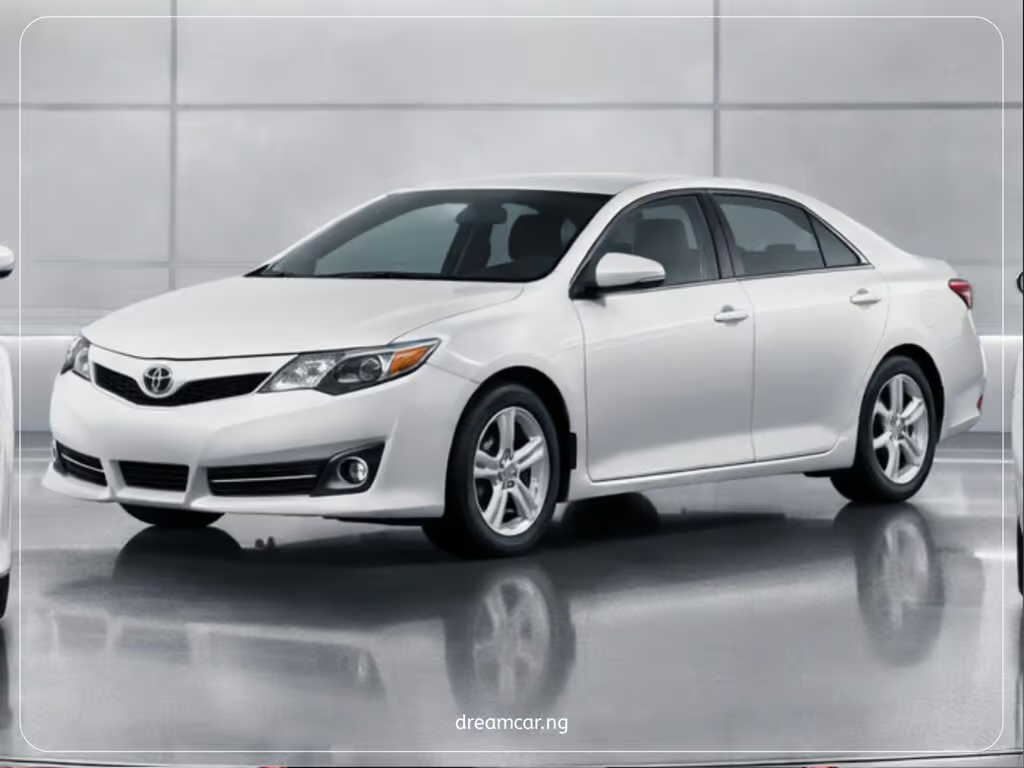
The 2013 Toyota Camry, while generally reliable, has notable concerns buyers should inspect before payment. Owners frequently report automatic transmission hesitation, delayed engagement and jerky shifts, particularly under Nigerian traffic conditions or when climbing steep roads; such behavior often traces to torque converter/clutch pack degradation and may require rebuilds or updates to the transmission control module.
Corroded or worn suspension bushings and struts wear faster on poor roads, causing uneven tyre wear and steering pull. The infotainment and electrical accessories (power windows, sensors) can fail prematurely, especially with unstable local voltage. Reports also include AC blower weakness, musty HVAC smells and weak cooling under constant heat, indicating duct/mold buildup or failings in evaporator drains.
Brake caliper sticking in ageing cars leads to uneven pad wear and heat buildup at rear wheels. Low-speed vibration and slight steering wander are common on high-mileage units exposed to heat and rough surfaces. Check engine mounts and transmission fluid condition as these fail sooner in hot, urban traffic.
Below is a balanced breakdown of the key advantages and drawbacks of the Toyota Camry, based on real Nigerian ownership, performance expectations, and typical use cases.
Dreamcar.ng reviews are produced by a research-driven team with direct exposure to auto market across Nigerian cities. Our analysis is based on dealership interactions, discussions with mechanics, observed market pricing patterns, and independent research. Each review reflects real Nigerian ownership conditions including fuel quality, road conditions, spare parts accessibility, maintenance realities, and long-term running costs, to help buyers make informed and practical decisions.” add this seamlessly “everythin depends on trim level but we talk more on the more rampant trims on Nigerian road.