
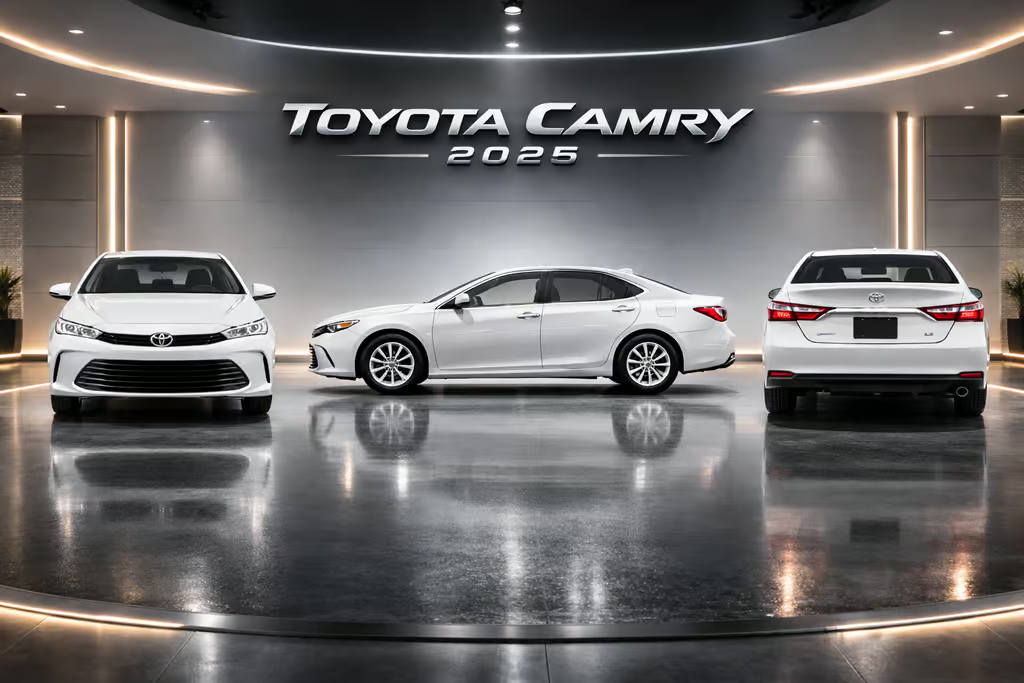
Performance, Safety, Interior, Pros & Cons
The Toyota Camry 2025 marks a major shift: all trims are hybrid only, using a 2.5-liter four-cylinder hybrid with ECVT and front-wheel drive standard with optional all-wheel drive. Trim levels include LE, SE, XLE and XSE – all with combined outputs around 225 hp FWD, 232 hp AWD. Entry alloys are 16-inch on LE, 18-inch on SE/XLE, 19-inch on XSE.
Infotainment tech evolves with 8-inch touchscreen standard and 12.3-inch upgrade on XLE/XSE with wireless Apple CarPlay, wireless Android Auto, Bluetooth and USB. Leather and microfiber seating surfaces appear on XLE/XSE; SE gets SofTex and fabric.
Safety comes via Toyota Safety Sense 3.0 with pre-collision with pedestrian detection, automatic emergency braking with cyclist detection, lane departure assist, lane tracing assist, adaptive cruise control, road sign assist, blind spot monitoring, rear cross traffic alert, plus stability control and traction control. Build quality uses updated GA-K architecture with improved rigidity and crash absorption.
The 2025 Camry is an all new, ninth-generation model with a complete redesign. Crucially, Toyota eliminated all fuel versions: Camry is now exclusively hybrid. Every trim (LE, SE, XLE, XSE and Nightshade) uses a new 2.5L/dual-motor hybrid system (225 hp FWD, 232 hp AWD) – about 30 hp more than before. For the first time AWD is available on all grades.
The exterior styling is totally fresh (“hammerhead” front fascia, slim LED headlights) and adds new colors like Ocean Gem and Heavy Metal. Inside, the cabin is revamped: XLE now offers genuine leather and Dinamica® microfiber (first time in Camry), and options like a panoramic sunroof (on XLE/XSE) and ventilated front seats arrive.
Standard equipment steps up too: Toyota Safety Sense 3.0 with BSM/RCTA is now on every model, bringing new hybrid power, new look, and new tech but at the cost of dropping the old V6/TRD model.
Recommended: 2024 Toyota Camry Review
The 2025 Toyota Camry simplified the lineup to LE, SE, XLE, and XSE trims, all powered by hybrid systems only.
₦72M
₦63M
The 2025 Toyota Camry commands a premium in Nigeria due to its very recent release and strong demand for newer models. Foreign used units average around ₦72,000,000, with a typical range between ₦70,000,000 and ₦80,000,000 depending on mileage, trim level, and condition. Nigerian used units are scarce but may appear around ₦63,000,000 in limited listings, though such figures are often inconsistent due to data limitations and low supply.
Pricing is heavily influenced by exchange rate changes, import duty costs, and shipping expenses, which significantly affect the landing price of newer vehicles. Higher trims and hybrid versions attract higher prices, while accident history or high mileage reduces value. Vehicles sold in major cities often carry higher dealer margins.
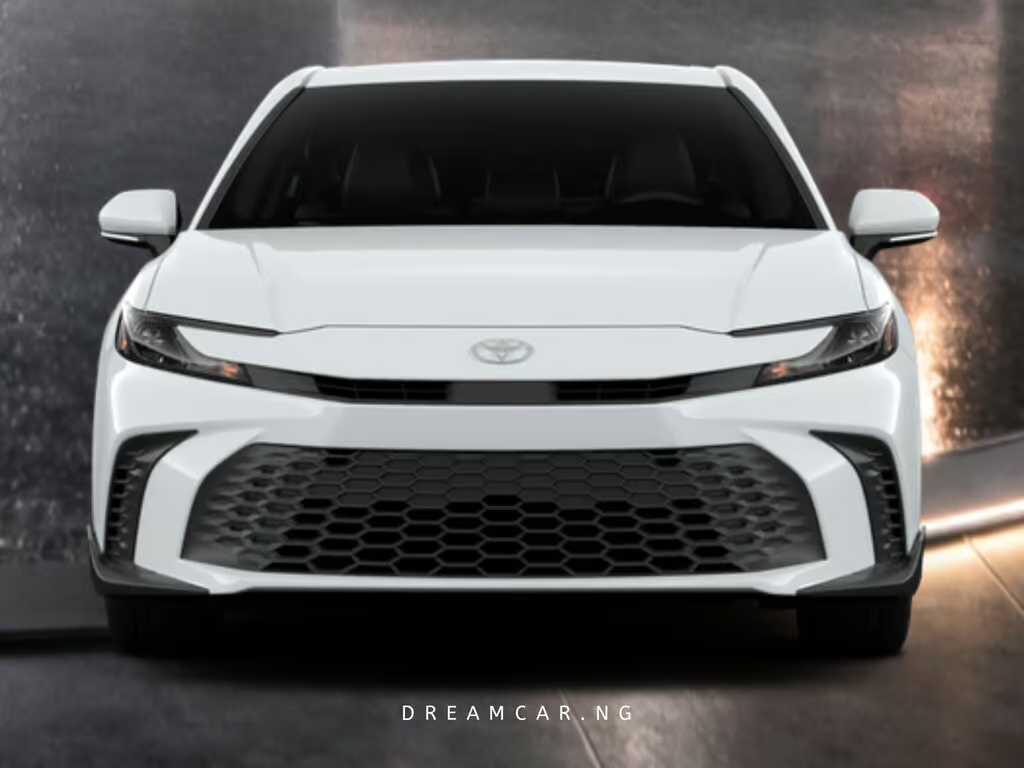
Petrol
Automatic & CVT
Sedan
For 2025 Toyota redesigned the Camry, shifting entirely to hybrid-only powertrains and dropping the old naturally aspirated gas and V6 engines.
Powertrains
Performance
Driving Experience
City: 51, Hwy: 49 (HEV)
21.7km/L (HEV)
20.8km/L (HEV)
The 2025 Toyota Camry is offered exclusively with a hybrid powertrain, and EPA data rates the base trim at 21.7km/l in urban driving and approximately 20.8km/l on the highway. While this model is not yet common on Nigerian roads, these figures indicate a significant efficiency advantage over previous petrol and hybrid mix.
The hybrid system combines a petrol engine with electric motor assistance, allowing reduced fuel consumption during low speed driving and traffic movement. In Nigerian conditions where congestion is frequent, a properly functioning hybrid system can operate on electric power at low speeds, supporting strong urban efficiency if driven conservatively. Highway consumption remains stable due to optimized engine load control.
Running costs are expected to be relatively affordable in terms of fuel usage, though long term ownership will depend on hybrid battery durability, access to qualified technicians, and consistent maintenance practices as these machines are not so rampant in the country yet..
Low
High
Very High
The 2025 Camry arrived in Nigeria as an early wave of the latest hybrid models, seen mostly in corporate fleets and among affluent private buyers in Lagos and Abuja. Routine servicing still follows coolant checks, brake inspections and suspension attention, but maintenance increasingly focuses on hybrid cooling, inverter health and battery system monitoring.
Because this generation is new locally, genuine hybrid modules and updated electronic sensors are mainly supplied through authorized dealers while aftermarket support is limited. Global demand and supply chain tightness for hybrid components can lengthen parts lead times and make some modules harder to source quickly.
Independent mechanics can handle conventional engine, transmission and chassis work, yet hybrid electrical faults typically require metropolitan workshops with manufacturer level diagnostic tools. As a result repair demand concentrates at accredited service centres and a small group of specialist mechanics; the broader spare parts trade is still maturing, especially outside major cities as it is a little hard and expensive to find replacements at the moment for the Toyota Camry 2025
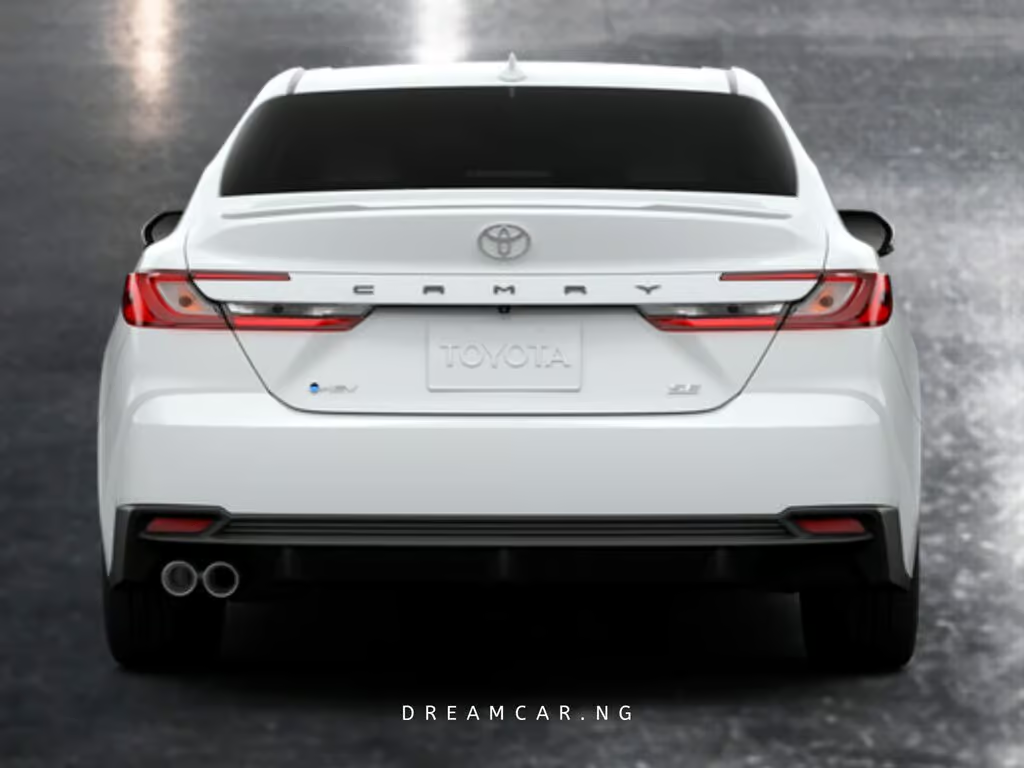
3.7/5
Toyota Audio Multimedia, Touchscreen, Bluetooth, WiFi, Apple CarPlay & Android Auto
Toyota Camry 2025 adopts a redesigned interior with a cleaner horizontal dashboard, soft touch materials and improved fit quality. Seating materials range from fabric to Sport SofTex® synthetic leather, microfiber leather combinations and full leather upholstery on higher trims.
Front seats are wider with better lumbar support and available heating and ventilation, while rear seats offer good legroom and improved headroom for taller passengers. Cabin space measures around 100 cubic feet with a boot capacity of about 15.1 cubic feet, ensuring practicality for daily use.
Dual zone automatic climate control maintains effective cooling, supported by rear vents and improved airflow distribution. Infotainment upgrades include larger 8 inch and available 12.3 inch touchscreens, wireless Apple CarPlay and Android Auto, and optional premium audio systems.
Additional USB ports and wireless charging improve convenience, while improved insulation materials reduce cabin noise on highways and rough urban roads.
6-10
Yes
Yes
The 2025 Camry represents a more noticeable step forward, with a redesigned platform that focuses on stronger materials and better crash energy management. Toyota increased the use of ultra high tensile steel and improved how loads are distributed throughout the structure, making the occupant cell even more rigid.
One major addition is the introduction of a centre airbag. This works alongside dual front airbags, side torso airbags, curtain airbags and knee airbags to improve protection, especially in side impacts where occupants can collide with each other. Overall airbag coverage is more comprehensive than before.
Crash testing reflects these improvements, with good ratings across updated side impact protocols and strong structural performance with minimal intrusion. Standard safety systems still include antilock braking, Electronic Brakeforce Distribution, Brake Assist, stability control and traction control. In addition, more advanced systems like autonomous emergency braking, lane support and speed assistance are widely included.
In Nigerian conditions, the stronger structure and improved electronics provide better crash protection and help prevent accidents, especially on rough or degraded roads. However, the use of advanced materials also increases repair complexity. Proper tools and procedures are required to maintain safety integrity after any collision.
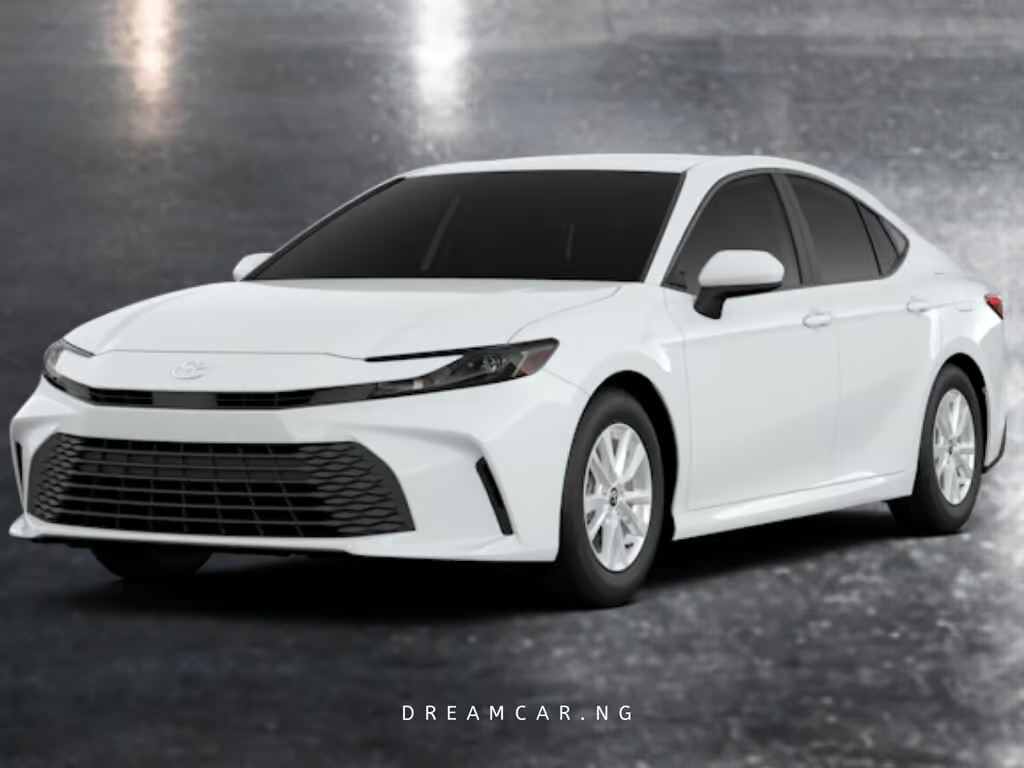
The 2025 model’s launch has generated significantly more owner complaints than recent Camrys. Common issues include interior rattles, squeaks, and trim misalignment, front bumper fit problems, and vehicle squealing noises at low speeds. Owners also report software/CarPlay glitches, slow climate controls, and Bluetooth annoyances.
Some discussions even highlight windshield fragility and rattling doors, and somes posts about fitting and finish quality that feels cheap compared to previous generations. These problems are especially noticeable early in the model year, so a thorough pre-purchase inspection is strongly recommended.
Below is a balanced breakdown of the key advantages and drawbacks of the Toyota Camry, based on real Nigerian ownership, performance expectations, and typical use cases.
Dreamcar.ng reviews are produced by a research-driven team with direct exposure to auto market across Nigerian cities. Our analysis is based on dealership interactions, discussions with mechanics, observed market pricing patterns, and independent research. Each review reflects real Nigerian ownership conditions including fuel quality, road conditions, spare parts accessibility, maintenance realities, and long-term running costs, to help buyers make informed and practical decisions.” add this seamlessly “everythin depends on trim level but we talk more on the more rampant trims on Nigerian road.