

If you follow the exchange rate in Nigeria, even casually, you already know that the value of the naira shapes almost every corner of the economy; Food, gadgets, spare parts, house rent and of course, imported cars.
The entire auto market in Nigeria operates in a very foreign currency driven space, and nothing exposes that reality more sharply than Tokunbo car prices.
Everyone who buys cars in Nigeria feels this pressure starting from Importers to dealers but buyers feel it the most.
Once the Dollar to Naira rate jumps, the ripple shows up on dealer lots in Lagos, Port Harcourt, Abuja, Kano, and every state where importation affects mobility.
This guide takes a walk through the exact ways that currency swings drive imported car prices in Nigeria, why dealers react quickly, and what buyers can do when the numbers begin to climb again.
The guide create a clear picture with zero fluff built on expert analysis of Nigeria’s exchange rate, verified car price trends in Nigeria, and reliable information on car importation costs shared by importers who deal with auctions, ports, logistics, and customs duty and exchange rate issues every day.
Recommended: Cheapest Cars In Nigeria
How Dollar to Naira Fluctuations Drive Tokunbo Car Prices
Let us start with the most direct point: Every Tokunbo car begins its journey outside Nigeria.
Someone bids for it at international vehicle auctions like Copart, IAA, Manheim, or buys from a private seller in the United States, Canada, Japan, or Europe.
That means the first major cost appears in dollars.
Importers describe this as the foundation on which the entire process stands and the moment the Dollar to Naira rate changes, every layer that sits on that foundation changes with it.
Many Nigerians study auction listings and discover a car that looks affordable at first glance like a 2011 Toyota Camry at $2,600, a Honda Accord at $2,800. A Lexus RX at $5k.
Great deals by global standards, but that number only becomes a Nigerian number after conversion at the current rate.
If the rate stays low, buyers enjoy some breathing space. Once the naira moves the other way, the cost of that same Camry begins to feel heavier.
People call importers asking why last year’s prices no longer exist, the reason sits right here.
Naira losing strength pulls cost of used cars in Nigeria upward.
This is why naira depreciation and car prices move like a chain reaction: Each weak point in the currency introduces a new level of discomfort for anyone who hopes to buy a clean, reliable imported car.
Forex watchers describe Nigeria as an import dependent automobile market, and they are right.
Everything in the car pipeline anchors itself to foreign currency strength. Even when dealers try to keep prices steady for a while, the math eventually forces a shift.
Daily conversations at car lots reflect the same thing, buyers ask what changed, dealers point to naira to dollar fluctuations.
Some even show buyers old invoices and recent invoices just to explain the jump.
This everyday back and forth reveals how currency driven the car ecosystem has become in Nigeria.
Recommended: Where To Find Cheap Cars In Nigeria
The Role of Import Costs, Duties, and Shipping Fees
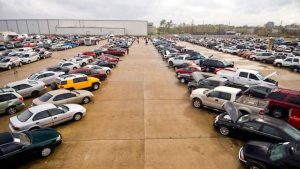
Buying a car abroad is only the first half. The second half rests on car importation cost, which includes logistics, transportation, shipping, clearing, documentation, storage, and movement from the port gate to the dealer’s location.
Each smaller cost links directly or indirectly to forex.
Start with shipping. Every year, Nigerians ship thousands of vehicles through United States ports like Houston, Newark, Baltimore, and Savannah. Each shipment sits in dollars.
When the rate rises, car shipping cost becomes a heavier burden for importers.
Then there is the long discussion about duties and port charges, customs uses a benchmark tied to currency values.
This is where customs duty and exchange rate comes into the picture, importers know the drill as a car that cost 1.2M in Naira to clear last season may require 1.5M or 1.8M once the authorities adjust the rate used for import assessment.
Every assessment uses a fixed formula, and that formula responds quickly to forex updates.
Inside every conversation with an importer, you find this repeated point that the auction price is only about 30% to 40% of the full journey.
The rest sits in what happens after bidding, clearing, documentation, and movement inside Nigeria which consume the bigger portion.
Importers sometimes show their receipts, they show the amount paid to the shipping company. the storage fee, the customs receipt and all the values that confirm how deeply the effect of forex scarcity shapes the final figure.
There is also the matter of limited dollar supply.
Many importers complain that they cannot source forex at official rates and they rely on the parallel market.
That alone changes a lot because when dollar availability becomes tight, the next possible impact touches foreign exchange and car prices more painfully.
Scarcity pushes the naira lower and lower naira pushes import figures up, higher import figures push imported cars prices into regions that shock buyers.
People who track shipping warehouses know how global automotive imports respond to world events, if global fuel prices rise, shipping rates rise.
If port congestion increases in North America or Europe, costs for storage and delay rise and every change outside Nigeria eventually shows up inside Nigeria.
This makes the vehicle importation Nigeria process extremely sensitive.
Importers joke that every time they calculate total cost, they hold their breath and it isn’t because they expect anything unusual, but because the numbers move so fast these days.
All these layers combine into the clearing costs at Nigerian ports, which play a major role in the price available on dealer lots in Lagos, Abuja, Warri, Aba, Port Harcourt and every city where imported cars arrive for sale.
Recommended: Cars With The Highest Resale Value In Nigeria
Why Car Dealers Adjust Prices During Forex Changes
Buyers often wonder why dealers move quickly once the rate climbs, the reason is that dealers usually replace sold cars with new stock.
Once the rate rises, the money from one sale cannot cover the cost of importing a similar replacement and that creates a break in the chain.
To keep the business afloat, dealers raise prices to match the new import value.
It is not a situation driven by excitement or emotion, just that dealers operate in a tight space where the forex market controls everything.
A dealer who sells a Toyota Corolla for 5.8m may discover that bringing in the same year and trim requires 6.6m because of the currency shift.
That seller cannot continue selling at the old price because the math refuses to agree, this is why car dealers in Nigeria tend to explain forex changes to every potential buyer.
Many buyers already know the pattern, they mention the exchange rate impact on consumer goods each time they discuss cars.
The Nigerian economy reacts the same way across many products, car prices just feel more dramatic because of the size of each transaction.
Currency swings affect rent at car lots, they influence transportation, they influence the cost of generator diesel to keep business running, they influence the cost of maintaining a showroom.
By the time the dealer combines all these expenses with the current forex realities, the price of a single car rises again.
This ties directly into economic factors affecting car prices; currency volatility, import duties, storage cost, ocean freight, and local logistics all rise whenever forex moves.
Dealers in Lagos always mention real examples about how fast the numbers change even while a car is still on the water heading to Nigeria, a car that looked affordable before shipment may land at a time when the rate used for assessment rises sharply.
These sudden changes are why many people compare prices of used cars in Lagos every three months because the movement feels that fast.
Lagos usually sets the tone for other states, once Lagos dealers adjust their figures, Abuja, Port Harcourt, Onitsha, and Kaduna follow.
Another hidden factor that sits quietly in the background is the fact that the auction prices abroad rise and fall too.
When global demand for certain models increases, overseas car auction prices rise, when you combine that with a weak naira, buyers cannot but feel the full weight and it becomes a double pressure issue.
Higher dollar cost outside, higher naira cost inside.
The last part of this story is inflation, local inflation adds extra discomfort because as fuel costs rise, transporters raise their charges, mechanics raise labor charges and just like that, everyone in the chain adjusts their fees.
All of this blends into inflation and vehicle affordability, making cars feel farther out of reach for many Nigerian households.
This is the complete picture behind why car prices are rising in Nigeria and a reminder that dealers do not operate in isolation, they react to forces much larger than their individual businesses.
Recommended: How To Avoid Common Car Scams
What Buyers Can Do When the Exchange Rate Rises
Nigeria sits in a place where the car market depends on forex and buyers cannot control the currency, yet they still need mobility.
Many ask for practical steps to stay ahead during difficult seasons.
Here are the most useful ones shared by importers, analysts, and everyday drivers through a dreamcar’s questionnaire generated from a thorough study of trusted data on forex impact.
Explore Model Alternatives
Some models rise faster in price once forex changes, for instance, Luxury vehicles respond more sharply because their auction values are higher.
Buyers who want something durable often shift toward brands with stable auction prices.
Nigerian roads still respect Toyota, Honda, Lexus, Hyundai, and Kia because these brands offer solid options across budgets.
You can still find clean Tokunbo units at reasonable figures even when the rate moves aggressively.
Watch Auction Trends
Many Nigerian buyers and retail sellers now follow auctions themselves before contacting an importer.
They track rising or falling bids on cars they like, this behavior helps them make informed decisions.
It gives them a clearer view of data driven evaluation of Tokunbo car prices, which prevents shock when a dealer quotes the actual landing cost.
Buy Before Peak Periods
Importers advise buyers to avoid delay during seasons when the naira begins to lose value.
Once currency volatility in Nigeria accelerates, every week carries the potential for higher numbers, early decisions sometimes save hundreds of thousands of naira.
Avoid Impulsive Decisions
Car purchase is a big deal and even with rising cost, buyers who take their time to compare options end up happier.
Study different trim levels, look at different brands, consider cars with similar reliability ratings but lower auction values.
These small choices save huge amounts when the Dollar to Naira rate rises again.
Work With Trusted Professional
Some buyers work with experienced importers who provide transparent cost breakup.
These professionals show buyers every figure including the auction purchase, shipping, clearing, inland movement, dealer margin amongst other cost.
This breakdown builds trust and prevents misunderstanding, it also helps the buyer track how forex plays a role at each stage.
Buy From Well Known Lots
The Nigerian used car space has many dealers, while some offer fair rates, some take advantage of market confusion.
Buyers who choose established lots benefit from authoritative automotive market insights and fairer price evaluation since authoritative establishment tend to me more honest to protect their reputation.
If the lot has a history of transparent pricing, the buyer understands what they are paying for.
Consider Cars Already In Nigeria
During steep increases in forex, some buyers avoid fresh importation and instead focus on cars already cleared and available.
These units may still be expensive, but they give buyers the advantage of fixed cost although some other dealers still mark up price.
But for most reputable establishment, you don’t need to worry about that, no waiting for shipping, no fear of another currency jump.
Negotiate With Facts
A buyer who knows current auction values, shipping rates, and clearing charges negotiates better.
Many importers say they prefer buyers who stay informed because those conversations run smoothly. With professional guide for Nigerian car buyers, negotiation becomes easier and fairer.
Explore Installment Agreements
Some dealers around Nigeria offer structured payment plans for certain models of cars.
This approach works for buyers who want to secure a car before another forex jump as they pay gradually over a short period while locking in the current price.
Consider Fuel Economy
Foreign exchange fluctuation is one thing, higher running cost feels even worse during economic uncertainty.
Cars with modest fuel consumption reduce pressure for the buyer which makes them practical choices in an era shaped by CBN forex policies and rising global energy cost.
Maintain The Current Car
This is an underrated strategy, if the current car can serve for one more year with proper maintenance, that decision may save millions.
Mechanics across the country confirm that good maintenance stretches the lifespan of Tokunbo cars far beyond what many people expect.
Closing Thoughts
Nigeria operates in a global car ecosystem and every imported car touches the international market before it reaches Nigerian soil.
That makes the journey heavily influenced by the exchange rate in Nigeria as it shapes auction costs, shipping, clearing, port logistics, and finally, the price displayed on dealer lots.
Buyers experience these shifts every season as importers adjust quickly and dealers explain the reasons daily as such, everyone in the chain responds to the movement of the currency and in response, the car industry becomes a mirror that reflects the state of forex.
But at that, buyers still adapt, study options, explore alternatives, time their purchases and compare auction data.
They learn from real world examples from Nigerian car importers and these small actions help them make cleaner, smarter decisions, even in a tough market.
This is how the Nigerian auto space continues to move forward despite all the challenges and somehow, people still buy cars, import them and sell
Everyone simply works with the numbers available at each moment.