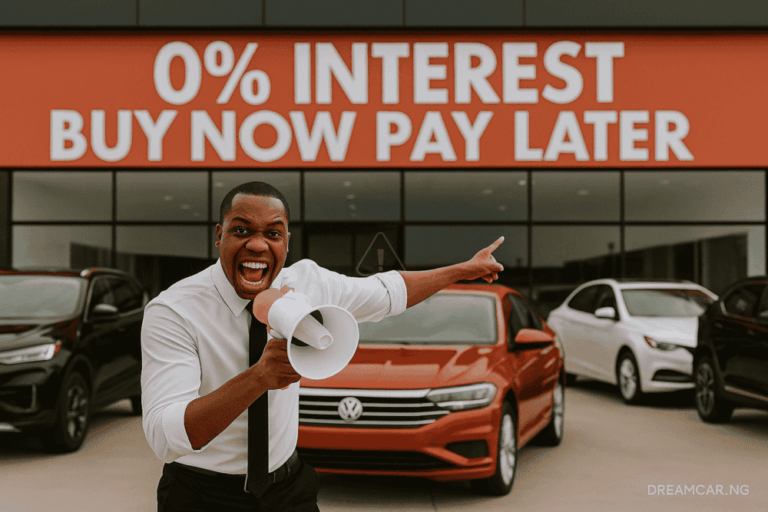
Everywhere you turn in Nigeria today, car dealers and auto finance companies are advertising “0% interest car loans”, “buy now, pay later”, and other irresistible car financing deals that seem like a golden opportunity to own your dream car without stress.
On the surface, a 0% car loan sounds like free money, no interest, no hidden charges, and easy repayment. But is it really that simple?
The truth is, many of these “zero interest” car loan offers come with fine print that can significantly impact the total cost of your vehicle.
From shorter repayment periods to higher upfront deposits and strict eligibility requirements, understanding how 0% car financing works in Nigeria can save you from paying far more than you expect.
In Nigeria’s rapidly expanding auto market, where both new and used car financing options are becoming increasingly competitive, knowing what you’re signing up for is crucial.
This detailed guide will explain what 0% interest car loans really mean, how they compare to traditional car financing, the hidden costs and limitations, and most importantly, how to decide if a 0% car loan is truly the best deal for your next car purchase.
So that even if this is your first vehicle or you’re upgrading to a newer model, this guide will help you make a smarter financial decision before you sign that car loan agreement.
What Does “0% Interest” on a Car Loan Really Mean?
At first glance, a 0% interest car loan sounds like a jackpot. You think, “So I’ll just pay for the car and nothing extra? Perfect!”
But that’s not exactly how it works. These “zero interest” deals are usually marketing tactics meant to grab attention and get buyers through the door.
Here’s what really happens behind the scenes: most dealers or automakers don’t actually “cancel” the interest.
Instead, they shift the cost somewhere else. Sometimes, the car’s price is quietly marked up to cover what would have been interest.
In other cases, the dealer’s banking partner or manufacturer absorbs part of the cost as a promo incentive, just to make the deal look attractive.
So, while the loan might say “0% interest,” the real cost may be hiding in the inflated car price, processing fees, or tighter repayment conditions like shorter tenures or larger upfront deposits.
In short, you may not be paying interest in name, but you’re still paying for it in another form.
How 0% Car Financing Works in Nigeria
In Nigeria, the promise of 0% interest car loans often sounds too good to ignore but when you look closely, you’ll realize it’s one of the most carefully engineered marketing tools in the auto industry.
Only a handful of authorized dealerships and partner banks actually offer true 0% interest car financing, and even then, the conditions are strict enough to filter out the average buyer.
Here’s how it typically works:
The dealer partners with a bank or finance company to create what’s called a subvented loan.
In this setup, the automaker or dealership pays part (or all) of the interest cost upfront, allowing the customer to enjoy “0% interest” during repayment.
But this isn’t done out of generosity it’s a sales strategy.
The dealership makes up for that lost interest in other ways, such as higher car prices, limited model options, or shorter loan tenures.
For example, you may only qualify for a 0% loan if you’re buying a brand-new car from a certified dealer, not a used or Tokunbo vehicle.
And you’ll likely be asked for a hefty down payment, often between 30% to 50% of the car’s total cost.
The repayment period is usually short, maybe 12 to 18 months, sometimes 24 at most compared to regular car loans that can stretch to 48 months or more.
Then there’s the credit side of the equation. Banks will only approve these offers for customers with excellent financial records, usually those with a steady salary account, verifiable employment, or an existing relationship with the bank.
In essence, the offer is built for a small group of low-risk, high-trust borrowers not for the average Nigerian trying to spread payments conveniently.
Here’s the irony: even when you meet all these conditions, a 0% interest deal might not be your best financial move.
Some buyers discover that they could save more by negotiating a direct discount on the vehicle’s price or going for a standard auto loan with a modest interest rate and a longer repayment window.
When you strip away the marketing gloss, 0% interest car financing in Nigeria isn’t really “free.”
It’s simply a trade-off between time, flexibility, and cost, one that only works in very specific circumstances.
Hidden Costs Dealers Don’t Always Tell You

The big, bold “0% interest” headline is designed to make you act fast but the fine print often tells a very different story.
Behind the glossy advertisements and persuasive sales talk, several hidden costs and restrictions can quietly turn your “interest-free” loan into a more expensive deal than you planned for.
Here’s what many Nigerian car buyers don’t realize:
Processing and Administrative Fees
Even if the loan is interest-free, you’ll almost always pay loan setup fees, documentation charges, or “management fees” that can range from ₦50,000 to ₦200,000 or more, depending on the bank or dealership.
These charges are how lenders recover part of the cost they would have earned from interest.
Higher Insurance Premiums
Most 0% car financing offers come with a catch like you must buy comprehensive insurance through the dealer’s preferred partner, not your own provider.
And since those partner insurers often charge premium rates, you could end up paying tens or hundreds of thousands of naira extra over the loan period.
No Price Discounts on the Vehicle
Ordinarily, when you buy a car outright, dealers can offer cash discounts or special promos.
But under a 0% financing plan, that discount disappears. The “free interest” is often balanced by removing any price reduction, meaning you still pay full price or even slightly above it.
Limited Car Options and Short Promo Periods
Don’t expect every car in the showroom to qualify. Most 0% offers are restricted to select models or trims, usually the ones the dealer wants to clear out.
Sometimes, the 0% rate only applies for the first few months (say, three to six months), after which a standard interest rate quietly kicks in.
Risk of Repossession and Tricky Loan Structures
If you miss payments, repossession terms are usually strict. Some agreements allow the dealer or bank to seize your car after just one or two missed installments.
And in certain cases, the loan structure may tie you to that dealer, meaning you can’t easily refinance, resell, or transfer ownership until the loan is fully cleared.
In the end, a 0% interest deal often means you’re still paying just in a different form.
Be it through inflated car prices, hidden charges, or limited flexibility, these costs can add up fast.
Therefore, before signing any “interest-free” car financing agreement in Nigeria, read the fine print, ask the right questions, and calculate the total cost of ownership not just the monthly repayment.
Should You Go for a 0% Interest Car Loan?
Should You Go for a 0% Interest Car Loan?
Before deciding to sign that “interest-free” car loan agreement, take a step back and ask yourself a few critical questions.
In Nigeria’s fast-changing auto market, what looks like a sweet deal on paper can easily become a financial headache once you crunch the numbers.
Is the Car Price Higher Than Similar Models Sold Elsewhere?
Always do your homework. Compare the dealer’s “0% offer” price with the same model listed on other reputable platforms or showrooms.
Many buyers discover that the so-called interest-free price is ₦500,000 to ₦1 million higher than what other dealers charge for outright purchase.
You can check our guide on Where to Find Cheap Cars in Nigeria to make smarter comparisons.
Can You Get a Better Deal from Your Bank?
Don’t just take the dealer’s financing plan as your only option.
Several of Nigeria’s top commercial banks like Access Bank, FirstBank, Sterling Bank, and FCMB offer competitive auto loan programs with interest rates as low as 20–30% per annum, plus flexible repayment plans that stretch up to 4 years.
In many cases, these regular commercial bank car loans give you more breathing room and end up cheaper overall than a short-term 0% deal tied to dealer plenty conditions.
Are You Buying the Car You Actually Need or Just Chasing the 0% Interest Deal?
A 0% interest tag can easily cloud your judgment. It’s tempting to buy a more expensive model simply because the offer feels like a bargain.
But keep in mind that even if there’s no interest, you’re still parting with millions of naira.
Always buy based on need, budget, and practicality, not emotion or marketing hype.
The truth is, a well-structured loan with a modest interest rate and a longer repayment period often gives better long-term value than a short, rigid 0% deal packed with hidden conditions.
Before you commit, compare total costs, not only the monthly payments.
The best car financing deal is not always the one with the flashiest headline but the one that fits your finances without stretching you thin.
How to Get the Best Car Loan Deals in Nigeria
If you’re truly ready to finance your next ride, don’t rush into the first offer that sounds good.
The Nigerian auto market is full of options and traps.
Getting the best deal means doing your homework, asking the right questions, and comparing real numbers, not just sales talk.
Here’s how to go about it like a rugged cartel
Understand the Car Buying and Financing Process
Before walking into any dealership or bank, make sure you understand how car loans work in Nigeria
Down payments, interest rates, tenure and insurance requirements.
Dealers often use complex terms to make offers sound attractive.
But when you are already knowledgeable about the whole thing, you can negotiate confidently and avoid being pressured into signing deals you don’t fully understand.
This is especially important for first time car buyers. we’ve made a great beginner’s guide for first time car buyers and it’s recommended you check it out before you proceed to get your first car.
Check the Car’s True Market Value
Never depend solely on the dealer’s quoted price.
Use trusted car valuation platforms, online marketplaces, or even visit multiple dealerships to get a sense of the average market value.
This way, you’ll know whether the deal being offered is fair or inflated to cover hidden costs.
Compare Offers from Multiple Banks and Dealers
Don’t settle for the first financing option you’re come across with.
Each Nigerian bank and dealership has its own lending criteria, repayment terms, and charges.
By comparing interest rates, tenure, insurance conditions, and total cost, you can save hundreds of thousands of naira.
Check out our comprehensive list of Top Nigerian Banks Offering Car Loans.
Be Vigilant & Avoid Auto Scams
Car loan scammers are not even slacking, be careful of dealers who demand 20% or 30% down payment for instant loan approval schemes.
or sellers who refuse to provide verifiable documents in cases of used car purchase.
We’ve already written a comprehensive guide on avoiding common car scams in Nigeria, it’s recommended you check it out also.
Choose Cars with Strong Resale Value
A smart buyer thinks ahead. Cars with good resale value like Toyota, Honda, or Lexus models save you money over time but also make refinancing easier if you ever need to upgrade.
See our expert guide for the best resale value cars in Nigeria
Explore Affordable Used Car Options if You’re on a Budget
You don’t have to break the bank to own a reliable car.
Many used (Tokunbo) vehicles offer excellent value when properly vetted.
Pair a modest loan with a solid and affordable used car, and you can drive away debt-free faster than you’d imagine.
The bottom line is that the best car loan deal in Nigeria isn’t necessarily the one with the lowest interest, it’s the one that combines affordable repayments, flexible terms, and a vehicle that holds its value.
Take your time, compare wisely, read the fine print, and don’t sign anything until every number makes sense to you.