
Buying a used car in Nigeria demands more than just a keen eye for shiny paint and a friendly handshake.
It takes sharp attention, patience, and a clear sense of what to look out for.
The market is filled with all sorts of vehicles from clean foreign imports to locally used options that have seen their fair share of bumpy roads and tropical wear.
Hidden faults, forged papers, and odometer rollbacks are just a few traps waiting for unsuspecting buyers.
A detailed inspection is your best defense against costly mistakes and disappointment after purchase.
This 2026 guide breaks down every step of the process; checking ownership documents, assessing the car’s exterior, examining the interior features, mechanical systems, and performance during a test drive.
You’ll also learn what to look for before sealing the deal so that you can walk away with confidence, knowing your money went into a car that’s truly worth it.
Documentation & Background Checks
Before you lift the bonnet or take a test drive, paperwork tells its own story.
A clean set of documents can save you from costly surprises down the road.
Many used cars in Nigeria look appealing on the surface, but their histories often reveal accidents, tampered mileage, or even unresolved customs issues.
Begin your inspection on paper before touching a spanner.
Verify Ownership and Registration
Start with the basics: ownership. The name on the registration certificate must match the person selling the car.
Confirm that the vehicle identification number (VIN) printed on the documents matches the one stamped on the car’s chassis or etched on the dashboard.
For imported vehicles, locally known as Tokunbo, review the customs clearance and duty payment receipts.
A car that cleared customs through proper channels will have traceable documents.
Missing or inconsistent paperwork is a major red flag that could lead to ownership disputes or impoundment by authorities.
Check VIN History and Use Reliable Reports
The VIN acts like a digital fingerprint. Run it through reputable databases or local verification platforms to uncover accident records, odometer rollbacks, or theft alerts.
Sellers may hide these details, so independent verification is your best shield.
Request service history, previous ownership logs, and repair records.
Cars with consistent maintenance entries show better care and reliability.
A well-documented service trail often signals a responsible previous owner and can justify a slightly higher price.
Cross-Check Vehicle Condition Against Documents
Inspect the car’s physical condition and make sure it aligns with what the papers claim.
If the odometer shows suspiciously low mileage for its age, it could mean tampering.
Compare the wear on the pedals, steering wheel, and seats to the mileage listed these small clues reveal a lot.
If records mention recent major repairs or importation, factor that into your decision.
A car rebuilt after a crash or flood might look fine but could carry long-term mechanical risks. Paperwork provides evidence, but the car itself confirms the truth.
Exterior Inspection
A careful walk-around tells plenty about a car’s real history. Dents, uneven paint, or corroded areas can expose years of rough use or poor maintenance.
Always perform this check in bright daylight on level ground so you can catch flaws that artificial lighting might hide.
Treat this stage as the car’s visual truth test, its body often speaks louder than its documents.
Bodywork, Paint & Panel Gaps
Move slowly around the car and study each panel; the doors, bonnet, boot, and fenders.
Panel gaps should appear consistent on both sides. Wide or uneven spacing hints at previous body repairs or accident damage.
Run your palm across the surfaces; inconsistent texture or fresh paint smell can reveal recent touch-ups.
Pay attention to color variations, slightly darker or glossier areas often signal panel replacement or repainting.
Rust is another silent destroyer, especially around door edges, wheel arches, and sills where moisture and road salt settle.
For imported cars, look underneath for salt corrosion caused by overseas winters. A small magnet can also help detect hidden filler; if it fails to stick, that section might contain body filler instead of metal.
A few scratches are fine, but repaired crash damage masked with heavy filler could shorten the car’s lifespan and resale value.
Glass, Lights & Mirrors
Inspect the windscreen, side windows, and rear glass for cracks or chips. Even tiny star-shaped marks can expand under heat or vibration.
Check for signs of delamination when glass layers start to separate near the edges.
All lighting components should be clean, sealed, and fully functional.
Test headlights, tail lights, indicators, brake lights, and fog lamps.
Moisture or fogging inside a lens often suggests that the housing was once cracked or poorly resealed after an impact.
Finally, confirm that side mirrors adjust smoothly, hold their position, and have intact reflective surfaces.
Damaged mirrors are cheap to replace but could signal a previous side collision.
Tyres & Wheels
Tyres reveal driving habits and suspension health. Inspect each one for even tread wear, uneven patterns often expose alignment, balancing, or suspension issues.
Check the date of manufacture using the DOT code stamped on the sidewall.
Tyres older than five to seven years may harden and lose grip, even with visible tread remaining.
Examine rims closely for bends, cracks, or corrosion. Mismatched wheels could indicate replacement after an impact.
Don’t forget the spare; it should be properly inflated and safe for emergency use.
Underbody & Chassis
If possible, crouch or use a flashlight to inspect underneath the car.
Look out for rusted frame sections, damp spots, or welded joints that appear non-factory.
These can point toward accident repairs or water damage.
Pay special attention to suspension mounts, subframes, and chassis legs because these areas carry most of the car’s structural load.
Severe corrosion or poorly done welding here can compromise safety.
In such cases, it’s better to walk away than inherit someone else’s headache.
Interior Inspection
A car’s interior is like a living diary, it reveals how the vehicle was treated through its daily life.
Torn upholstery, damp carpets, or faded buttons can tell you more about its real story than the odometer ever will.
Spend time here, because comfort, safety, and long-term usability all begin inside the cabin.
Smell & General Condition
Start with your senses. As soon as you open the door, notice the air inside.
A fresh, neutral scent usually points toward proper ventilation and care, while a musty or damp smell could signal flood exposure or water seeping through door seals or the floor.
Examine the seats, padding, and carpets closely. The level of wear should make sense for the car’s age and recorded mileage.
For instance, a supposedly low-mileage car with torn seats or a worn steering wheel may have been clocked back.
Also pay attention to stains or fading on seat fabric, roof lining, and plastic trim, these often result from prolonged exposure to sunlight or careless interior cleaning.
A clean, well-kept cabin usually mirrors responsible ownership.
Instrument Cluster, Controls & Electronics
Insert the key or push the start button and check that every dashboard light, gauge, and switch responds correctly.
Malfunctioning warning lights that fail to illuminate during startup can mean hidden faults.
Test all electrical features including the infotainment system, air conditioning, interior lighting, power windows, central locking, and electronic mirrors.
Each one should operate smoothly. For vehicles with power seats or memory settings, confirm full range of motion and responsiveness.
Don’t overlook the air conditioning. Set it to the coldest setting with maximum fan speed and wait for quick cooling.
In Nigeria’s hot climate, a failing AC system is an expensive inconvenience.
Lastly, inspect the instrument panel for tampering marks or loose fittings which may be a sign that someone may have interfered with the odometer or replaced components to disguise issues.
Carpets, Headliner, Trim & Seating
Lift the floor mats and feel beneath them. Dampness or a muddy residue might point toward leakages through the doors, firewall, or underbody.
Vehicles that experienced flooding often retain moisture in these hidden areas even after cleaning.
Check the headliner, that is the inner roof fabric, for sagging, stains, or wrinkles.
These are classic signs of long-term moisture exposure or smoking inside the car.
Examine all trim pieces and plastic panels to ensure they fit tightly without missing clips or cracks.
Loose panels can rattle during driving and may indicate previous interior disassembly.
Test every seat for firmness, adjustability, and safety. Slide, recline, and fold them where applicable.
Seat belts should extend and retract smoothly, and locking mechanisms must hold securely.
Weak seat frames or jammed sliders suggest neglect or accident repair.
Engine Compartment & Mechanical Checks
The heart of every car lies under the bonnet. This is where real value lives or dies. A shiny exterior can mask a tired engine, so take your time here.
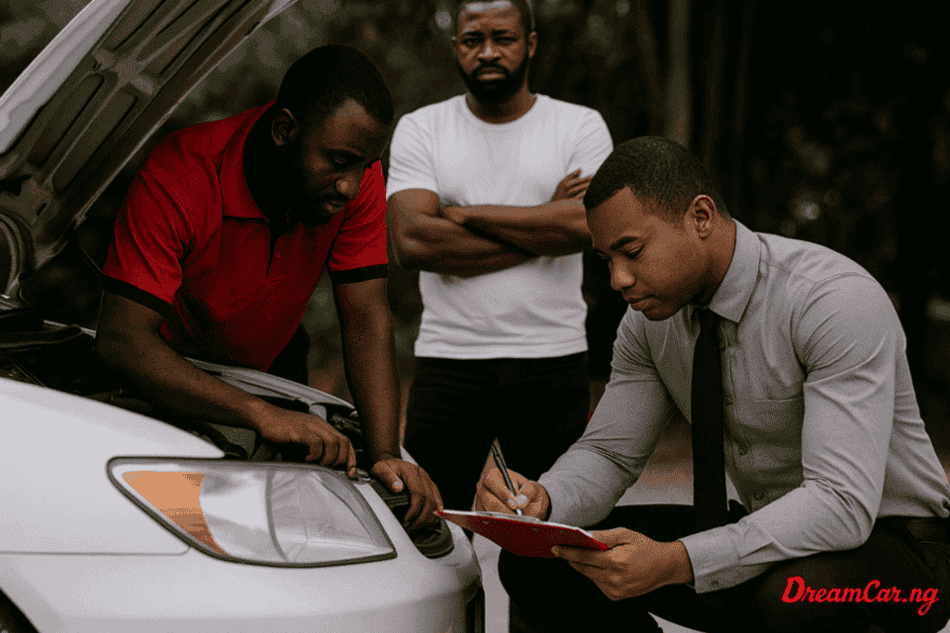
You want to perform the check when the engine is cold and the car sits on a level surface.
The aim is spotting leaks, abuse, and signs of neglect before they turn into expensive repairs.
Fluids & General Engine Bay Condition
Start with the basics, fluids tell the story of how well the car has been maintained.
Pull out the engine oil dipstick and inspect the color and texture. Healthy oil appears honey-brown or dark bronze and feels smooth.
Milky or sludgy oil can mean coolant has mixed in, often pointing toward a failing head gasket which means an expensive repair is waiting to happen.
Next, check the coolant reservoir. The fluid should be clear and vibrant in color – green, pink, or orange depending on the type.
A rusty or sludgy appearance shows corrosion or poor maintenance.
In automatic cars, transmission fluid should have a clean reddish-pink look without a burnt smell.
Move your inspection across belts and hoses. Belts should appear flexible without cracks or fraying, while hoses must feel firm yet pliable, free of bulges or oil coating.
Check around the battery terminals for green or white residue, a classic sign of corrosion.
Finally, look beneath the engine for visible leaks. Drops of oil, coolant, or power-steering fluid under the car indicate aging seals or loose components.
Engine Start-Up and Idle
Start the engine while it’s cold, it’s the most honest test of its condition.
Listen carefully for knocking, tapping, or rattling sounds. These noises may come from worn bearings, valves, or timing components.
Walk behind the car and observe the exhaust. Heavy white smoke can indicate coolant burning in the cylinders;
blue smoke means oil is entering the combustion chamber; black smoke suggests the engine is running too rich with fuel. All three are red flags.
As the engine warms, the idle should remain steady and quiet. Watch the rev counter, erratic fluctuations or low idle speed may signal poor tuning or air leaks.
For manual cars, release the clutch slightly while in gear; the car should move smoothly without jerks or unusual vibrations.
Any shudder or clutch slip reveals wear inside the transmission system.
Transmission & Drivetrain
For automatic vehicles, shift gently through the gears – park, reverse, drive, and back.
The transitions should feel smooth and immediate without delay or harsh engagement. Jerking or slipping between gears is a bad sign that the transmission may need repair or replacement.
In manual cars, focus on clutch feel and gear engagement. The clutch pedal should press down smoothly, not spongy or overly stiff.
Shifting into first gear must be clean without grinding noise or vibration.
While underneath or during a quick inspection, check the driveshaft and CV joints.
Torn or greasy CV boots leak lubricant, which leads to joint failure if left unchecked.
Transmission oil leaks also deserve close attention, they can drain life out of even the strongest gearbox.
Suspension, Steering & Undercarriage
Before taking a test drive, do a brief visual scan of the suspension area under the bonnet.
Inspect the strut towers for cracks, dents, or welding marks these areas absorb most of the vehicle’s front-end impact.
Check springs, links, and bushings for damage or uneven wear.
Look for rusted or welded suspension arms and torque rods, these are signs of a repaired accident or structural weakness.
During the test drive, you’ll confirm how the steering and suspension feel on the road, but this initial inspection can already reveal cars that deserve to be ruled out immediately.
Test Drive & Performance Evaluation
A proper test drive is the moment the car tells you its truth. Everything that looked perfect on paper and during inspection now gets tested in motion.
The goal is to observe how the engine, transmission, steering, and suspension behave under real driving conditions.
Never skip this phase because most of the time, it’s where hidden faults reveal themselves.
Starting and Warm-Up Phase
Start the car and let it idle briefly before moving off. Observe how the engine comes alive.
A healthy engine should start easily and settle into a smooth rhythm. Watch the temperature gauge climb gradually toward normal operating range; sudden spikes or slow movement could signal cooling issues.
As you begin driving, acceleration should feel smooth and predictable, without hesitation, jerking, or lag.
Any stumbling under throttle might point toward fuel delivery or ignition problems.
Keep an eye on the instrument panel, warning lights that flicker or stay on during warm-up deserve attention before purchase.
Transmission Behavior
For automatic cars, shifting should be seamless. Listen for any harsh engagement, delayed response, or gear hunting while accelerating or slowing down.
Smooth transitions between gears show the transmission is healthy.
If you feel a kick or jolt, or if the car holds a gear too long, that gearbox might need service soon.
Manual drivers should test clutch operation. The clutch should engage halfway through pedal travel, not at the very top or bottom.
Slipping, grabbing, or grinding noises indicate wear or alignment issues.
On an incline, test the handbrake and footbrake to confirm that both hold the car firmly without rolling backward or forward.
Brakes, Steering & Handling
Find a safe, straight stretch of road and test the brakes at moderate speed. The car should slow down in a straight line without pulling to one side.
The pedal must feel solid underfoot, not soft or spongy. Vibrations under braking is a sign of warped rotors or uneven tyre wear.
Steering feedback is equally important. It should feel precise and balanced, neither too tight nor overly light.
Briefly loosen your grip on the wheel on a flat road; the car should maintain its lane without drifting left or right.
While turning, listen for clunks or knocks around the steering column or suspension area.
These sounds usually mean worn joints or bushings.
Suspension & Ride Quality
Drive over slightly uneven ground or minor potholes to gauge ride comfort.
The car should absorb bumps without excessive noise or harsh jolts. Repeated bouncing after hitting a bump suggests weak or worn shock absorbers.
Take gentle corners at moderate speed and notice how the body leans. Moderate body roll is normal, but if the car sways dramatically or feels unstable, the suspension components may be tired or unbalanced.
These repairs can be expensive, so note them early.
Final Checks and Post-Drive Inspection
When the drive ends, park the car on level ground and keep the engine running for a moment.
Then, crouch and look underneath for fresh drips or leaking oil, coolant, or transmission fluid often appearing after the engine warms up.
Walk around the vehicle one last time. Check the tyres again for even tread, the glass for new cracks, and the body for fresh scuffs or leaks that may have surfaced during the drive.
This final pass ensures that what you saw before the test still holds true after putting the car through its paces.
A well-behaved car on the road, with no noises, vibrations, or warning lights, earns your trust far more than any seller’s promise.
Checking For Flood, Accident & Odometer Tampering
Nigeria’s used-car market carries risk of water damage, structural repairs, and mileage fraud.
These hidden problems might not show up right away but can cause big headaches later.
Approach each vehicle like a forensic case: gather clues, verify facts, before you decide.
Here’s exactly how to spot water damage, structural repairs, and mileage rollback before you make your buying decision.
Signs of Flood Damage
Flood-damaged cars are everywhere in the Nigerian market, especially after heavy rains or importation from abroad.
The first giveaway is usually the smell. If the car smells damp or moldy, that’s a red flag. Take a good sniff inside the cabin, boot, and under the carpets.
Check for water stains or rust in unusual spots like under the seats, spare-tyre area, or door sills.
If you notice new carpets or mats that look too clean for the rest of the interior, it could be a cover-up.
Pop open the bonnet and look closely at the wiring. Corrosion on metal parts or discolored connectors often means water once got in.
Cars that have been flooded might run fine for a while but will later develop electrical faults that are expensive to fix.
Spotting Accident Repairs
Many used cars on the market have been in accidents, and while some repairs are harmless, others are poorly done and unsafe.
Take a few steps back and look at the car from all angles. The body panels should line up evenly.
If the gaps between doors, bonnet, and boot look uneven or the paint shades don’t match perfectly, that’s a warning sign.
You can also use a small magnet to check for areas with thick filler, if the magnet doesn’t stick in some places, that part might have been patched after a crash.
Open the bonnet and boot to inspect the metal edges; fresh weld marks or rough seams often mean the car was once hit hard and repaired.
Ask the seller directly if the car has ever been in an accident. If they dodge the question or seem unsure, you can decide to walk away or stay depending on other factors.
A car with a bent frame may drive fine at first but can never be truly safe or stable again.
Checking for Odometer Rollback
Mileage fraud is another common car scam. Some sellers adjust the odometer to make the car look newer than it really is.
But the car itself can tell the truth if you look closely.
A car showing “50,000 km” shouldn’t have a worn-out steering wheel, smooth pedals, or torn seats.
If it does, someone likely rolled the mileage back.
Ask for service records or old receipts, they often show the mileage at the time of maintenance.
Compare those numbers to what’s showing on the dashboard now. If something doesn’t add up, it’s best to move on.
Keep in mind that, an honestly used car with higher mileage is usually better than one that’s been reset to look newer on paper.
Final Evaluation & Negotiation Strategies for the Car
After checking the car inside out and taking it for a proper test drive, it’s time to decide if it’s truly worth buying and at what price.
This is where you put everything you’ve learned during the inspection to good use.
Summarize What You Found
Go over all your notes from the papers and paintwork to how the engine sounded and how the car handled on the road. Try to picture the overall health of the vehicle.
If you spotted a few small issues, like tyres that are almost due for replacement, noisy suspension, or minor body scratches, estimate how much it would cost to fix them.
Use that figure to guide how much less you should offer.
But if you found serious problems like poor engine performance, rough gear shifts, or signs of flood damage, be honest with yourself: no deal is better than a bad deal.
Use Your Findings to Negotiate
Negotiation is easier when you have facts. If the car has worn tyres, fading paint, or signs of accident repair, those are valid reasons to ask for a discount.
Politely explain what you noticed and how it affects the car’s value.
If the seller insists on a high price despite clear faults, don’t be afraid to walk away.
There are many other cars out there. Sometimes, leaving makes the seller call you back with a better offer.
Before You Pay, Double-Check Everything
Once you agree on a price, don’t rush. Make sure all documents are complete and genuine – proof of ownership, registration papers, and any service records.
If possible, verify the details at a licensing office or through trusted agents before handing over money.
When the car is officially yours, set aside some money for basic servicing.
An oil change, new filters, and fresh tyres are wise moves even if the car seems fine. It’s better to start your ownership on a clean slate but not necessary though.
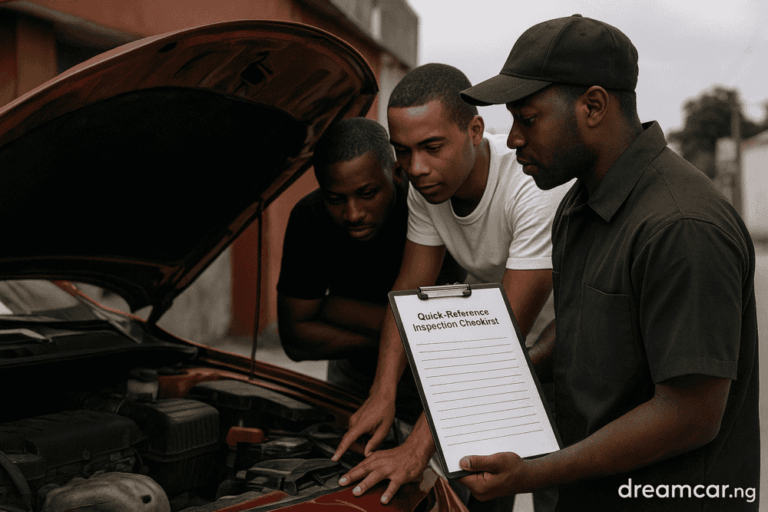
Quick Reference Inspection Checklist
Here is a condensed version you can screenshot, print or keep on your phone when you’re ready to go inspect that used vehicle in Nigeria:
- Verify VIN, chassis & engine numbers against papers
- Confirm customs/import documents (if applicable)
- Inspect registration certificate, ownership documents
- Walk-around: panel gaps, paint consistency, rust spots
- Magnet test for filler repairs
- Check glass, lights, mirrors all working and undamaged
- Assess tyres and wheels: age, tread, wear pattern
- Sit inside car: smell, wear on seats/trim/pedals
- Turn on electronics & AC: all functions working
- Engine bay: fluid checks, oil appearance, coolant colour, battery condition
- Start cold engine: listen for anomalies, check exhaust smoke
- Test drive: acceleration, gear shifts (auto/manual), brakes, handling, suspension
- Post-drive: any new leaks, underbody inspection
- Flood/accident signs: water stains, wiring corrosion, welds
- Mileage vs condition: check for odometer tampering
- Estimate repair cost based on findings
- Negotiate using those defects as leverage
- Ensure paperwork is clean and transfer is smooth
- Plan for immediate maintenance after purchase
In conclusion, a well-executed pre-purchase inspection in Nigeria separates smart buys from costly regrets.
The time you spend walking around the vehicle, checking documentation, going for a proper drive and probing hidden signs of damage will pay off in peace of mind and lower ownership cost.
Approach the process with discipline and a clear checklist.
If a car fails one or more major checks like the engine/transmission health, flood damage, structural flaws, walk away.
There is always a better deal, don’t feel so much in a hurry to own a car (especially for first time buyers) that you now ignore major problem.
If everything checks out, you’ll own a vehicle that serves you and is worth your money rather than the one that will spend most it’s days in a mechanic workshop and turn you to an overnight bestie with your mechanic.