
Price, Performance, Spec, Safety, Interior, Fuel Economy, Pros & Cons
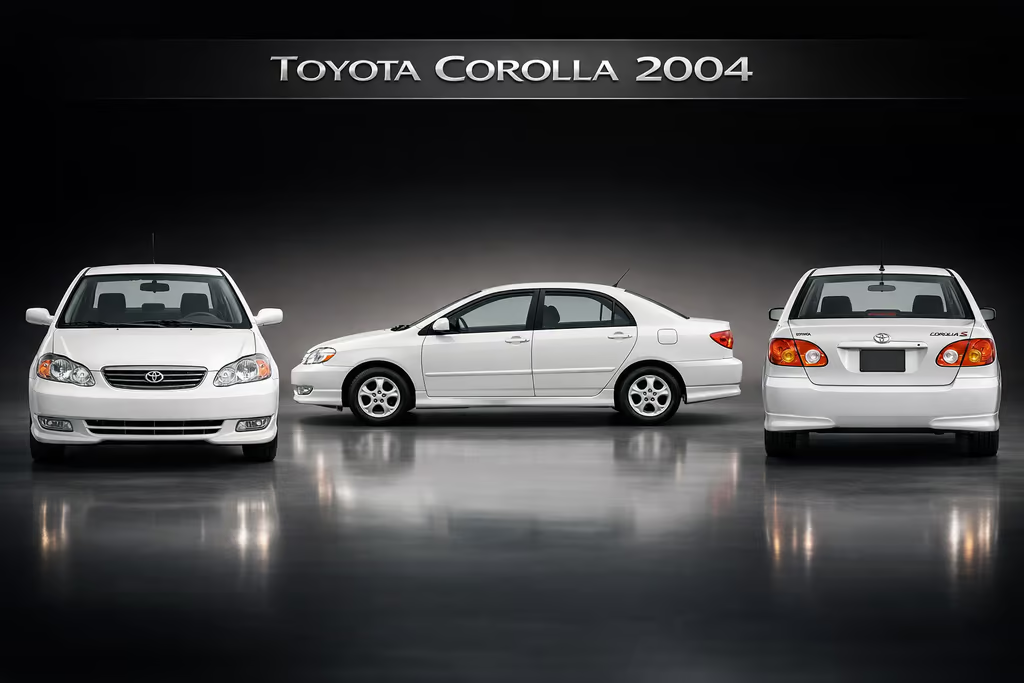
The Toyota Corolla 2004 belonging to the E120/E130 9th generation, stands as one of the most common entry level sedans seen across Nigerian roads today. Its wide usage makes it a strong reference point for buyers researching used petrol cars that suit daily commuting, ride hailing, and small household transport.
In the Nigerian market, this model is mostly encountered as a used import or long term local unit, giving buyers a large pool of real ownership experience to study before purchase.
The appeal of the Corolla 2004 lies in its straightforward engineering, easy servicing culture, and compatibility with Nigerian fuel conditions. Many mechanics understand this model well, spare parts are widely stocked, and ownership costs stay within reach for budget focused buyers. These factors make it easier to assess how the car behaves after years of use on local roads.
This Toyota Corolla 2004 review and Nigerian buyer guide looks closely at current market pricing, engine response, fuel spending, cabin space, protective features, common workshop complaints, and day to day ownership advantages and drawbacks. The goal is to help buyers make informed choices based on how the car performs in real Nigerian driving conditions.
Also check: Toyota Corolla 2005 Buyer’s Review
₦8M Estimated
₦6M
₦4.5M
Skip the stress. For just ₦20,000, we’ll match you with verified dealers, help you avoid scams, and get your ideal car within 7 days.
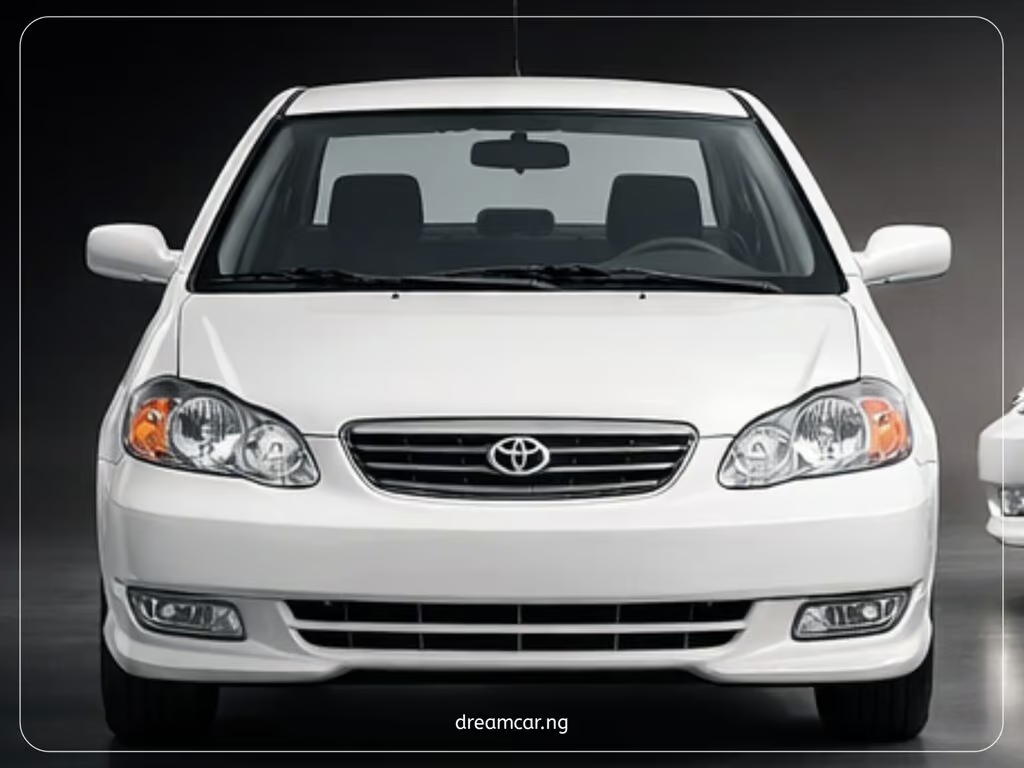
For buyers looking at the 2004 Corolla, this older sedan is one of the most common imported used cars in Nigeria. Tokunbo units typically trade in a lower price band compared to newer Corollas, often showing ask prices between about ₦4 million and ₦6 million largely because these cars usually have higher mileage and older trims.
Nigerian-used examples can be cheaper still, most times below ₦5 million, especially if the bodywork or interior shows wear, tyres are due for replacement, or older electrical bits are tired.
Price differences among markets are noticeable: Lagos and Abuja usually list a bit higher, while northern states may show slightly lower figures, especially on private seller listings. Dealers often add a markup to cover servicing and minor fixes, and that’s a decent negotiation point if you can inspect the car yourself.
Private sellers typically undercut dealers by a few hundred thousand naira, but always check the service history and confirm mileage before purchase. A clean 2004 Corolla that’s been well looked after still holds resale appeal because spare parts are easy to source nationwide.
Inline-4 petrol
Automatic & Manual
Sedan
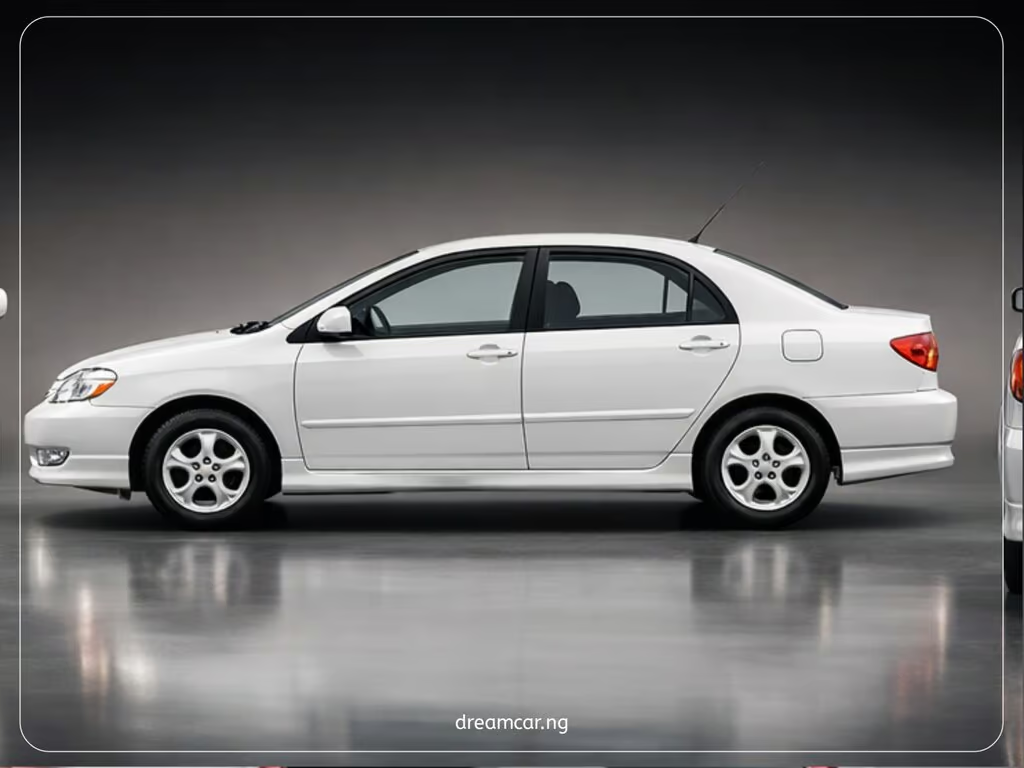
The 2004 Toyota Corolla on Nigerian roads is commonly fitted with either a 1.6 litre or 1.8 litre naturally aspirated inline four petrol engine, depending on import source. Power is sent to the front wheels through a five speed manual or four speed automatic gearbox.
Output ranges around 109 horsepower for the 1.6 litre and up to 126 horsepower for the 1.8 litre, with torque sitting between 150 and 170 Nm. Ground clearance falls within the mid 140 to 160 mm range based on tires and market spec.
Acceleration builds smoothly making it easy to manage in traffic. On highways, the engine holds cruising speed without excessive revs. On rough roads, the suspension handles light surface damage well but deep potholes require slower pace.
Front-Wheel Drive
City Driving: 10.6 km/L
Highway: 15.9 km/L
City: 25 MPG
Highway: 37 MPG
The 2004 Toyota Corolla predominantly uses petrol (unleaded) with common engine sizes from 1.4L to 1.8L, and diesel versions exist in some markets. Average figures put city fuel economy around 24 – 26 MPG (about 10.2 – 11L/100 km) and highway closer to 24 – 25.8 MPG (15.3 – 16.1 L/100 km) depending on engine and transmission.
Used real-world Nigerian data also suggests an average combined ~31 MPG (~13.2 L/100 km) for many petrol Corollas. With Nigeria’s petrol often around ₦800-₦1,000 per litre (estimate may vary), a typical monthly fuel cost for moderate driving (1,500 km) could range ₦90,000-₦120,000.
Routine service (oil change, filters) is typically affordable, and major maintenance jobs like timing belt/water pump changes might be slightly higher. Spare parts are very widely available across markets like Lagos and Port Harcourt and very affordable relative to many other brands, often costing a fraction of European makes.
Local Nigerian mechanics are extremely familiar with this generation, keeping labor costs low.
Radio / CD
Five Seaters
385 Liters
Inside the 2004 Corolla, the layout feels simple and purposeful, clearly built for daily Nigerian driving. It seats five people comfortably, with front seats offering decent thigh support and enough width for adults. Seat covering is fabric as standard, designed to handle heat and regular use without peeling or cracking.
Cabin legroom in front is fair, while rear legroom suits average adult passengers for city trips. Headroom is generous enough even for taller drivers. The dashboard houses a basic radio and CD player, easy to operate and resistant to dust. Cooling is handled by a manual air conditioning system that cools the cabin evenly when properly serviced.
Road and engine noise are noticeable at high speed but calm during town driving. The boot offers about 385 litres of usable space, enough for market bags or airport luggage. Rear seats fold down, allowing longer items to pass through. Interior materials feel tough, with buttons and panels known to last many years on Nigerian roads.
Dual Front (Two)
Yes
No
The 2004 Corolla sold in Nigeria was built during a transition phase for compact car safety. Dual front airbags were standard on most imports, but side airbags and curtain protection were rare and usually absent. ABS was available on higher trims but many Nigerian-used units arrived without it, especially Japan imports. Stability systems were not part of the package.
Brake performance under emergency stops is average, with noticeable pedal fade after repeated hard use, particularly on older brake lines. Structurally, the chassis holds up well against age and abuse, with a strong central safety cage that protects occupants in moderate impacts. Body panels are light and thin, denting easily in urban traffic, but the underlying frame resists deformation better than many rivals of the era.
Suspension components handle rough Nigerian roads decently, although worn bushings can affect wheel alignment and braking feel. On highways, the car tracks straight but feels unsettled at high speed. Crash reputation is acceptable for its time, though far below modern standards. Nigerian buyers must also verify airbag recall status due to known inflator issues affecting early 2000s models.
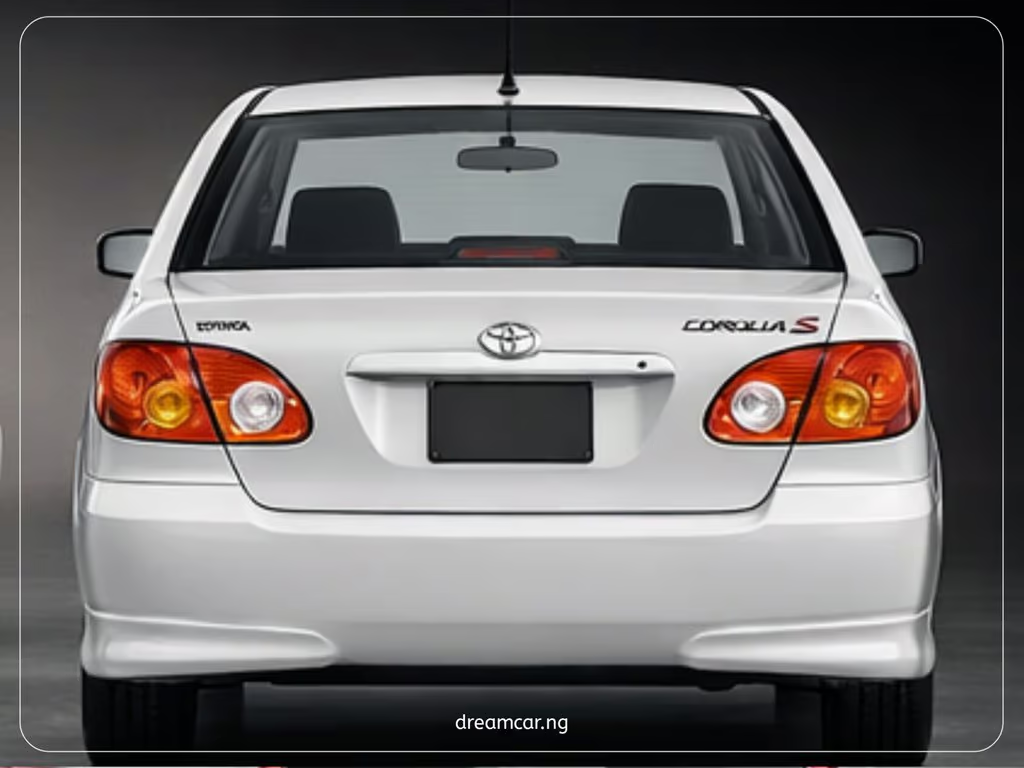
For a 2004 Corolla, many long time owners report that the engine starts strong but can develop lean-running symptoms or rough idle after high use. Owner communities note frequent P0171 codes and air-fuel mixture problems that can be linked to intake gasket leaks or aged MAF sensors, leading to inconsistent performance and stalling in traffic conditions common in Nigerian cities.
Engine oil leaks and higher-than-expected oil consumption also appear in recall and complaint listings, sometimes tied to worn piston rings or valve seals as mileage climbs over 100 000 km.
The electrical system on this year sometimes draws down the battery when the car sits, especially if prior owners added accessories or cheap aftermarket units, a problem seen in numerous forum posts. Suspension and brakes can wear quickly on rough surfaces, so check shock absorbers, struts, brake pads, and discs for uneven wear or knocks.
Nigerian dealers rarely replace these before resale, so expect some cost. The rare but serious airbag fault and recall for defective inflators should be checked with the VIN to ensure yours was corrected, as older units globally were part of major safety actions.
Before buying, inspect underbody for rust, especially near wheel arches and under the engine bay, and validate service history. Check the stability of the transmission linkage, as worn PRNDL components have caused issues where the gear lever will not reliably engage park or reverse.
If you’re ready to buy, we’re ready to connect you. Get direct access to verified dealers near you for a fast, safe and stress-free deal with just ₦20K
Tell us your budget and location. For ₦20k, we’ll connect you with verified dealers, help you avoid scams, and find your ideal car in as little as 7 days.
Dreamcar.ng reviews are produced by a research team with direct exposure to auto market across Nigerian cities. Our analysis is based on dealership interactions, discussions with mechanics, observed market pricing patterns, and independent research. Each review reflects real Nigerian ownership conditions including fuel quality, road conditions, spare parts accessibility, maintenance realities, and long-term running costs, to help buyers make informed and practical decisions. While vehicle specifications and experiences can vary by trim level, our reviews focus primarily on the most common and widely circulated trims on Nigerian roads, reflecting what the average buyer is most likely to encounter.