
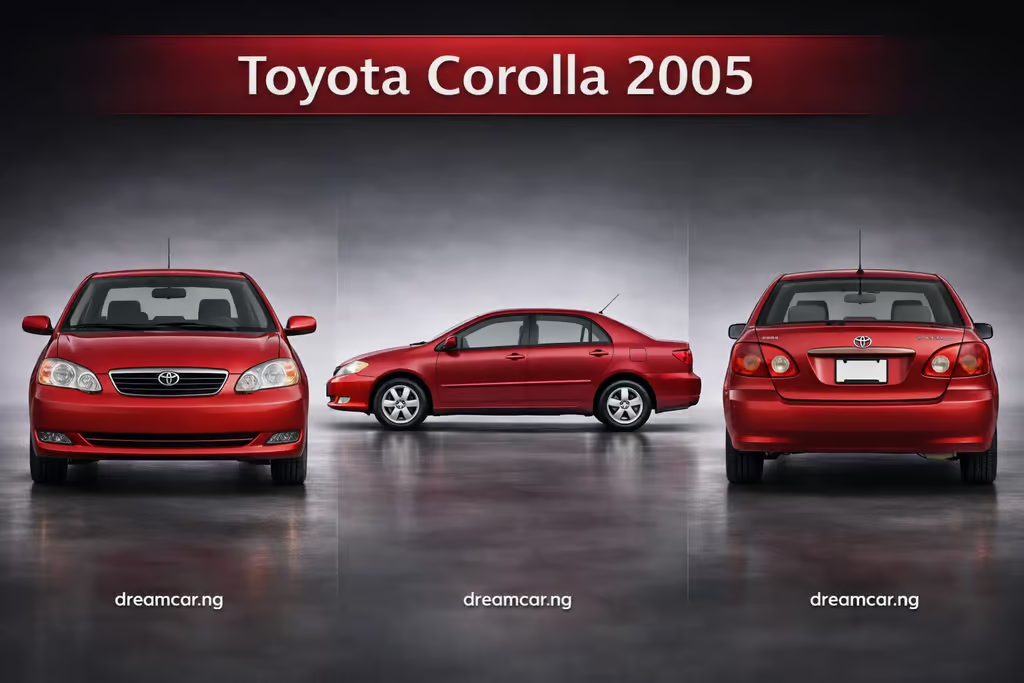
Price, Performance, Spec, Safety, Interior, Fuel Economy, Pros & Cons
The 2005 Toyota Corolla is within the E120/E130 9th generation and continues the strong market presence established by earlier models, and that makes it a familiar option for Nigerian buyers seeking a dependable used sedan. It is widely used across cities and smaller towns, serving as a private daily car, commercial transport option, and family runabout. This strong local usage gives buyers access to practical feedback on ownership costs and long term upkeep.
In Nigeria, the 2005 Corolla is valued for its calm driving feel and simple petrol engine setup that works well with common fuel grades. Owners often choose this model due to ease of repairs, widespread parts access, and a design that does not demand specialized tools or rare components. These traits reduce ownership stress, especially for buyers new to used cars.
This Toyota Corolla 2005 review and buyer guide focuses on the factors Nigerian drivers care about most. It examines used market prices, real world performance on urban and highway roads, fuel spending patterns, interior space and seating comfort, protective equipment, known mechanical faults, and everyday ownership pros and cons. The aim is to present a clear picture of what buyers should expect before committing money to this model.
Recommended: Toyota Corolla 2006 Buyer’s Review
₦8.5M Estimated
₦6.5M
₦5M
Skip the stress. For just ₦20,000, we’ll match you with verified dealers, help you avoid scams, and get your ideal car within 7 days.

The 2005 Corolla tends to sit a bit higher on the price scale than the 2004 due to incremental improvements and ongoing demand. Tokunbo examples generally go for about ₦5.5 million up to roughly ₦7 million, though well-presented cars with lower mileage can edge slightly above that upper band in active markets.
Local Nigerian used 2005 Corollas sometimes list between about ₦4 million and ₦5 million, with the spread reflecting how clean the interior looks, tyres, brakes, and engine bay condition.
Mileage plays a big role since a Corolla averaging 150,000 km will generally price lower than one showing less than 100,000 km, and as a buyers, you can use that to negotiate thousands off the listed amount.
Dealers in Lagos State might list a 2005 with fresh service history more aggressively than a similar unit in Port Harcourt, but the Lagos market also draws more buyers so turnover is quicker.
Private sellers usually price slightly beneath dealer adverts, though you should budget for potential repairs that a dealer might already have addressed. The 2005 model keeps good resale strength because Toyota parts are abundant and many garages are familiar with this year’s common issues.
Compare With: Toyota Corolla 2004
Inline-4 petrol
Automatic & Manual
Sedan
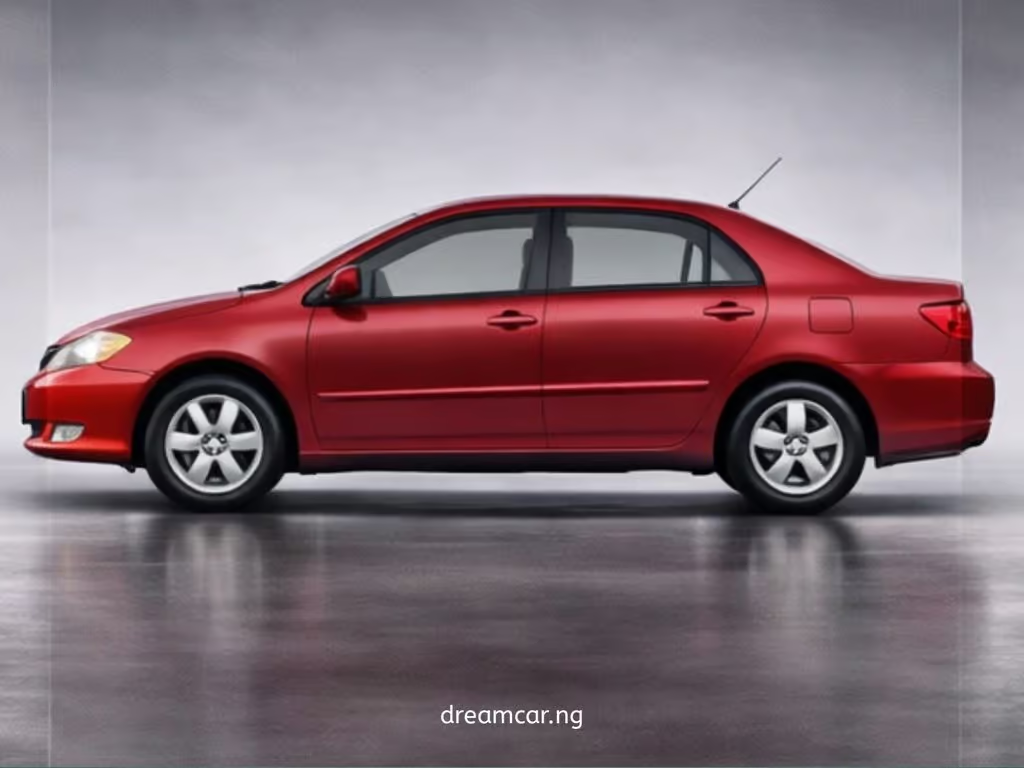
The 2005 Corolla sold and used in Nigeria typically comes with a 1.6 litre or 1.8 litre petrol inline four engine paired with front wheel drive. Manual and automatic transmissions are both common, especially on imported units.
Power delivery spans roughly 109 to 126 horsepower, while torque output ranges around 150 to 170 Nm depending on engine choice. Ride height sits in the mid 140 to 160 mm band, influenced by wheel size and suspension condition.
Acceleration feels controlled and predictable, suited to urban driving. Highway performance is stable at cruising speed with the engine running calmly. On uneven roads, the chassis absorbs mild bumps well, though badly damaged surfaces demand careful steering.
Front-Wheel Drive
City Driving: 10.8 km/L
Highway: 15.9 km/L
City: 25.5 MPG
Highway: 37 MPG
The 2005 Corolla continued with the same petrol and occasional diesel options as 2004 with common engine sizes from 1.6L to 1.8L, maintaining similar economy: roughly 25.5 MPG city and 37 MPG highway on most trim. Given that fuel efficiency typically sits around 10.8 – 15.9L/100 km for city and expressway driving. Realistic Nigerian monthly fuel costs on petrol could be ₦1ook for regular commuting.
Routine servicing typically stays in the ₦30,000 range, while major jobs like brake or suspension overhauls range from ₦60,000-₦150,000 if parts are needed.
The 2005 Corolla benefits from very high spare parts availability nationwide and competitive pricing because it’s one of the most common Corolla years on Nigerian roads. Mechanics know this model well, which means lower labor costs and fast turnaround for servicing and repairs.
Radio / CD
Five Seaters
385 Liters
The 2005 Corolla keeps a familiar cabin with the 2004 but adds a slightly improved seat design that feels better during longer drives. It carries five occupants without crowding, especially in front where leg space feels relaxed. Seats come in cloth upholstery, chosen for breathability in hot weather.
Rear legroom is modest but usable, while head clearance remains friendly even with the roof liner intact. The center console features a radio and CD system, sometimes paired with cassette in Nigerian imports. Air conditioning is manual and effective, pushing cold air quickly once the engine settles.
Noise inside the cabin stays controlled at low and mid speeds, with tyre sounds only becoming noticeable on rough roads. Boot space remains generous at roughly 385 litres, handling groceries or school bags with ease. The rear seat can be folded when extra loading length is needed. Interior panels and seat fabric are known for lasting many years without sagging or rattling.
Dual Front (Two)
Yes
No
The 2005 Corolla shows minor improvements in occupant protection but still reflects early 2000s safety priorities. Dual front airbags were widely fitted, while side airbags were optional and uncommon in Nigerian imports. ABS availability improved slightly compared to 2004, yet many used examples on Nigerian roads still lack it due to trim selection during import.
Electronic stability systems were not part of the design. Braking hardware is reliable for daily driving, offering predictable stopping power, though emergency performance depends heavily on tyre quality and maintenance. The chassis is well engineered, with good torsional strength that limits cabin distortion on bad roads. Body panels remain light and susceptible to dents, especially in Lagos and Port Harcourt traffic conditions.
Suspension durability is a strong point, with struts and control arms surviving years of potholes when properly maintained. In crash discussions, the 2005 Corolla earned respectable ratings for its era, though leg protection was noted as an area of concern in frontal tests. Highway behavior is stable up to moderate speeds, but crosswinds and worn shocks can unsettle the car. For Nigerian buyers, safety largely depends on mechanical condition rather than factory electronics.
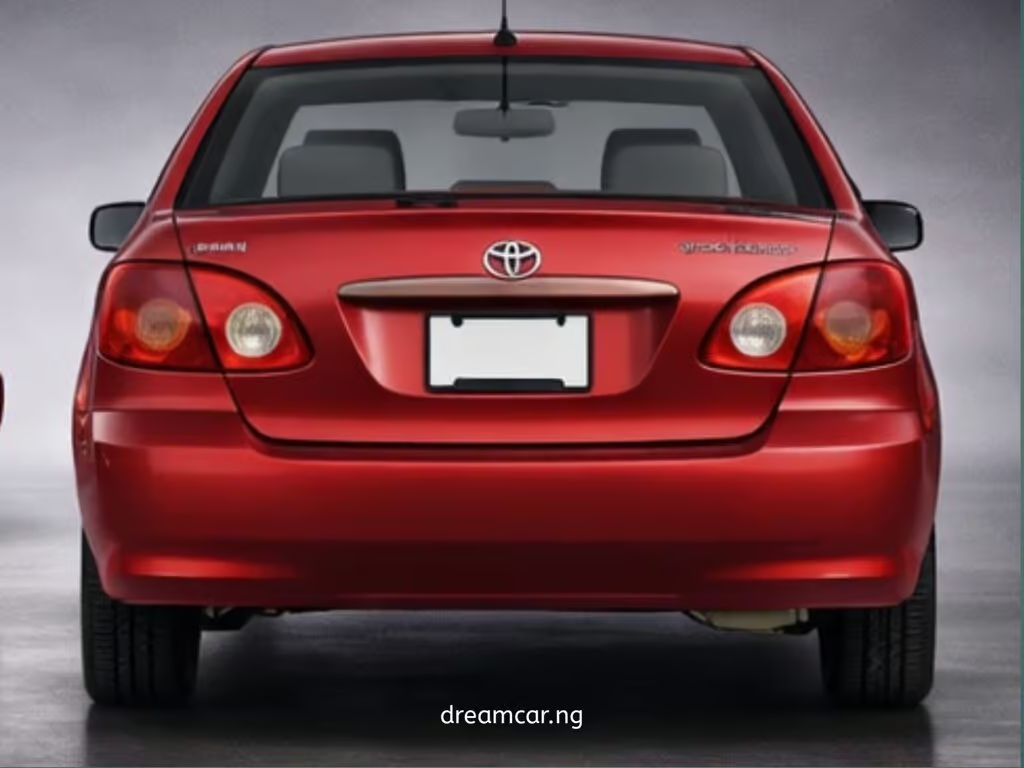
The 2005 Corolla shares much mechanical DNA with the 2004 but with a few shifts in complaint patterns. Older owners often report starter and hot-start problems where the engine cranks slowly or not at all after short drives in stop start conditions typical of Lagos and Abuja traffic. There are also loose reports of fuel injection or EVAP system faults triggering the check engine light without clear cause.
Mechanical forums note that engine noise or ticking can be a sign of prolonged oil change intervals. Confirm service history and listen for unusual engine sounds at idle and higher RPM, as neglect can speed up wear on valvetrain and bearings.
Rust and body panel corrosion are more common on this year compared to later ones, so check rocker panels, door sills, and the underside of wheel wells carefully. Interior plastic wear is typical; test all switches and windows.
If you’re ready to buy, we’re ready to connect you. Get direct access to verified dealers near you for a fast, safe and stress-free deal with just ₦20K
Tell us your budget and location. For ₦20k, we’ll connect you with verified dealers, help you avoid scams, and find your ideal car in as little as 7 days.
Dreamcar.ng reviews are produced by a research team with direct exposure to auto market across Nigerian cities. Our analysis is based on dealership interactions, discussions with mechanics, observed market pricing patterns, and independent research. Each review reflects real Nigerian ownership conditions including fuel quality, road conditions, spare parts accessibility, maintenance realities, and long-term running costs, to help buyers make informed and practical decisions. While vehicle specifications and experiences can vary by trim level, our reviews focus primarily on the most common and widely circulated trims on Nigerian roads, reflecting what the average buyer is most likely to encounter.