
Price, Performance, Spec, Safety, Interior, Fuel Economy, Pros & Cons
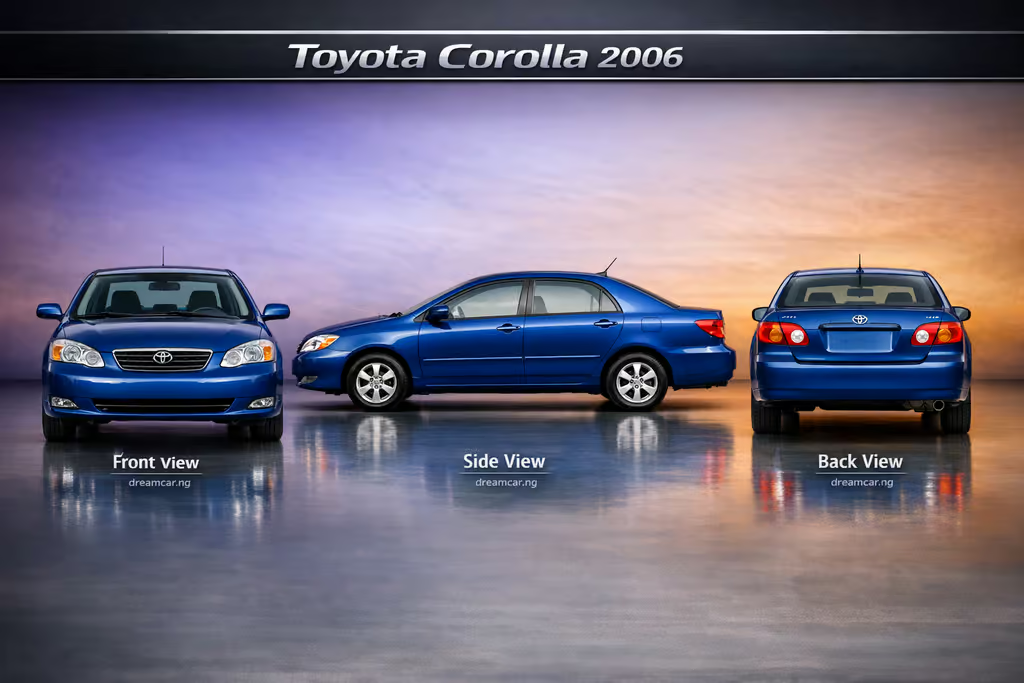
The Toyota Corolla 2006 is a well established option in the Nigerian used car scene, often chosen by buyers who want a balance between age, price, and everyday usability. Its presence across taxi fleets, private garages, and office parking areas provides valuable hint on how the car handles prolonged use under Nigerian conditions. This makes it easier for buyers to judge real ownership experience.
Most Nigerian market units arrive as used imports, paired with petrol engines known for steady operation and manageable fuel needs. The 2006 model sits firmly within the E120/E130 9th generation and benefits from a layout that supports routine servicing without high labor costs. Mechanics across the country are familiar with its systems, and spare parts remain easy to source through local markets and dealers.
This Toyota Corolla 2006 review and Nigerian buyer guide breaks down the essentials buyers need to understand. It covers prevailing prices, engine behavior during city traffic and long trips, fuel and service expenses, seating layout and ride comfort, protective systems fitted to common trims, frequent workshop issues, and a clear assessment of strengths and shortcomings based on everyday Nigerian use.
See also: Toyota Corolla 2007 Review
₦9.5M
₦7M
₦5.5M
Skip the stress. For just ₦20,000, we’ll match you with verified dealers, help you avoid scams, and get your ideal car within 7 days.

For the 2006 Corolla, pricing tends to reflect its position as a solid mid-2000s model that many commuters and small business owners trust. Tokunbo 2006 units often list around ₦5 million up to roughly ₦7 million, and you’ll notice that condition swings pricing quite a bit.
Meaning vehicles with clean service records and fewer dents push towards the top of that scale. Nigerian used cars of this year commonly trade roughly within the ₦4.5 to ₦6 million band, and the cheaper end usually indicates higher mileage or more visible wear.
Location influences price too, in Lagos or Port Harcourt, a neat 2006 Corolla might be listed higher because buyers there often are willing to pay a premium for a good example, while in smaller towns listings sit lower due to softer demand.
Dealers generally add a few hundred thousand naira above private seller prices, often covering basic checks and minor warranty support, though private sellers can be more flexible on cash deals. Mileage sensitivity is pronounced here; engines that have been lightly used with regular oil changes and brake servicing hold their appeal and list nearer the high end of the range.
Resale strength is good due to the year’s reputation for reliability and ease of maintenance.
Compare With: Toyota Corolla 2005
Inline-4 petrol
Automatic & Manual
Sedan

For 2006, Nigerian buyers still get the familiar 1.6 litre 3ZZ FE petrol engine with front wheel drive layout. Power delivery stands at about 109 horsepower with torque in the 150 Nm range.
Buyers can choose between manual and automatic gearboxes, both proven for long term use. Ride height remains around 150 mm, which works best on well graded roads.
Acceleration feels smooth off the line, with enough pull for overtaking at moderate speed. Highway driving feels settled at cruising speed, especially with proper wheel alignment. On rough surfaces, the Corolla prefers careful pace to protect suspension components.
Front-Wheel Drive
City Driving: 10.8 km/L
Highway: 15.9 km/L
City: 25.5 MPG
Highway: 37 MPG
The 2006 Toyota Corolla came with petrol and diesel options, with petrol engines (like the 1.6 L VVT-i) averaging around 10.2 – 11.05 L/100 km (~24 – 26 MPG) for city driving and highway around 14.9 – 16.1 L/100 km (~35-38 MPG) depending on engine choice.
Fuel type for most private buyers in Nigeria is petrol; at current Nigerian petrol prices, if you drive ~800 km monthly, expect fuel costs of roughly ₦85,000-₦120,000 per month depending on city vs highway mix. Routine services like oil and filter changes often run low cost like ₦15,000-₦30,000, while major maintenance (timing components, brake jobs) can be ₦70,000-₦150,000 every 40k-90k km.
Spare parts for a 2006 Corolla are very widely available, and prices are affordable compared to many older imports. Nigerian mechanics are highly familiar with this generation, which helps keep labor costs down and problem diagnosis quick.
Radio / CD
Five Seaters
385 Liters
By 2006, the Corolla’s interior felt slightly better than the 2005 , with better seat padding and a calmer cabin mood. Five people fit in the car naturally, with front occupants enjoying supportive seating for daily commuting. Cloth seats dominate this model year, often darker in color to hide stains.
Rear legroom works best for two adults, while headroom stays open and airy. The dashboard layout is clean, featuring a radio and CD player that still works well even after years of use. Manual climate control is standard, and cooling strength suits Nigerian heat once gas levels are correct.
Engine and road noise stay well muted during city driving. Boot space is around 385 litres, making it useful for traders and families alike. The rear seat folds down to allow transport of longer items. Cabin plastics feel firm and resistant to cracking, even after long exposure to sun and dust.
2-4, Varies by trim
Yes
No
The 2006 Corolla represents one of the most common variants in Nigeria and its safety profile reflects that popularity. Front airbags were standard across most trims, while side airbags remained optional and rarely seen locally. ABS appeared more frequently on European imports, though Japanese market cars often omitted it.
Stability control was still absent in the 2006 Corollas we have in Nigeria but brake performance is dependable in normal use, with solid pedal feedback, but repeated hard stops expose the limits of the braking system. Chassis construction is one of this model’s strengths, with a rigid passenger cell that resists twisting on uneven roads. Body panel thickness is modest, prioritizing weight reduction over impact resistance, which explains the ease of cosmetic damage in minor collisions.
The design of suspension suits Nigerian road conditions, absorbing potholes without frequent component failure when serviced correctly. Crash reputation is generally positive for low to moderate speed impacts, earning trust among taxi operators and families alike. On highways, the car feels planted at cruising speed but lacks advanced aids for sudden maneuvers. Structural resilience on poor roads remains one of its strongest selling points locally.

For the Toyota Corolla 2006, owners frequently mention check engine lights tied to the EVAP system (gas cap seals, purge valves) and occasional hard starts that can be environmental or sensor related. Manual models can have high-clutch wear if used hard without fluid changes, so check for slip under acceleration.
Transmission overall is better than earlier models, but some high mile cars show shifting delays in urban usage. For suspension wear, listen for thuds over bumps and check wheel alignment.
In Nigerian conditions, inspect the cooling system hoses and radiator cap for signs of heat cracking due to frequent traffic heat. Belts and tensioners should be checked for slack or cracking, a common neglected wear point.
Electrical gremlins, like interior light and power socket failures, occur more in cars with aftermarket audio or alarm installations. Confirm all door switches and relays operate reliably.
If you’re ready to buy, we’re ready to connect you. Get direct access to verified dealers near you for a fast, safe and stress-free deal with just ₦20K
Tell us your budget and location. For ₦20k, we’ll connect you with verified dealers, help you avoid scams, and find your ideal car in as little as 7 days.
Dreamcar.ng reviews are produced by a research team with direct exposure to auto market across Nigerian cities. Our analysis is based on dealership interactions, discussions with mechanics, observed market pricing patterns, and independent research. Each review reflects real Nigerian ownership conditions including fuel quality, road conditions, spare parts accessibility, maintenance realities, and long-term running costs, to help buyers make informed and practical decisions. While vehicle specifications and experiences can vary by trim level, our reviews focus primarily on the most common and widely circulated trims on Nigerian roads, reflecting what the average buyer is most likely to encounter.