
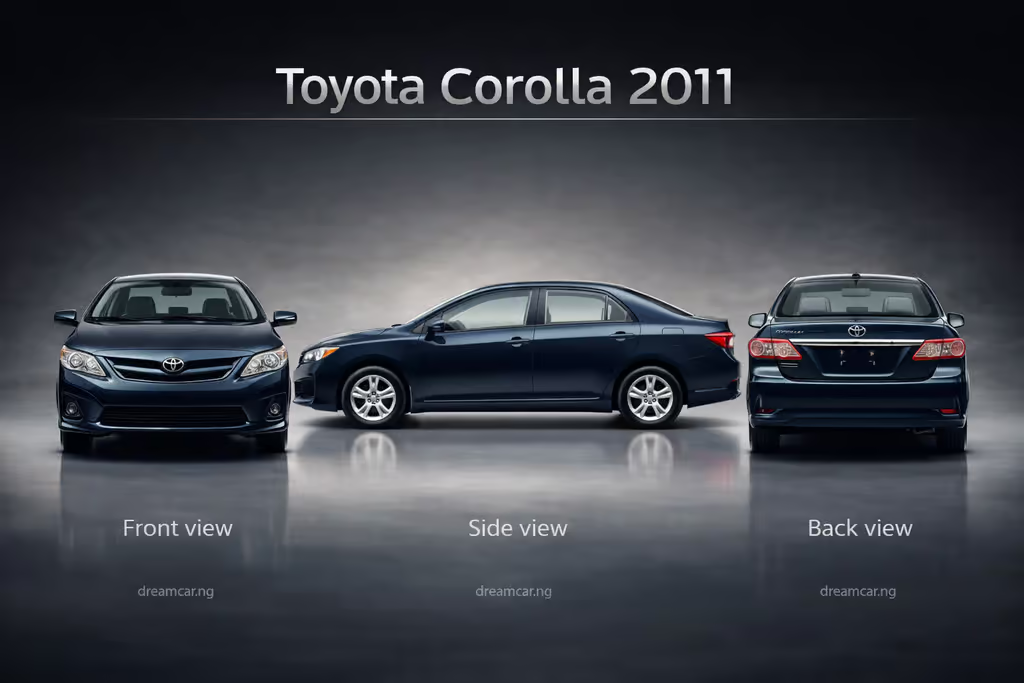
Price, Performance, Spec, Safety, Interior, Fuel Economy, Pros & Cons
The Toyota Corolla 2011 targets Nigerian buyers who want a balance of modern design, smooth driving, and controlled ownership costs. It is popular among professionals and families seeking a dependable daily car with improved interior layout and exterior appeal. It is present across Nigerian cities like Lagos, Abuja, Port Harcourt and that gives buyers access to real usage feedback.
Driving performance benefits from refined engine tuning and better suspension response, making the car comfortable on rough roads and expressways alike. Fuel consumption still remains reasonable for its class, while service routines stay predictable due to shared components with earlier corollas
This review for the Toyota Corolla 2011 examines all major ownership factors for new buyers. It looks at market prices, road performance, fuel spending, cabin comfort and passenger space, protective features offered on Nigerian market units, common workshop issues, and a balanced review of strengths and weaknesses. This guide is written to support informed purchase decisions grounded in everyday Nigerian driving conditions.
See also: Toyota Corolla 2012 Review
₦16.5M
₦13M
₦10M
Skip the stress. For just ₦20,000, we’ll match you with verified dealers, help you avoid scams, and get your ideal car within 7 days.

For 2011 Toyota Corolla units in Nigeria, the price scene is noticeably firm compared to older years because many buyers see it as a good balance between modern features and manageable cost. Tokunbo examples are often listed by dealers around roughly ₦10 million up to about ₦13.5 million on mainstream classified sites, reflecting current foreign used supply and how dealers import cars with decent mileage and service records.
Nigerian used examples that have circulated for a few years usually list lower, often around ₦9 million up to about ₦11 million depending on condition and mileage.
For instance, a Toyota Corolla 2011 with under 100,000 km will command higher offers because buyers value a smaller odometer reading as an indicator of longer useful life. Vehicles showing higher odometer figures often sit longer on seller lots and can be pitched at lower asking prices by private sellers who want cash deals quickly.
Condition plays a big role too; clean bodywork, a genuine service record, and running electrical fittings can add significant worth. Lagos and Abuja listings often sit at the stronger end of the price spectrum because demand in those markets is high and buyers expect better examples.
Private sellers on the other hand usually start their listings lower than dealer boards, but you can negotiate only if you check vital parts like brakes and suspension before paying. Toyota Corolla 2011 holds decent resale performance among older buyers because the platform is familiar and parts logistics are straightforward across Nigeria’s major cities.
Recommended: Toyota Corolla 2010 In Nigeria
Inline-4 petrol
Automatic & Manual
Sedan

For the Nigerian market 2011 Corollas, it continue with the 1.8 litre naturally aspirated petrol engine. Output stays at about 132 horsepower and 174 Nm of torque, feeding the front wheels through familiar gearboxes.
Ride height does not change much, remaining average for a compact sedan. Acceleration feels confident during everyday driving, especially in traffic gaps. Highway travel is calm with good straight line control even at higher speed.
On broken roads, suspension components handle repeated bumps better than older generations, though deep craters still require careful navigation.
Front-Wheel Drive
City Driving: 10.8 km/L
Highway: 15.9 km/L
City: 25.5 MPG
Highway: 37 MPG
The 2011 Corolla again uses regular petrol with similar powertrain options as 2010, delivering roughly 24–26 mpg in city driving and about 36–38 mpg on highways across manual and automatic variants, equating to an approximate 10.8-15.9 L/100 km range.
In Nigeria, with 800 km of monthly travel, fuel consumption demands typically translate to about ₦90,000–₦120,000 per month in petrol usage, assuming moderate traffic conditions and consistent cruising speeds. This year isn’t radically different in fuel use from 2010, but refined engine tuning often yields slightly smoother highway economy for buyers who mainly travel long distances.
Routine services like oil, air filters, spark plug changes, generally cost less than ₦30k in local workshops, and intermediate maintenance like battery, brake, and suspension work often less than ₦300K dependent on the exact part needed.
Spare parts remain readily available and affordable across Nigerian auto markets due to this generation’s popularity, and used parts are abundant too. Nigerian mechanics have extensive experience with the 2011 Corolla, so labor costs and service times tend to stay reasonable and predictable, which is ideal for buyers focused on minimizing long-term running costs.
Radio / CD / Aux
Five Seaters
450 Liters
Stepping into the 2011 Toyota Corolla you still find that solid seating for five adults, with front seats that slide and recline easily so a tall driver can settle in without fuss. Seat covering is usually cloth, durable and welcoming even when you’re coming in with sweaty clothes after Lagos traffic.
The front cabin offers broad legroom, about 105.9 cm, and rear legroom around 92.2 cm, giving most passengers space to stretch on longer trips. Headroom is decent too, with almost four inches of clearance up front and a bit less in the back, so passengers don’t feel boxed in.
The dashboard includes a basic audio setup with an FM/AM radio, CD, USB and aux input, and steering-mounted audio control stays handy on daily drives. Air conditioning is manual but effective at cooling the cabin in hot weather, an especially welcome feature when sunlight is strong.
Boot space is healthy at around 15.9 cubic feet or 450 liters, enough for shopping bags or airport luggage, and the rear seat folds in a 60/40 fashion for carrying longer loads. Toyota fitted the cabin with firm plastics and upholstery meant to handle frequent use without rattles, so years on busy Nigerian roads don’t wear it out quickly.
2-4, Varies by trim
Yes
Some Trims
The 2011 Toyota Corolla represents one of the safest iterations of this generation. Front, side, and curtain airbags were widely fitted, significantly improving head and chest protection. ABS was standard, while stability systems appeared on many trims, especially European imports.
Brake performance is dependable, with consistent stopping behavior under varied conditions. The chassis benefits from reinforced safety zones, enhancing occupant protection in severe impacts. Body panels are still light but well aligned, to reduce intrusion during collisions.
Crash reputation is strong, supported by improved head protection systems and side impact performance. Suspension durability remains a highlight, coping with prolonged exposure to poor road surfaces without major structural fatigue. On highways, the car feels stable and predictable, even at sustained speeds. Structural resilience on rough Nigerian roads remains excellent, making the 2011 model one of the safest used Corolla options available locally.
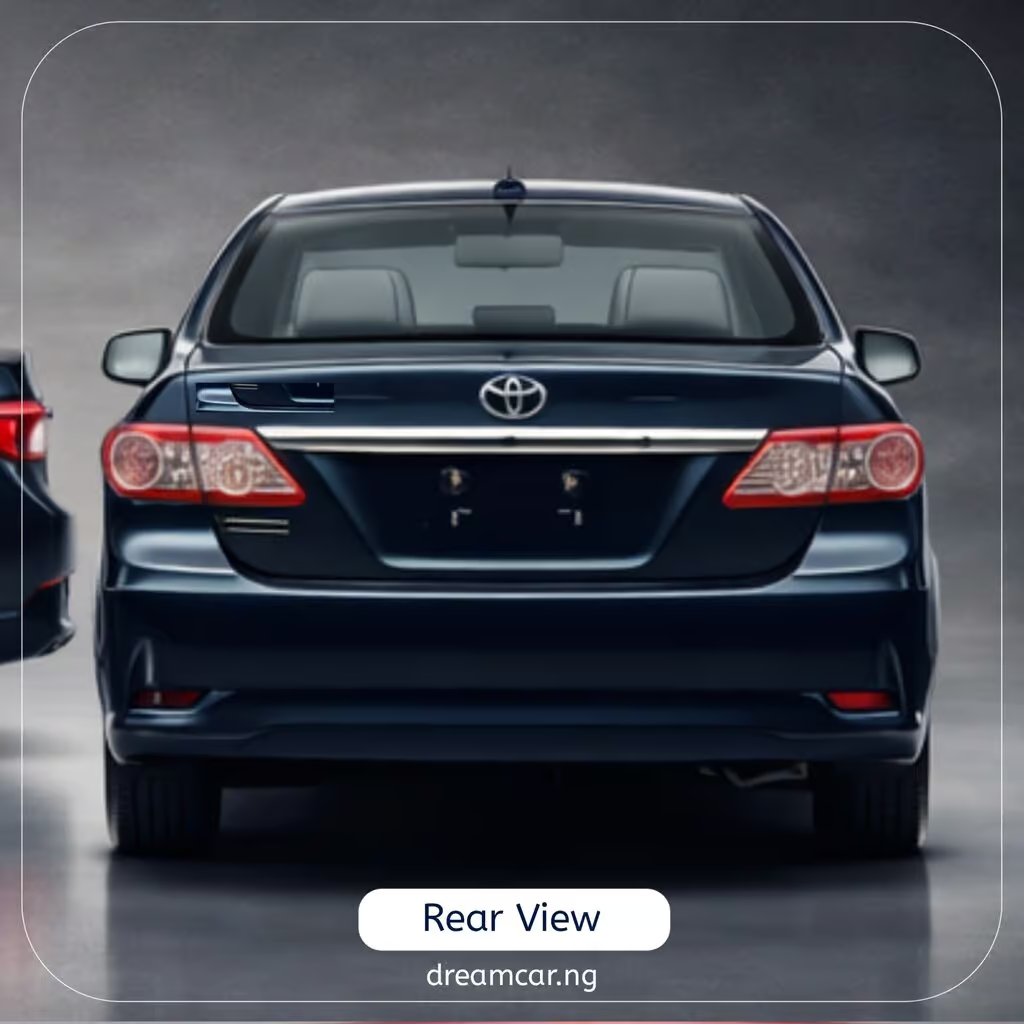
Owners of the 2011 Toyota Corolla emphasize body paint fade and surface rust more than mechanical faults, particularly in parked units that were exposed to sun and moisture. Check door jambs and hood edges for bubbling paint or rust through.
Engine reliability is still strong, but check for oxygen sensor drift and catalytic converter ageing, which will show as check engine lights and can be expensive to sort locally.
Ignition coils and spark plugs if never replaced can cause misfires; have the seller show recent maintenance and do general checkup on they one you want to buy before buying.
If you’re ready to buy, we’re ready to connect you. Get direct access to verified dealers near you for a fast, safe and stress-free deal with just ₦20K
Tell us your budget and location. For ₦20k, we’ll connect you with verified dealers, help you avoid scams, and find your ideal car in as little as 7 days.
Dreamcar.ng reviews are produced by a research team with direct exposure to auto market across Nigerian cities. Our analysis is based on dealership interactions, discussions with mechanics, observed market pricing patterns, and independent research. Each review reflects real Nigerian ownership conditions including fuel quality, road conditions, spare parts accessibility, maintenance realities, and long-term running costs, to help buyers make informed and practical decisions. While vehicle specifications and experiences can vary by trim level, our reviews focus primarily on the most common and widely circulated trims on Nigerian roads, reflecting what the average buyer is most likely to encounter.