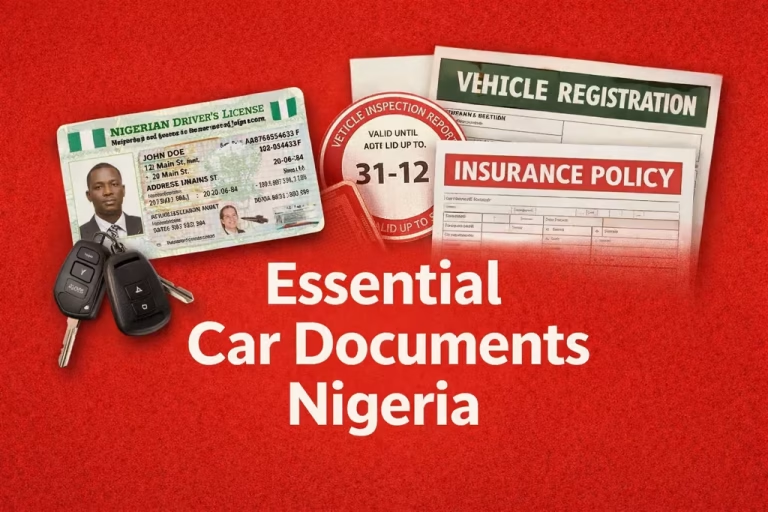
If you want to drive legally and confidently on Nigerian roads, having the right car documents in Nigeria is just as important as keeping your engine, tyres, and brakes in top shape.
For private car owners, valid vehicle papers are what protect you from FRSC stops, police checkpoint issues, VIO penalties, failed insurance claims, and ownership disputes.
Across Nigeria, traffic authorities continue to enforce strict checks on documents required to drive in Nigeria, and private motorists are expected to present complete, valid particulars on demand.
Current enforcement and registration guidance still places driver’s licence, vehicle licence, proof of ownership, insurance, road worthiness, and registration number allocation among the most important Nigerian vehicle papers every driver should keep current.
Why These Car Documents Matter in Nigeria
For a private car owner, these papers do much more than help you pass a checkpoint. They establish your legal authority to drive, prove your title to the vehicle, connect your plate number to the FRSC national database, validate your insurance certificate, and protect your interests during resale, theft recovery, or accident claims.
This is why the most searched terms around FRSC required documents, documents police check in Nigeria, and vehicle papers for private cars all point back to these core records. The FRSC registration platform itself includes services for new registration, vehicle revalidation, and number plate verification, showing how central documentation is to lawful road use in Nigeria.
Essential Documents Every Private Car Owner Must Have
Driver’s Licence
Your driver’s licence is the first and most personal document in your possession. It proves that you have been trained, tested, and approved by the Federal Road Safety Corps to operate a motor vehicle on public roads.
This document carries your name, photo, license class, issue date, and expiry date, and it is often the very first paper any FRSC officer or police officer requests at a checkpoint.
Since the FRSC continues to provide online and physical renewal channels, keeping this licence valid is one of the most important parts of private car compliance in Nigeria.
Vehicle Licence
The vehicle licence confirms that your car has been licensed for legal road use for the current year. Many people confuse this with proof of ownership, but it serves a completely different legal purpose.
It is your annual authorization for the vehicle itself to be used on Nigerian roads. Because it is tied to your plate number and registration record, it is one of the most visible FRSC documents for private cars and one of the first things officers check during document inspection.
Proof of Ownership Certificate
This document confirms that the car legally belongs to you. For private vehicle owners, this is one of the most valuable papers because it protects your rights during resale, transfer, theft investigations, and title disputes.
It also plays a key role in car ownership verification in Nigeria, since it links your name to the engine and chassis details in the registration database.
Road Worthiness Certificate
Your road worthiness certificate confirms that the vehicle passed safety inspection and is fit for public roads. This includes checks on tyres, brakes, headlights, mirrors, wipers, and suspension systems.
Even though some private owners only pay attention to it when VIO enforcement gets stricter, it is still one of the most relevant documents required by Nigerian police and VIO during compliance checks.
It also supports a stronger safety record for older vehicles.
Plate Number Allocation Paper
The plate number allocation paper, also known as allocation of registration number, ties your physical number plate to the FRSC database. It proves that the plate attached to your private car was lawfully issued and matches your vehicle registration record.
This becomes very important during plate verification, cloned number plate investigations, vehicle resale, and lost plate replacement.
Since FRSC now supports direct number plate verification online, this paper has become even more important for vehicle registration certificate.
Motor Insurance Document
A valid motor insurance document is compulsory for every private car on Nigerian roads. Third party insurance is the minimum legal requirement, and it protects you when your vehicle causes damage or injury to another road user.
The Nigerian Insurance Industry Database now gives both car owners and law enforcement agencies a direct way to verify authenticity, which has made it much harder for fake insurance slips to pass roadside checks.
e-CMR Document
The Electronic Central Motor Registry (e-CMR) is a mandatory, digital vehicle registration system to control vehicle theft, enhance security, and provide digital proof of ownership.
It adds another layer of ownership and scam or theft protection to your paperwork and helps security agencies trace the identity history of your vehicle and can become very useful during police verification, theft recovery, or purchase due diligence for used cars.
For premium private cars and SUVs, this paper strengthens the ownership trail and helps prevent identity cloning issues in the Nigerian used car market.
Tint Permit
If your private car has factory fitted tinted glass or custom dark windows, the tint permit is essential. Security agencies in Nigeria closely monitor tinted vehicles due to visibility concerns, so this paper confirms that your glass tint is legally approved.
It is highly relevant for SUVs and executive private cars where darker rear glass is common.
What Happens If You Drive Without These Documents
Driving without complete essential car documents in Nigeria can quickly lead to fines, checkpoint delays, suspicion of stolen vehicle status, insurance claim rejection, court summons, or outright impoundment.
Recent Nigerian vehicle compliance reports still confirm that missing papers are one of the top reasons motorists get delayed by FRSC, VIO, and police officers.
For private owners, even one expired paper can trigger legal and financial stress far beyond the cost of timely renewal.
So again, here are the possible consequences include:
- Instant fines
- Vehicle impoundment
- Long checkpoint delays
- Police suspicion of theft
- Failed insurance claims
- Court summons in serious cases
- Inability to resell fast
How Often Should You Renew Your Vehicle Documents in Nigeria
For the best vehicle paper renewal Nigeria workflow, your driver’s licence should be renewed based on its issued validity period, often three to five years.
Your vehicle licence and motor insurance document should be renewed yearly. Road worthiness is often checked yearly where required by state VIO processes.
Your tint permit and proof of ownership certificate do not always follow the same yearly cycle, though some state agencies now request periodic revalidation for internal record updates.
The FRSC and NIID platforms make it easier to keep these timelines in view through digital verification systems.
How to Keep Your Car Documents Safe
The smartest way to protect your Nigerian vehicle papers is to keep the original proof of ownership and allocation papers at home in a waterproof file, while storing clear photocopies in your glove compartment where accepted.
Digital scans of the original copies should also be saved in Google Drive, email, and WhatsApp for instant access.
As a private vehicle owner, another pro tip is that you create calendar reminders one month before each expiry date so you won’t run into document issues at checkpoints.
This simple habit improves both legal compliance and resale readiness.
Frequently Asked Questions
Can police seize my private car for expired papers in Nigeria?
Yes. Expired driver’s licence, insurance, vehicle license, or missing tint permit can all lead to fines and possible impoundment during enforcement stops.
Is third party insurance enough for a private car in Nigeria?
Yes, it is the minimum legal requirement, though many private owners choose comprehensive insurance for stronger protection.
Do I need originals or photocopies of my car papers?
For sensitive documents like proof of ownership, it is safer to keep the original at home and travel with clear photocopies, except when a direct transfer or official inspection specifically requests the original.
Is ECMR compulsory for private cars?
It may not be requested at every checkpoint, but it is highly valuable for theft protection, verification, and resale due diligence.
Do factory tinted cars still need a tint permit?
Yes. If the glass tint significantly affects visibility, officers may still request a valid tint permit even when it came factory fitted.