
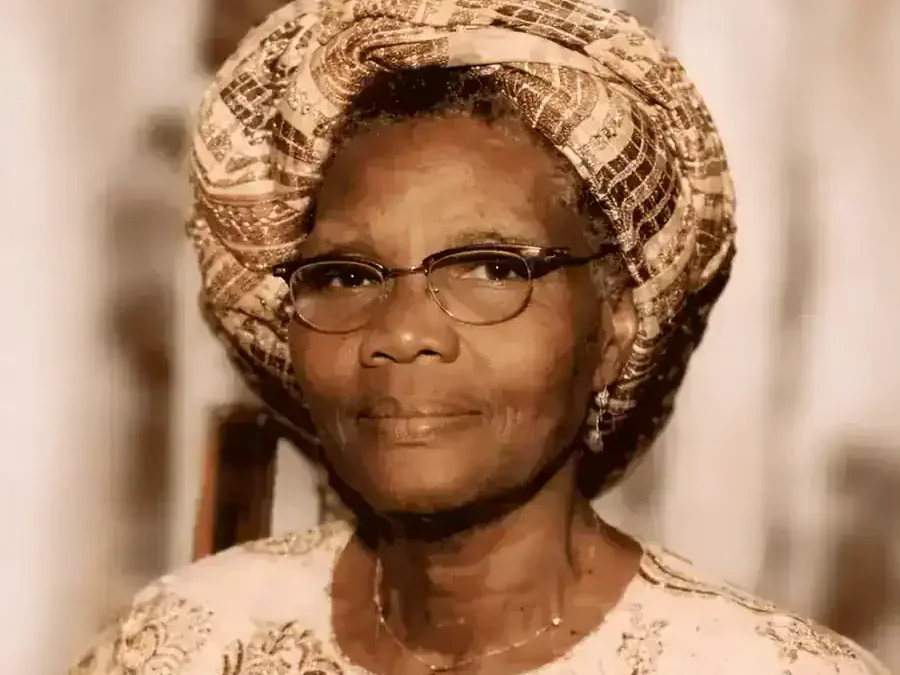
When you search for the first woman to drive a car in Nigeria, one name keeps appearing across credible historical records and biographies: Funmilayo Ransome-Kuti. Her story sits at the intersection of mobility, colonial society, and women’s struggle for space in public life.
You are not just reading about someone who held a steering wheel before other women; you are stepping into a period when driving itself symbolized power, access, and social permission.
Historical accounts consistently describe her as the first Nigerian woman to drive a car, particularly in Abeokuta during the 1930s.
That moment carried weight far beyond transportation, it marked a visible shift in what a Nigerian woman could do in a society structured by both colonial rule and deeply rooted gender expectations.
To fully grasp the importance of this milestone, you need to understand the world she lived in, how cars arrived in Nigeria, why driving mattered, and how her decision to drive connected to a broader fight for rights.
The Arrival of Cars in Colonial Nigeria
Before you can appreciate what it meant for a woman to drive, you need to picture the early automobile era in Nigeria. Cars arrived during the colonial period, mostly controlled by European administrators, missionaries, and wealthy elites. Roads were limited, mechanical knowledge was rare, and vehicles themselves were expensive imports.
Driving in that environment required access to money, education, and connections. It also demanded a willingness to navigate colonial systems that often excluded Nigerians from full participation. Even among men, only a tiny number had the privilege to own or operate vehicles.
For women, the barrier stood even higher because social expectations defined women’s roles around domestic life, trade, or community structures that rarely included mechanical skills or mobility freedom.
So the idea of a woman driving a car in the early twentieth century did not fit the accepted social script.
That context explains why the first woman driver did not emerge quietly, her act stood out immediately because it disrupted both technological access and gender norms at the same time.
Funmilayo Ransome-Kuti and the Breaking of Barriers
When you look closely at Funmilayo Ransome-Kuti, you see a pattern of firsts that extend far beyond driving. She was born in 1900 in Abeokuta, educated in Nigeria and later in England, and returned home with exposure to ideas that challenged colonial and patriarchal structures.
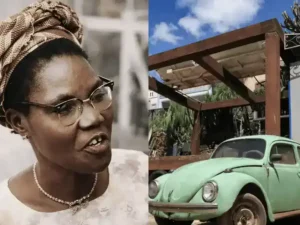
Her experience abroad played a key role in shaping her worldview. Education gave her access to spaces that many Nigerian women at the time could not reach and that exposure influenced her actions when she came back to Nigeria, including her decision to drive.
Records show that she and her husband imported a secondhand car from England in the mid-1930s, after which she became the first woman in Abeokuta to drive a car. Over time, that local milestone expanded into national recognition, with many historians and writers describing her as the first Nigerian woman to drive.
This distinction matters because early automobile history in Nigeria often began in urban centers like Lagos and Abeokuta, where colonial infrastructure existed. Being the first in Abeokuta placed her among the earliest female drivers in the country, and historical consensus elevated her position as a national pioneer.
Why Driving a Car Meant More Than Mobility
You might think driving simply means moving from one place to another, but in 1930s Nigeria, it carried deeper meaning. Cars represented access to colonial power structures, economic status, and social visibility.
When a woman drove a car during that period, she challenged multiple layers of restriction at once. She entered a male-dominated space, used a technology associated with colonial authority, and displayed independence in public.
For Funmilayo Ransome-Kuti, driving aligned with her broader philosophy. She believed women deserved equal access to education, political participation, and economic opportunities.
Her actions consistently reflected that belief, whether she organized women’s unions or led protests, which is exactly why she was known to pioneer many things aside driving.
What Else Is Funmilayo Ransome-Kuti Known For Beyond Driving
Funmilayo Ransome-Kuti did far more than become the first widely recognized woman to drive in Nigeria. When you look closely at her life, you are dealing with one of the most influential pioneers in Nigeria’s social and political history.
Her impact cuts across education, women’s rights, politics, and international activism, and many of her “firsts” shaped how modern Nigerian society functions today.
First Nigerian Woman to Play a Major Role in Organized Women’s Rights Movements
You cannot talk about women’s rights in Nigeria without encountering her name. She founded the Abeokuta Women’s Union in the 1940s, which grew into one of the most powerful grassroots movements led by women in West Africa at the time. This was not a symbolic group; it mobilized thousands of market women and challenged colonial policies directly.
Through this union, she pioneered mass female political organization in Nigeria. Before her, women participated in society, but not at that scale of coordinated resistance against authority.
First Nigerian Woman to Lead a Major Anti-Colonial Protest Movement
She led what became known as the Abeokuta Women’s Revolt in the late 1940s. You are looking at a movement where thousands of women protested against unfair taxation and administrative abuse under colonial rule.
This was not a quiet petition. It involved marches, sit-ins, and sustained pressure that forced the Alake of Abeokuta to temporarily abdicate his position. That level of influence from a woman leader was unprecedented in Nigeria at the time.
First Nigerian Woman to Formally Challenge Colonial Tax Policies Affecting Women
At a time when colonial systems largely ignored women in governance, she directly confronted taxation policies imposed on market women. These taxes were seen as unjust, especially since women had no political representation.
She pioneered the idea that women should not be taxed without representation, echoing global democratic principles but applying them in a Nigerian context. That argument later influenced broader political reforms.
One of the First Nigerian Women to Travel Widely for International Activism
She did not limit her work to Nigeria. She traveled internationally, representing Nigerian women in global conversations about rights and justice. This included visits to places like the United Kingdom and even the Soviet Union during a time when such travel was rare for African women.
By doing this, she pioneered Nigerian female participation in global political discourse, long before it became common.
First Nigerian Woman to Be Part of National Political Structures
She became one of the earliest Nigerian women to be involved in formal politics at a national level. She was part of political movements pushing for independence and reforms, including her involvement with nationalist groups.
Her presence in these spaces challenged the idea that politics was exclusively for men and opened doors for future female politicians in Nigeria.
Pioneer of Female Education Advocacy in Nigeria
Education for girls was not widely prioritized during her early years. She used her platform to advocate strongly for female education, emphasizing that women needed intellectual empowerment to achieve independence.
She helped expand access to education for girls and encouraged families to see its value. Today, when you see increasing female enrollment in schools, it connects back to early advocates like her.
One of the First Nigerian Women to Gain International Recognition and National Honors
She received national honors for her contributions, becoming one of the first Nigerian women to be officially recognized at that level. This recognition helped legitimize women’s contributions to national development in a society that often overlooked them.
Pioneer of Grassroots Political Mobilization Among Market Women
Her strategy was unique because she did not rely on elite circles alone. She organized market women, many of whom had little formal education, and turned them into a powerful political force.
This approach changed how activism worked in Nigeria. It showed that real power could come from everyday people when properly organized.
Early Voice for Gender Equality in Governance
Long before gender equality became a mainstream topic, she was already pushing for women’s inclusion in decision making processes while challenging both colonial authorities and traditional systems that excluded women.
Her advocacy for is part of what laid early foundations for conversations about representation that still continue in Nigeria as we have it today.
The Debate Around “First Woman to Drive a Car in Nigeria”
When you dig into historical claims, you will notice occasional debate. Some accounts suggest she might have been the first Nigerian woman with a driver’s license, while others argue she was simply the first widely documented female driver.
Even with those discussions, her position in history remains strong. Multiple sources still credit her as the first Nigerian woman to drive a car, and her role in expanding women’s visibility in public life remains undisputed.
This kind of debate often appears in early historical records, especially in colonial contexts where documentation favored certain groups over others. Many achievements by African women went unrecorded or underreported, which makes definitive “first” claims difficult to verify with absolute certainty.
Despite that, her impact goes beyond the label. Whether you view her as the first licensed driver or the first widely recognized female driver, her influence on Nigerian society stands clearly documented.
Comparing Her to Other Early Female Figures
When discussing early milestones, you may encounter other names connected to automobile history in Nigeria. For example, Efunroye Tinubu is often credited as the first woman to buy a car in Nigeria.
That distinction differs from driving. Owning a car does not necessarily mean operating it, especially during a time when chauffeurs often handled driving duties for wealthy individuals.
This comparison highlights how different “firsts” exist within the same domain. One woman may have been the first to own a vehicle, while another became the first to drive it herself.
Understanding these differences helps you see the broader evolution of women’s relationship with automobiles in Nigeria.
Today, you see women driving across Nigeria in cities like Lagos, Abuja, and Port Harcourt. Driving schools train both men and women, and vehicle ownership has expanded across different social groups.
That normalcy did not exist a century ago. It developed through gradual shifts influenced by pioneers like Funmilayo Ransome-Kuti.
When you sit behind the wheel today, you are part of a long historical progression. Each generation expanded access and normalized activities that once seemed unusual.
Her story connects directly to that evolution. It shows how individual actions can influence broader social change over time.
Conclusion: More Than the First Woman Behind the Wheel
When you ask who the first woman to drive a car in Nigeria was, the answer points to Funmilayo Ransome-Kuti. Yet stopping at that fact would miss the depth of her story.
She did not simply drive a car. She challenged expectations, expanded possibilities, and contributed to a larger movement for women’s rights in Nigeria.
Her achievement depicts a moment when technology, gender, and social change intersected. It shows how a single act can carry meaning far beyond its immediate context.
When you think about driving today, it feels ordinary. Her story reminds you that what feels normal now often began with someone willing to do something different.