

Price, Performance, Spec, Safety, Interior, Fuel Economy, Pros & Cons
The Toyota Camry 2011 represents the final production year of the Toyota Camry (XV40) before Toyota introduced a new generation for 2012. By this stage, the model had matured mechanically and stylistically, with most early production issues already resolved and features standardized across trims.
Structurally, the 2011 Camry remained a front-wheel-drive midsize sedan built for balanced everyday use. Its body size places it clearly above the Corolla, offering a wider stance, more rear legroom, and a larger boot capacity. The driving character is predictable and comfort-focused, with suspension tuning designed to absorb road imperfections rather than deliver sharp cornering performance.
Powertrain options included a 2.4-liter four-cylinder engine and a 3.5-liter V6 engine. A hybrid variant was also available, pairing a petrol engine with Toyota’s Hybrid Synergy Drive system and an electronic continuously variable transmission (eCVT). Petrol models were equipped with either a 5-speed automatic (four-cylinder) or a 6-speed automatic transmission (V6), depending on specification and market.
Inside, the 2011 model retained a practical dashboard layout with clearly arranged controls and improved material finishing compared to earlier XV40 years. Seating capacity remained five, with good cabin width and rear-seat space suited for family use or executive transport. Noise insulation and ride stability were consistent with the comfort-oriented design philosophy of the generation.
For 2011, the Toyota Camry largely carries over mechanically, yet Toyota expands feature availability across the lineup. Bluetooth connectivity becomes more widely accessible on LE and SE trims. Audio systems receive interface updates and broader compatibility for portable devices.
Navigation equipped models benefit from revised mapping data and faster processing. While core safety hardware remains unchanged, Toyota broadens the availability of certain features to additional grades. Inside, new fabric patterns and minor trim finish adjustments refresh the cabin subtly. Exterior updates are limited to new paint choices, with no sheet metal changes.
Hybrid variants continue without hardware revisions. Nigerian imports from this year typically show these incremental connectivity improvements, which differentiate them from earlier units. 2011 represents a final carryover year focused on equipment consolidation before the next full redesign.
The 2011 Camry lineup remained CE, LE, SE, XLE, and Hybrid, giving buyers a mix of standard, sporty, and eco-friendly choices.
₦12M
₦7.7M
In Nigeria, the 2011 Toyota Camry remains in strong demand, reflected in its relatively high resale value. Foreign used units typically sell for ₦12,000,000 but that is dependent on the exact trim, mileage, engine configuration and overall condition. Well equipped variants with lower mileage attract the highest prices.
Nigerian used units generally range from ₦6,500,000 to ₦8,000,000, with maintenance quality, accident history and interior condition influencing value. Vehicles with original paint and complete service records command a premium. Exchange rate fluctuations heavily affect Tokunbo pricing, while import duty, freight and port charges contribute to final cost.
Lagos, Abuja and Onne Port – Harcourt remains the most competitive market, while Ekiti and Abia state for instance often have higher price points due to reduced supply. Official dealership listings are uncommon, so pricing is largely set by independent dealers, importers and private sellers on jiji and other platforms
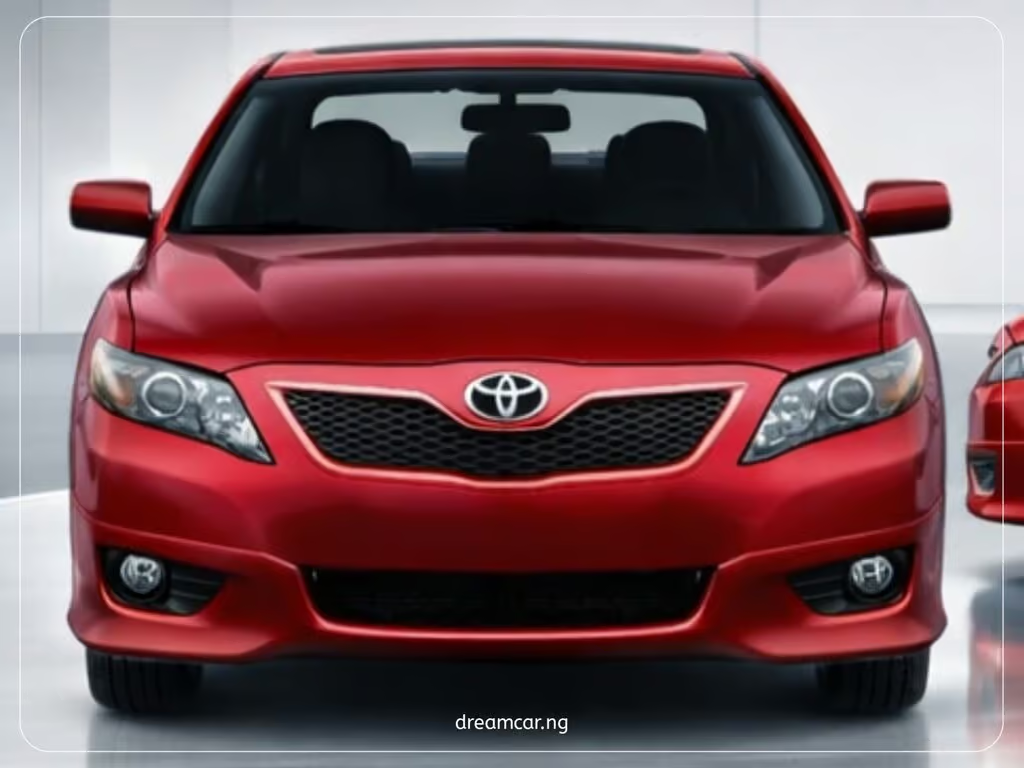
Petrol
Automatic & CVT
Sedan
The Toyota Camry 2011 carried over the 2010 Camry powertrain unchanged, including the 2.5-litre four-cylinder (169 hp) and 3.5-litre V6 (268 hp), both paired with 6-speed automatic transmissions.
Performance and driving feel remain largely the same. Acceleration is smooth and predictable, and the ride remains soft and quiet. Steering is light and progressive and not so sharp.
Under Nigerian conditions, the Camry continues to feel reliable and comfortable. The engines deliver smooth power for city traffic, while the V6 provides ample performance for overtaking on highways. The car’s cooling system and overall durability perform well in hot climates.
City: 22, Hwy: 32
9.3km/L
13.6km/L
The 2011 Toyota Camry base model returns 9.3km/l in city traffic and 13.6km/l on the highway. At ₦850 per litre, driving 1,500km monthly in urban conditions translates to approximately ₦137,000 in fuel expenses, while highway usage may cost around ₦94,000. In Nigerian cities where congestion is common, most owners should plan their fuel budget around the city figure.
Routine oil service averages ₦50K, and periodic brake and suspension maintenance should be expected. Maintaining proper tyre pressure and using quality engine oil help preserve fuel efficiency. Driving aggressively or operating consistently in heavy traffic will reduce achievable km/l and raise monthly fuel spending.
Check: EPA fuel economy by trims
Low
High
Very High
The 2011 Camry follows the same maintenance pattern as earlier XV40 models with the 2.4 litre four cylinder and 3.5 litre V6 engines. Nigerian conditions demand regular oil change along with routine inspection of brakes, cooling system, and suspension components. High mileage four cylinder units require monitoring for oil consumption, while the V6 benefits from timely spark plug replacement and cooling system care.
Timing chains reduce major scheduled replacement costs. The five speed automatic transmission is robust when fluid changes are not neglected. Suspension parts such as control arms and stabilizer links may require periodic renewal due to rough roads.
Spare parts supply remains extensive nationwide, covering engine internals, sensors, suspension assemblies, and transmission components through genuine and quality aftermarket channels. Nigerian mechanics are highly experienced with this generation, which ensure accurate diagnosis and straightforward repairs.
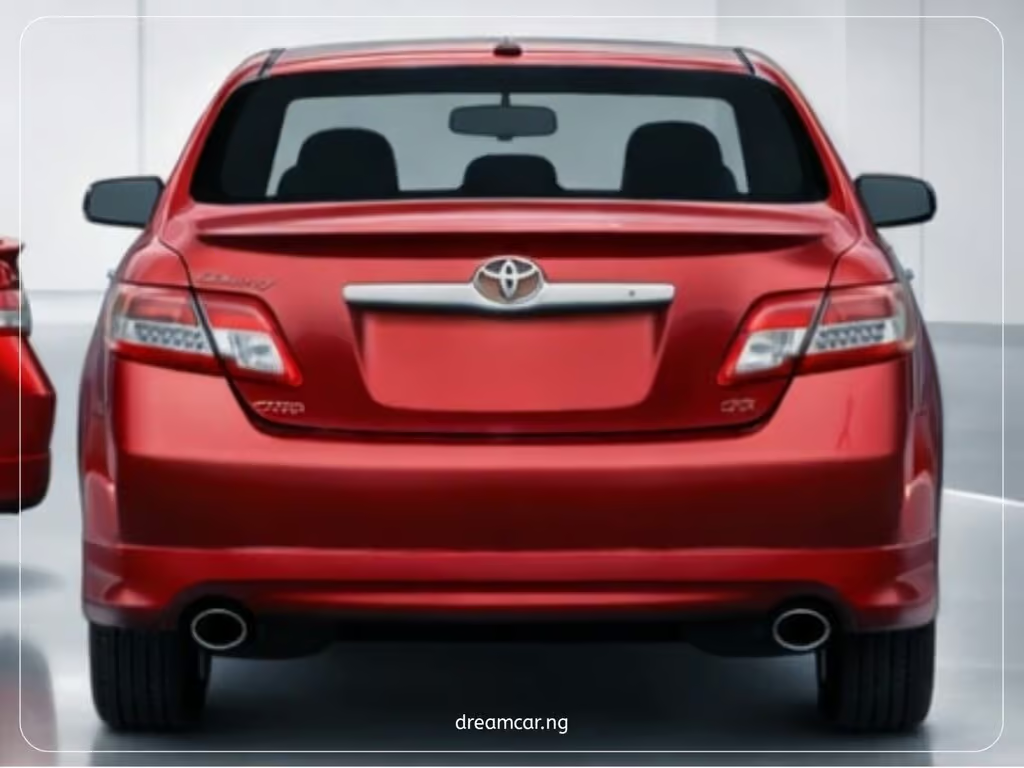
4.3/5
Radio / CD / Aux
The 2011 Toyota Camry keeps a layered dash with soft touch upper materials and durable lower plastics plus simulated wood or metallic trim on higher variants. Base models use woven cloth seats while LE and XLE provide leather trimmed seating and XLE includes power adjustments and heated front seats. SE offers firmer strength and sport fabric for improved lateral support.
Front seats provide cushion depth and lumbar adjustment on higher trims. Rear seats offer competitive legroom and a flat floor aiding three passenger accommodation. Materials include polyester woven cloth, leather trimmed seats, urethane steering surfaces and polypropylene lower panels. Sound insulation is competent at highway speeds though tyre and suspension noise increases on rough Nigerian roads.
Automatic climate control cools effectively in high ambient temperatures and rear vents distribute airflow. Infotainment includes AM FM radio with CD and auxiliary input, navigation and premium speaker systems; storage includes centre console, door bins and a wide trunk.
6-10
Yes
Yes
The 2011 Camry carried forward the strengthened XV40 body structure, continuing with targeted high tensile reinforcements and better door rings. These were designed to better handle side impacts and roof loads. In testing, the car continued to perform well, earning Good ratings in frontal and side impacts, and showing positive roof strength results, although some rear impact scores were weaker in certain tests.
Standard safety systems now included antilock brakes, Electronic Brakeforce Distribution, Brake Assist, traction control and Vehicle Stability Control. The occupant protection system featured dual stage front airbags, front seat side airbags, full length curtain airbags and a driver knee airbag on better equipped models.
Structurally, the car relied on door intrusion beams, reinforced floor cross members and energy absorbing mounting points to maintain the integrity of the passenger space during a crash. In Nigerian conditions, the robust cabin does a good job resisting deformation from potholes and minor impacts. However, repeated damage to subframes, poor alignment work and non OEM panel replacements can reduce the effectiveness of these engineered load paths.
Check: Safety rating on iihs.org
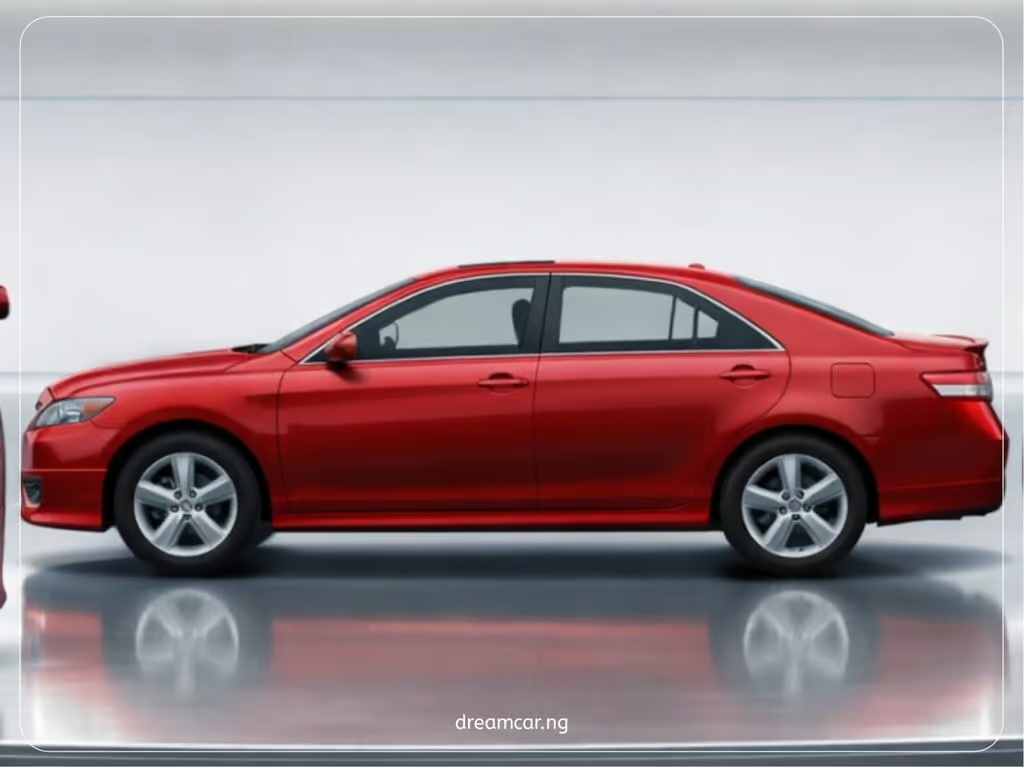
For the Toyota Camry 2011, oil consumption complaints reduced but did not disappear completely, particularly on high mileage imports. Always confirm oil level stability and watch for smoke under load. The six-speed automatic can hesitate or shift harshly if transmission fluid was not changed at proper intervals, and Nigerian traffic conditions can accelerate wear.
Suspension durability remains a concern on locally used cars, expect worn bushings, noisy strut mounts, and steering play on poorly maintained roads. Hybrid versions introduce more complex electrical systems; issues like intermittent steering assist warnings or hybrid system alerts can appear if connectors corrode or batteries age in hot climates.
Brake pads tend to wear unevenly in heavy urban driving. Interior armrests, door panels, and trims often peel or crack under prolonged sun exposure, so check cabin condition carefully before buying.
Below is a balanced breakdown of the key advantages and drawbacks of the Toyota Camry, based on real Nigerian ownership, performance expectations, and typical use cases.
Tell us your budget and location. We’ll connect you with verified dealers in your city.
Dreamcar.ng reviews are produced by a research-driven team with direct exposure to auto market across Nigerian cities. Our analysis is based on dealership interactions, discussions with mechanics, observed market pricing patterns, and independent research. Each review reflects real Nigerian ownership conditions including fuel quality, road conditions, spare parts accessibility, maintenance realities, and long-term running costs, to help buyers make informed and practical decisions.” add this seamlessly “everythin depends on trim level but we talk more on the more rampant trims on Nigerian road.
Stay informed with car reviews, ownership tips, and Nigeria auto market updates.
©2026. Dream Car Nigeria. All Rights Reserved.