
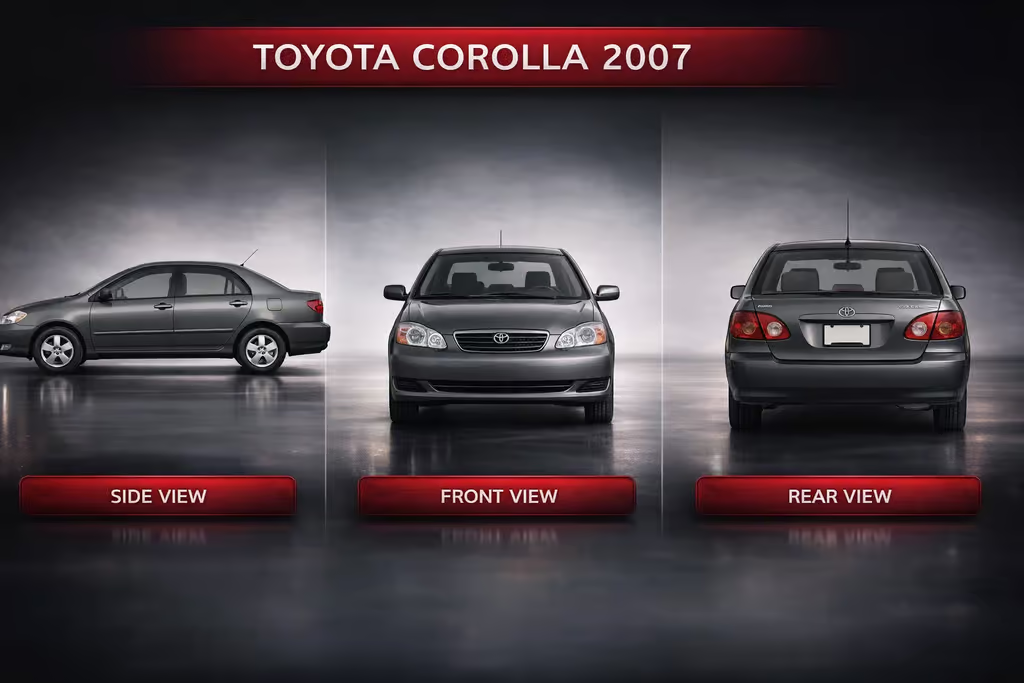
Price, Performance, Spec, Safety, Interior, Fuel Economy, Pros & Cons
The Toyota Corolla 2007 represents the final phase of the E120/E130 9th generation and a step toward a more modern appearance while still retaining ownership traits Nigerian buyers appreciate. It is commonly seen among professionals, families, and transport operators who want a cleaner design without stepping into high running costs. Its popularity across different buyer groups creates a wide base of ownership feedback in Nigeria.
Under the bonnet, petrol engine options focus on smooth delivery and controlled fuel use during daily driving. The car suits city movement, traffic conditions, and longer highway trips common on Nigerian roads. Interior layout improvements also make the 2007 model feel more accommodating for passengers compared to older versions.
This 2007 Toyota Corolla review and buyer guide explores what ownership truly looks like in Nigeria. It examines used car pricing trends, driving performance, fuel spending, interior comfort and space, protective features available on common market units, recurring mechanical concerns raised by mechanics, and a realistic outline of advantages and disadvantages. This guide is written to help buyers evaluate the Corolla 2007 based on real world usage rather than expectations alone.
See also: Toyota Corolla 2008 Review
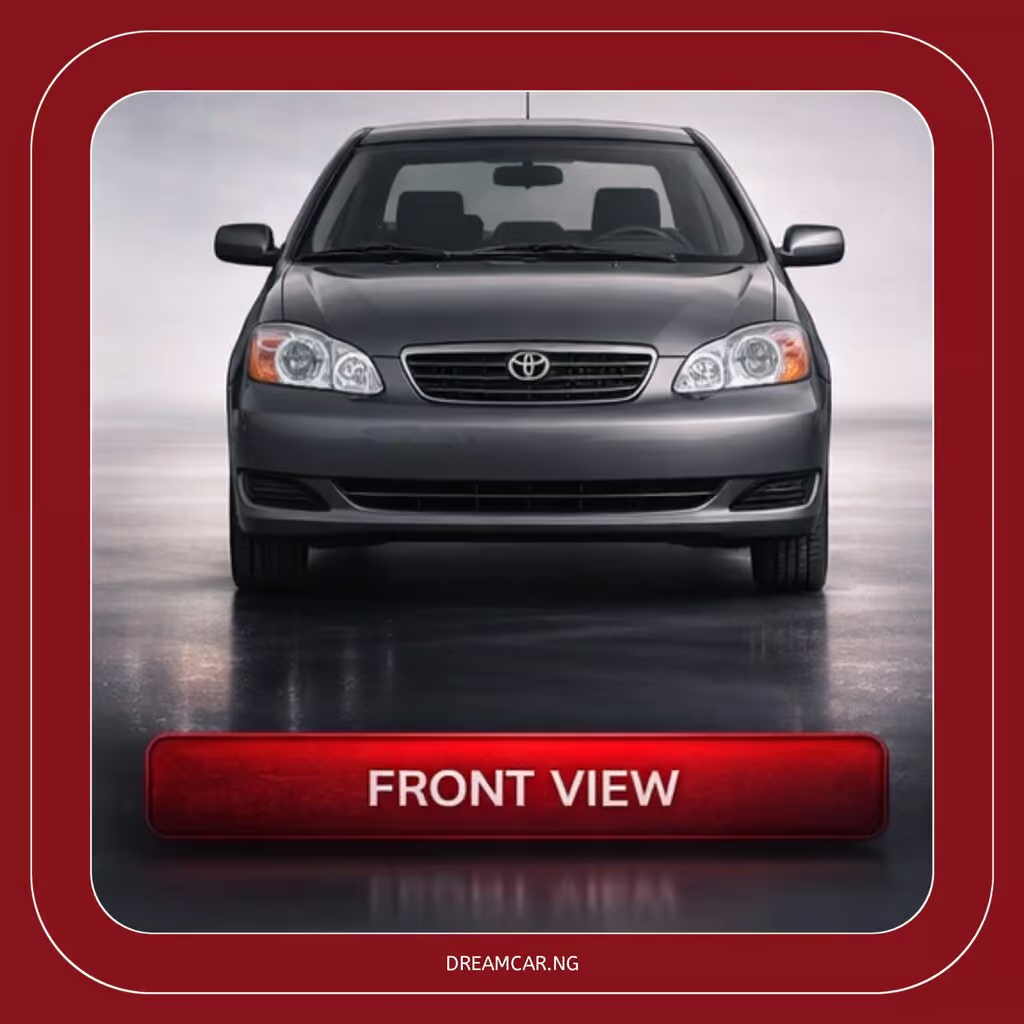
₦11M
₦8M
₦6M
In the Nigerian market, the 2007 Corolla is another popular choice reflecting ongoing demand for mid-generation Toyotas. Tokunbo asking prices typically fall in the rough range of about ₦5.5 million to ₦8 million for tokunbo units that look reasonably neat and run well.
Nigerian used examples might advertise around ₦5 million up to nearly ₦6.5 million on the higher end, with condition and mileage being the key price drivers.
Mileage can swing the price a lot as a well serviced 2007 with under 120,000 km will attract more interest than one that needs fresh tyres, brakes, or a new battery. Dealers often list cars with inspection reports and slight reconditioning, so their prices tend to cluster at the upper end, while private sellers might accept softer offers.
In Lagos, Abuja, or Kano, clean examples often list a bit higher due to stronger demand by taxi operators and gig drivers like uber and bolt who count on Corolla durability. Given the steady demand and ease of spare parts, resale value doesn’t plunge sharply, making the 2007 model a sensible buy for budget minded but pragmatic buyers.
Compare With: Toyota Corolla 2006
Inline-4 petrol
Automatic & Manual
Sedan
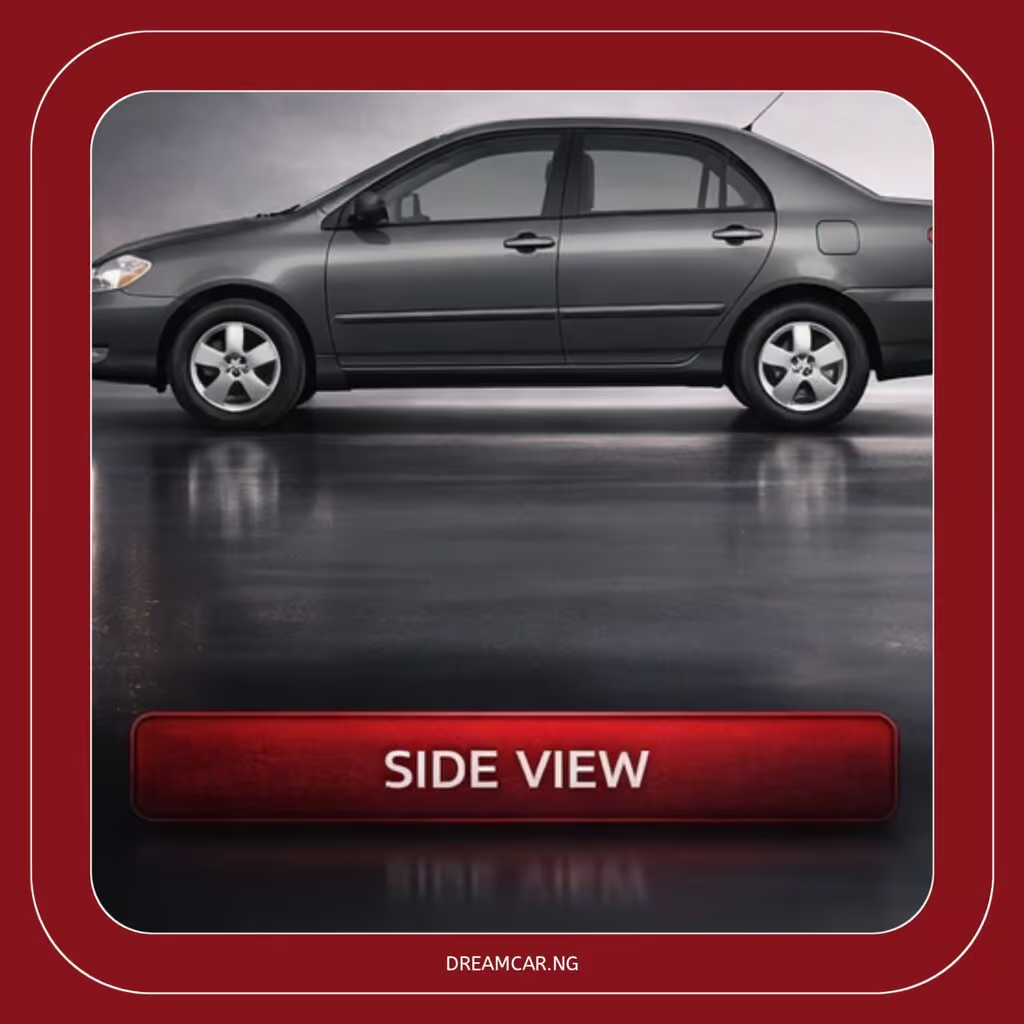
The 2007 Corolla, which marks the final year of its body style, is widely available in Nigeria with both 1.6 litre and 1.8 litre naturally aspirated petrol engines. Power is delivered to the front wheels through manual or automatic gearboxes that emphasize durability.
Output ranges around 109 horsepower on the smaller engine and up to about 126 horsepower on the larger unit, with torque reaching between 150 and 170 Nm. Ground clearance generally sits within the mid 140 to 160 mm range, shaped by suspension wear and tire choice.
Acceleration feels composed and linear, making daily driving easy. At highway speed, the 2007 Corolla tracks straight and steady. On rough roads, careful driving helps preserve suspension parts and ride comfort.
Front-Wheel Drive
City Driving: 10.8 km/L
Highway: 15.9 km/L
City: 25.5 MPG
Highway: 37 MPG
The 2007 Corolla, shows similar fuel economy figures to its 2006 sibling: 10.2 – 11.05 L/100 km (~24 – 26 MPG) for city driving and highway around 14.9 – 16.1 L/100 km (~35-38 MPG) depending on engine type.
For Nigerian commuters, petrol driving of 800 km monthly could cost ₦85,000-₦120,000 in fuel. Standard maintenance like oil, filters, and basic tune-ups typically cost ₦15,000-₦30,000 in local garages, and larger jobs that may need spare parts range ₦70,000-₦150,000.
Spare parts remain affordable and easy to find across Nigerian auto markets, and prices stay budget friendly. Most mechanics in cities such as Lagos, Abuja, and Port Harcourt are very comfortable servicing this year, which is a plus for reliability and ongoing cost predictability.
Radio / CD
Five Seaters
385 Liters
The 2007 Corolla brings a more modern cabin shape with smoother dashboard lines and better seat contouring. Seating is for five people, with improved comfort in the rear compared to earlier years. Fabric seats remain standard and hold up well against sweat and frequent entry.
Legroom in front is generous, while rear passengers get improved knee space. Head clearance remains comfortable across all seats and infotainment comes as a radio and CD unit, sometimes upgraded with steering wheel controls in higher trims.
Cooling is handled by manual air conditioning that distributes air more evenly across the cabin. Road noise feels reduced compared to older models, making highway trips calmer. Boot space measures around 385 litres, and rear seats fold to extend loading length. Interior build feels solid, with fewer loose panels even on Nigerian used cars.
2-4, Varies by trim
Yes
No
The 2007 Corolla continues the same safety philosophy but with incremental refinements. Dual front airbags were standard, and side airbags were still optional, with limited presence in Nigerian-used units. ABS became more common, especially on UK and European imports, improving braking control on wet roads. Stability systems were still missing.
Brake hardware delivers consistent stopping under normal loads, though emergency braking performance depends heavily on suspension health and tyre condition. The chassis shows impressive longevity, maintaining alignment even after years of uneven road exposure.
Body panels remain thin and easily damaged, yet the underlying structure offers solid occupant protection during moderate impacts. Suspension components handle long-term abuse well, though worn dampers reduce highway composure. Crash test reputation places the 2007 model as adequate for its era, though head and leg protection lag behind modern expectations.
On Nigerian highways, straight-line stability is good, but evasive maneuvers expose the lack of electronic aids. Endurance for poor or rough roads remains a key advantage, making this model suitable for mixed urban and intercity use.
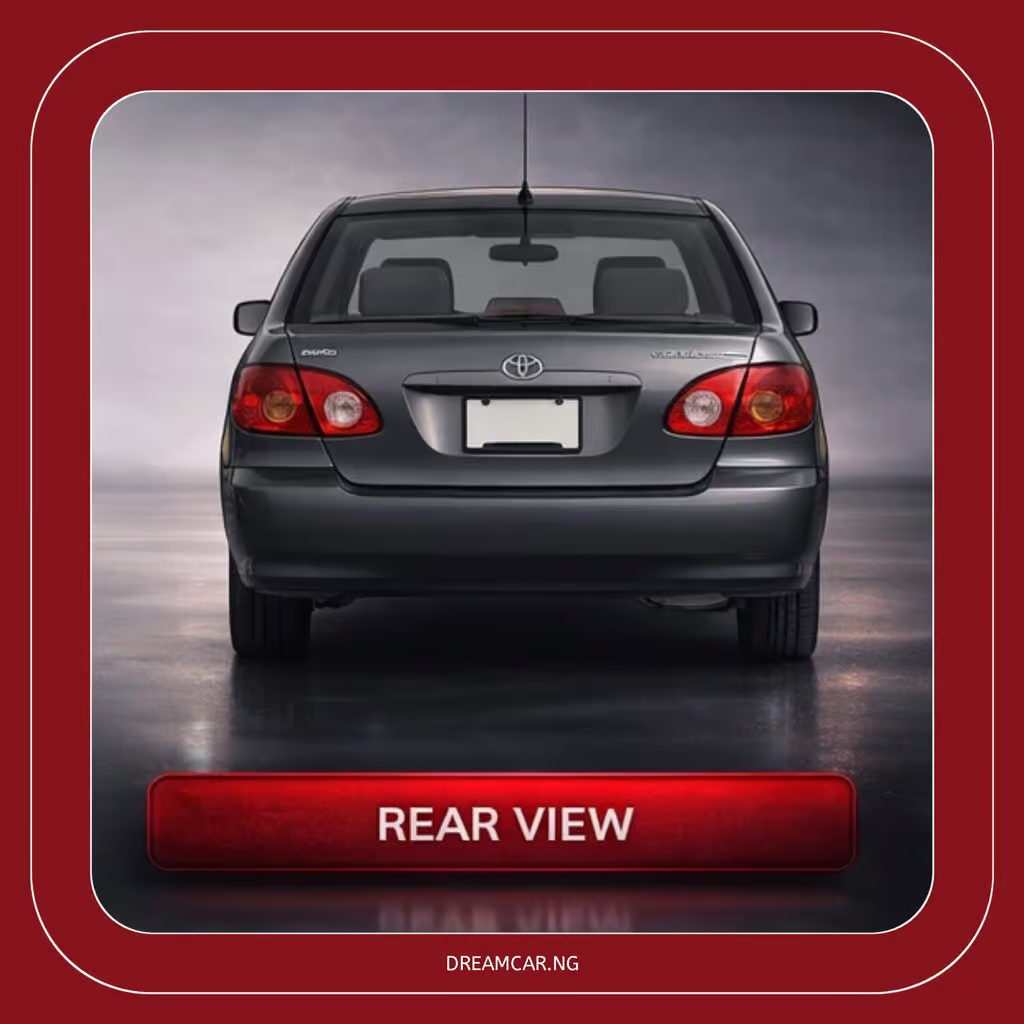
This year saw the continuation of the same generation with some tech updates. Owners often advise intake manifold gasket replacement as a proactive measure since the original can crack and cause fuel-air imbalances. Oil usage can creep up once the engine passes 150 000 km, particularly if past owners used low-grade oil or skipped changes.
Check air conditioning performance carefully; frequent rebuild or regas needs suggest leaks in the system, and under Nigerian heat this can be a major expense. Suspension wear remains a theme, especially front strut mounts and rear trailing arms if the car has been on poorly maintained rural surfaces.
Confirm the odometer reading is plausible given service history and wear patterns on steering wheel and pedals. Some older cluster units have been observed to stop at high numeric thresholds, but this should be verified against the title and service stamps.
Tell us your budget and location. We’ll connect you with verified dealers in your city.
Right now, your ideal costumers are typing keywords into google just like you did, and if you position well, they'll find you just like you found us!
Dreamcar.ng reviews are produced by a research team with direct exposure to auto market across Nigerian cities. Our analysis is based on dealership interactions, discussions with mechanics, observed market pricing patterns, and independent research. Each review reflects real Nigerian ownership conditions including fuel quality, road conditions, spare parts accessibility, maintenance realities, and long-term running costs, to help buyers make informed and practical decisions. While vehicle specifications and experiences can vary by trim level, our reviews focus primarily on the most common and widely circulated trims on Nigerian roads, reflecting what the average buyer is most likely to encounter.
Stay informed with car reviews, ownership tips, and Nigeria auto market updates.
©2026. Dream Car Nigeria. All Rights Reserved.