
Price, Performance, Spec, Safety, Interior, Fuel Economy, Pros & Cons
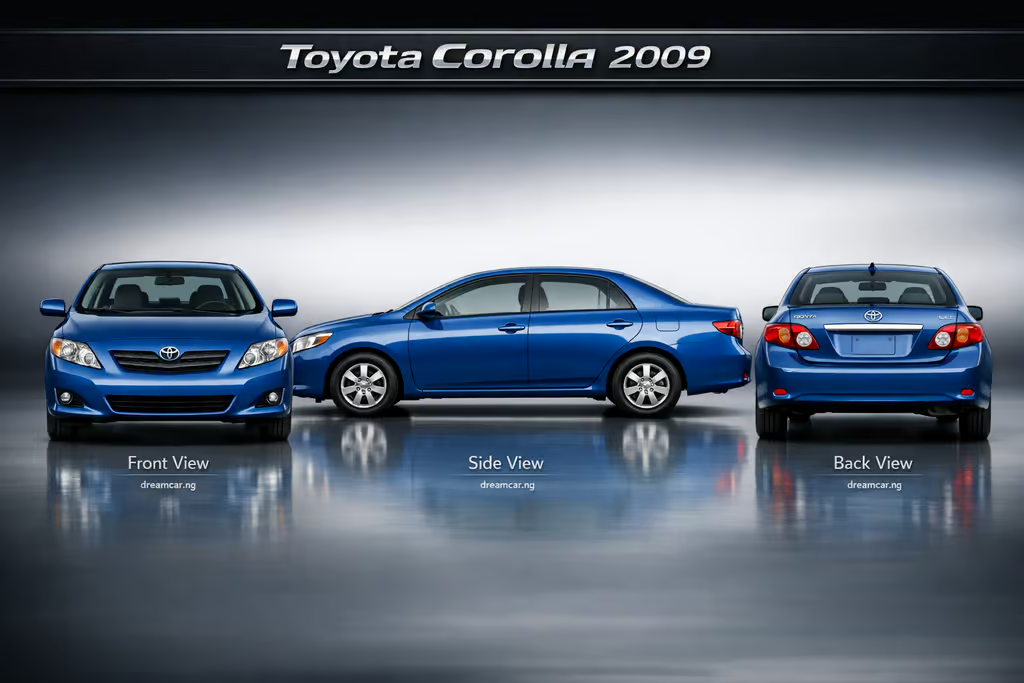
The Toyota Corolla 2009 is one of the most sought after options among Nigerian used car buyers due to its modern shape and improved road behavior as it marks the introduction of the E140 generation.
It appeals to office workers, young families, and drivers who want a car that feels newer without the financial burden of recent models. Its strong presence on Nigerian roads allows buyers to evaluate ownership expectations with ease.
This model year benefits from refined suspension tuning and improved cabin design, contributing to a smoother ride on uneven roads. Petrol engine choices deliver steady acceleration while keeping fuel spending within reasonable limits for daily commuting. Service support continue to be strong, with many technicians familiar with common issues associated with this generation.
This Toyota Corolla 2009 review and Nigerian buying guide covers the prevailing market prices, real driving performance, fuel usage patterns, interior comfort and space, protective features fitted to Nigerian market units, known mechanical faults, and an honest breakdown of advantages and drawbacks to help you see how the Corolla 2009 performs in everyday Nigerian ownership and to be sure it’s the perfect ride for you.
See also: Toyota Corolla 2010 Review

₦14M
₦11M
₦9M
The 2009 Corolla stands as a transitional year, still practical, and often fetching slightly stronger prices than the previous corollas because buyers see it as closer to a modern vehicle. Tokunbo listings often ask around ₦8 million up to roughly ₦11.5 million for cars that are clean and mechanically sound.
On the Nigerian used side, pricing can range roughly between ₦6.5 and ₦8 million, with higher prices seen for examples with more recent servicing or lower odometer figures.
Location based differences is also part of things that impact vehicle pricing in general. Lagos and Kaduna markets typically have more active buyer lists, and dealers pick that up by pricing a bit higher, while smaller markets might list the same year slightly lower.
A well-aligned 2009 with clear records and tested engine tends to retain good resale appeal in Nigeria because drivers value easy maintenance and parts availability. Private seller prices usually offer better initial deals, though you should plan for any immediate servicing costs that a dealer might already have addressed.
Compare with: Toyota Corolla 2008
Inline-4 petrol
Automatic & Manual
Sedan

In 2009, the Toyota Corolla continues with the 1.8 litre inline four petrol engine as the popular choice. Power output remains close to 132 horsepower with torque around 174 Nm. The front wheel drive setup works with manual and automatic transmissions depending on trim.
Ride height stays modest, so cautious driving is still advised on damaged roads. Acceleration response is quicker than earlier generations, making city merges easier. On expressways, the car cruises smoothly at high speed without feeling strained.
Rough road performance improves slightly thanks to revised suspension tuning, though very uneven surfaces still demand slower pace.
Front-Wheel Drive
City Driving: 10.8 km/L
Highway: 15.9 km/L
City: 25.5 MPG
Highway: 37 MPG
The 2009 Corolla maintains fuel efficiency similar to other late 9th generation models, petrol engines around 10.2 – 11.05 L/100 km (~24 – 26 MPG) for city driving and highway around 14.9 – 16.1 L/100 km (~35-38 MPG).
In everyday Nigerian use with mostly petrol, expect ₦90,000-₦125,000 monthly fuel cost for ~1000 km. Regular service like oil changes and inspections cost less than ₦30k, and more involved jobs may run ₦70,000-₦150,000 depending on parts and work needed.
This year’s Corollas have excellent fuel economy and spare parts availability across Nigerian cities and markets, and parts prices remain budget friendly. Nigerian mechanics are very familiar with the 2009 Toyota Corolla, which helps minimize surprises during servicing or repairs.
Radio / CD / Aux
Five Seaters
450 Liters
The 2009 Corolla continues with a calm and practical interior that suits family and work use. It accommodates five occupants comfortably, with improved seat cushioning that reduces fatigue. Cloth seat covering remains standard, chosen for durability under constant use.
Legroom is generous in front and reasonable at the back, while headroom allows tall passengers to sit upright. The infotainment setup includes radio and CD, often with auxiliary input for phones and MP3 players.
Manual air conditioning works efficiently, maintaining even cooling across the cabin. Cabin noise stays low during smooth road driving, though rough surfaces still pass some sound inside.
Boot space stays around 450 litres, which gives enough room for everyday hauling. Rear seat backs fold to allow longer cargo. Interior panels feel tightly fitted, resisting squeaks even on aging units.
2-4, Varies by trim
Yes
No
The 2009 Corolla benefits from a full redesign that significantly improves occupant protection. Dual front airbags were standard, with side and curtain airbags fitted on many trims, especially European-market imports. ABS became standard on most versions, while stability control appeared on higher trims but was still not universal in Nigeria.
Brake performance is notably better, with shorter stopping distances and improved pedal feel. The chassis shows increased rigidity, contributing to better crash energy management and improved cabin protection. Body panels are still not thick, but the underlying structure is stronger and better engineered. Suspension durability remains excellent, absorbing potholes without excessive wear.
Crash reputation is strong for a compact car of its era, earning good ratings in multiple test categories. Highway behavior is more planted, with reduced body movement during lane changes. On poor roads, the structure resists stress well, and that makes the 2009 model a safer and better choice for Nigerian daily use.

The 2009 Corolla has broader reports in global reliability reviews of excessive oil use and possible water pump wear. Overheating can be severe if coolant is neglected; inspect hoses, thermostat, and any signs of past overheating (resurfacing marks on head or coolant residue). Rubber hose collapse under vacuum can stall the engine under load, check hoses for softness and internal collapse.
Owners also report false airbag warning lights and sensor errors that are often wiring or clock spring issues rather than real faults, but this still affects safety checks and insurance value. EFI and emissions sensors can degrade with poor fuel quality commonly encountered in Nigeria; click through with a scan tool before you decide to buy.
Tell us your budget and location. We’ll connect you with verified dealers in your city.
Right now, your ideal costumers are typing keywords into google just like you did, and if you position well, they'll find you just like you found us!
Dreamcar.ng reviews are produced by a research team with direct exposure to auto market across Nigerian cities. Our analysis is based on dealership interactions, discussions with mechanics, observed market pricing patterns, and independent research. Each review reflects real Nigerian ownership conditions including fuel quality, road conditions, spare parts accessibility, maintenance realities, and long-term running costs, to help buyers make informed and practical decisions. While vehicle specifications and experiences can vary by trim level, our reviews focus primarily on the most common and widely circulated trims on Nigerian roads, reflecting what the average buyer is most likely to encounter.
Stay informed with car reviews, ownership tips, and Nigeria auto market updates.
©2026. Dream Car Nigeria. All Rights Reserved.