
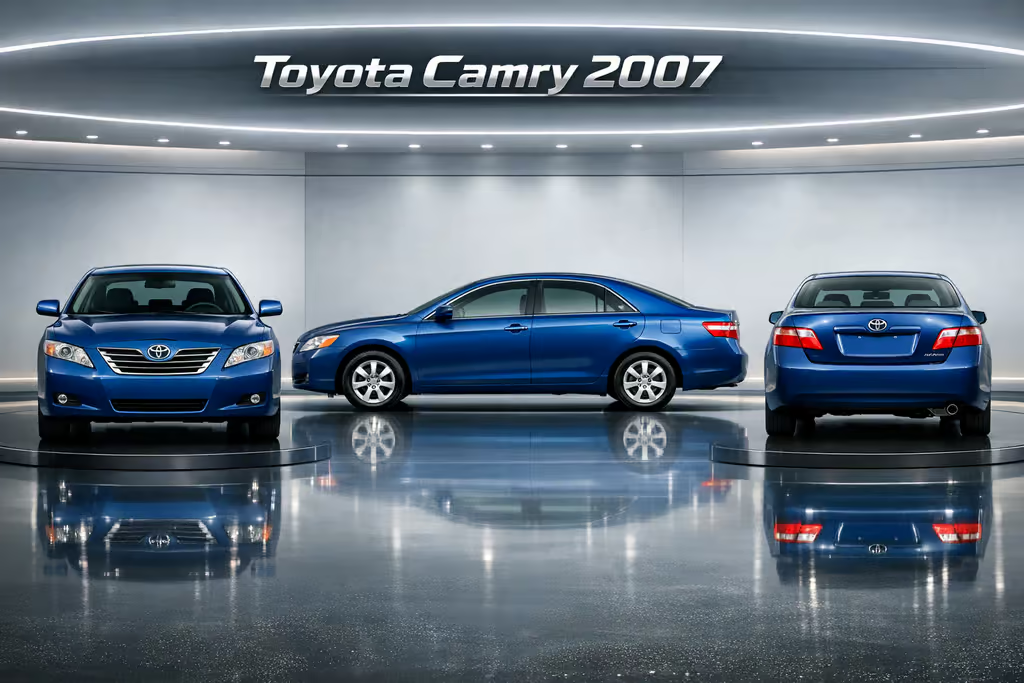
Price, Performance, Spec, Safety, Interior, Fuel Economy, Pros & Cons
The Toyota Camry 2007 marked a full redesign and the beginning of the Toyota Camry (XV40). It introduced updated styling, a revised interior, and improved powertrain options compared to the previous XV30 generation. The 2007 model also became the first Camry to offer a hybrid variant.
Positioned above the Corolla in size and engine output, the 2007 Camry remained a five-seater midsize sedan with a front-wheel-drive layout. The suspension continued to focus on ride comfort rather than sporty handling, making it suitable for urban driving and highway travel. Compared to the 2006 model, it offered a slightly larger body structure and a more modern dashboard layout.
Engine options included a 2.4-liter four-cylinder engine and a 3.5-liter V6 engine. A Camry Hybrid variant was also introduced, pairing a 2.4-liter engine with Toyota’s hybrid system and an electronic continuously variable transmission (eCVT). Non-hybrid models were equipped with a 5-speed manual (in select markets), a 5-speed automatic (4-cylinder), or a 6-speed automatic transmission (V6).
For 2007 the Toyota Camry introduces a full redesign with a new platform replacing the previous generation bringing longer wheelbase wider tracks and increased interior room. Engine choices change to a new 2.4 litre 2AZ FE four cylinder and an all new 3.5 litre 2GR FE V6 replacing the outgoing 3.3 litre paired with a new six speed automatic while manual remains on base trims. The hybrid variant adopts a revised system for better output Trim structure expands with CE LE SE XLE and Hybrid grades Safety adds standard front side and curtain airbags.
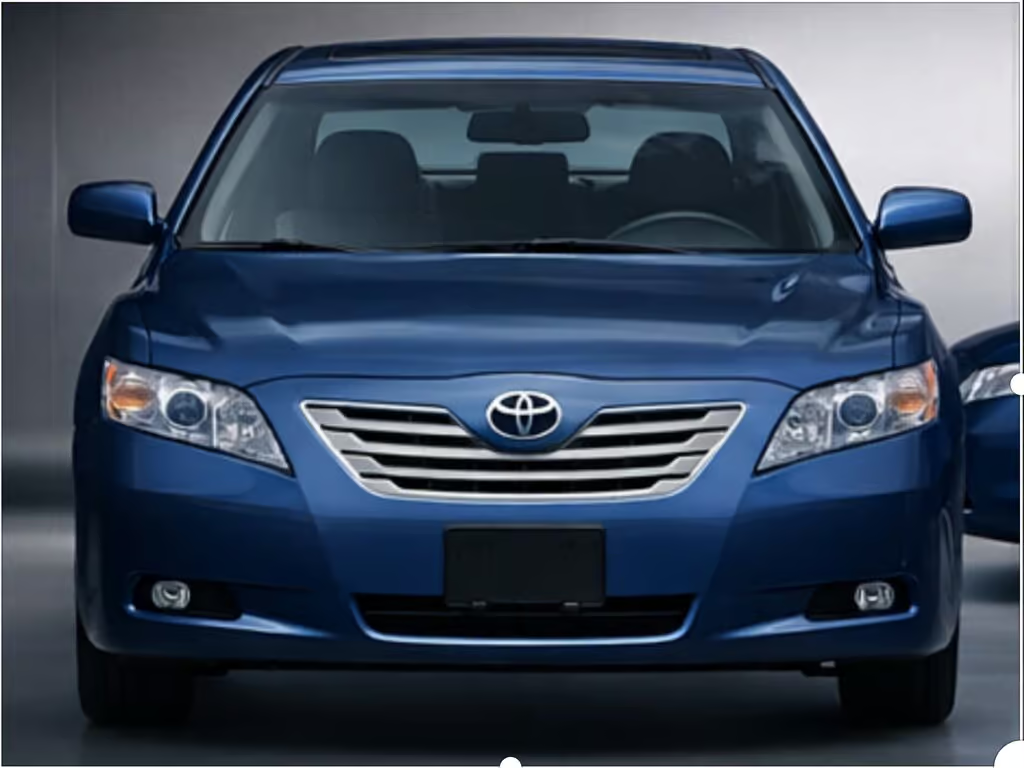
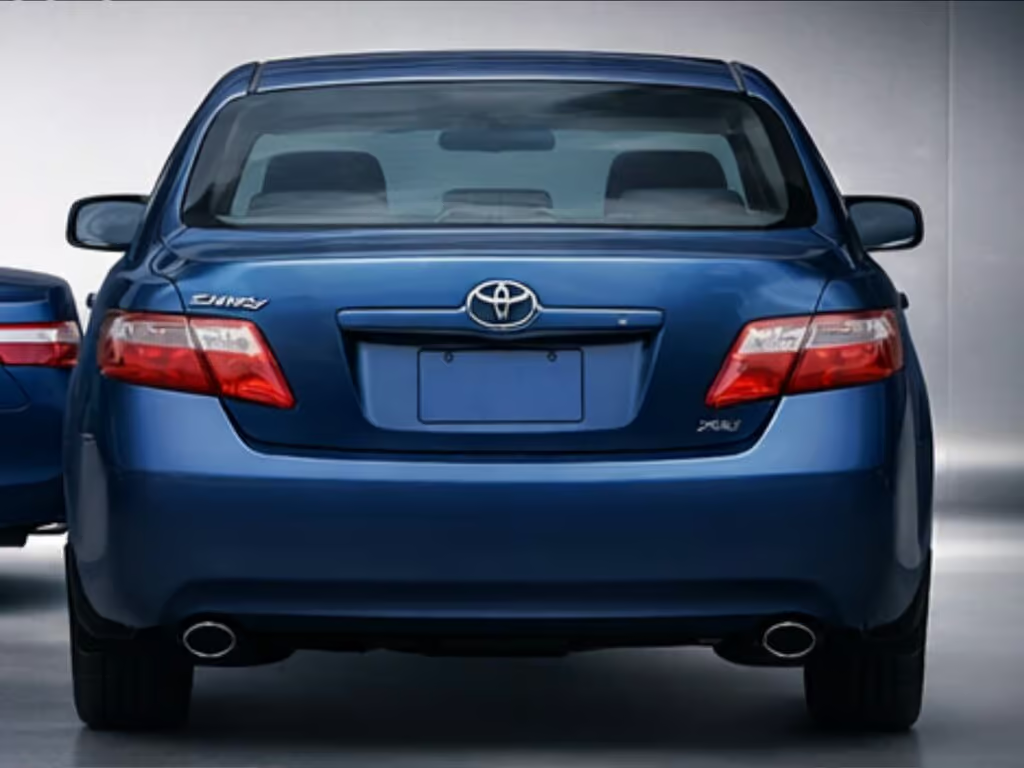
Design brings sharper headlights larger grille and more sculpted body and new features include smart key push start Bluetooth and upgraded audio options improving convenience for Nigerian buyers importing Tokunbo units. Build quality sees improved body rigidity and revised suspension tuning for better ride stability and quieter cabin overall refinement levels compared with the 2006 model across all key measurable areas including braking feel and steering.
The 2007 Camry added a Hybrid trim to the CE, LE, SE, and XLE lineup, introducing better fuel efficiency alongside the traditional models.
₦9.5M
₦6.5M
The 2007 Toyota Camry commands higher prices than the 2006 model due to its newer generation and stronger demand. Foreign used units in Nigeria typically range from ₦8,000,000 to ₦10,000,000, influenced by trim level such as LE, SE or XLE, engine configuration and mileage. Nigerian used units generally sell between ₦6,000,000 and ₦7,500,000 depending on usage history, accident records and mechanical condition.
Vehicles with original paint, complete documentation and minimal wear are priced at the upper end. Exchange rate changes significantly affect Tokunbo pricing, while port charges and import duties also play a role.
Lagos markets often offer more competitive pricing due to higher volume, while Abuja and Port Harcourt prices can be slightly higher. Official dealership channels are uncommon for this model year, so pricing is largely determined by independent dealers, auction importers and private sellers.
Petrol
Automatic & CVT
Sedan
The 2007 Toyota Camry introduced improved powertrains. It came with a 2.4-litre four-cylinder engine producing about 158 horsepower and a more powerful 3.5-litre V6 delivering 268 horsepower. The four-cylinder engine was paired with either a 5-speed manual or automatic transmission, while the V6 featured a 6-speed automatic.
Acceleration is noticeably stronger in the V6, reaching 0–60 mph in around 6.5 seconds, making highway merging effortless. A hybrid option was also available, combining a 2.4-litre engine with an electric motor for a total output of about 192 horsepower.
On the road, the 2007 Camry focuses on comfort. The ride is quiet and soft, with excellent cabin insulation. Handling is stable but not sporty, as the suspension is tuned more for smoothness than agility. In Nigerian driving conditions, it performs reliably, staying cool in traffic and absorbing road imperfections with ease.
City: 21, Hwy: 31
8.9km/L
13.2km/L
The 2007 Toyota Camry base model records 8.9km/l in city driving and 13.2km/l on expressway. In Nigerian urban conditions where traffic density is high, most owners should expect figures close to 8.9km/l. At ₦850 per litre, driving 1,500km monthly translates to fuel spending of about ₦144,000 in heavy city use and around ₦97,000 if most driving happens on open highways.
Real world results vary with throttle control, engine condition, and fuel quality. Routine servicing averages ₦30,000 to ₦45,000 per interval using standard parts. Brake components and suspension bushings may require periodic replacement due to uneven roads. Keeping the engine properly tuned and tyres correctly inflated helps maintain factory consumption figures and prevents unnecessary increases in monthly fuel expenses.
Check: EPA fuel economy by trims
Low
High
Very High
The 2007 Camry introduced the XV40 platform with the 2.4 litre 2AZ FE and 3.5 litre 2GR FE V6. Under Nigerian driving conditions, regular routine servicing is advisable, focusing on engine oil, filters, brake components, and suspension inspection. The four cylinder benefits from close monitoring of oil levels on high mileage examples, while the V6 requires proper cooling system maintenance and spark plug servicing.
Both engines use timing chains, reducing long term maintenance compared to belt driven systems. The five speed automatic transmission is reliable when fluid is replaced periodically. Suspension components such as control arms, links, and struts often require replacement due to poor road surfaces.
Spare parts are abundant nationwide, with strong availability of genuine and aftermarket options including sensors and transmission components and Nigerian mechanics are highly familiar with this generation, and diagnosis is straightforward using common scan tools.
4.1/5
Radio / CD
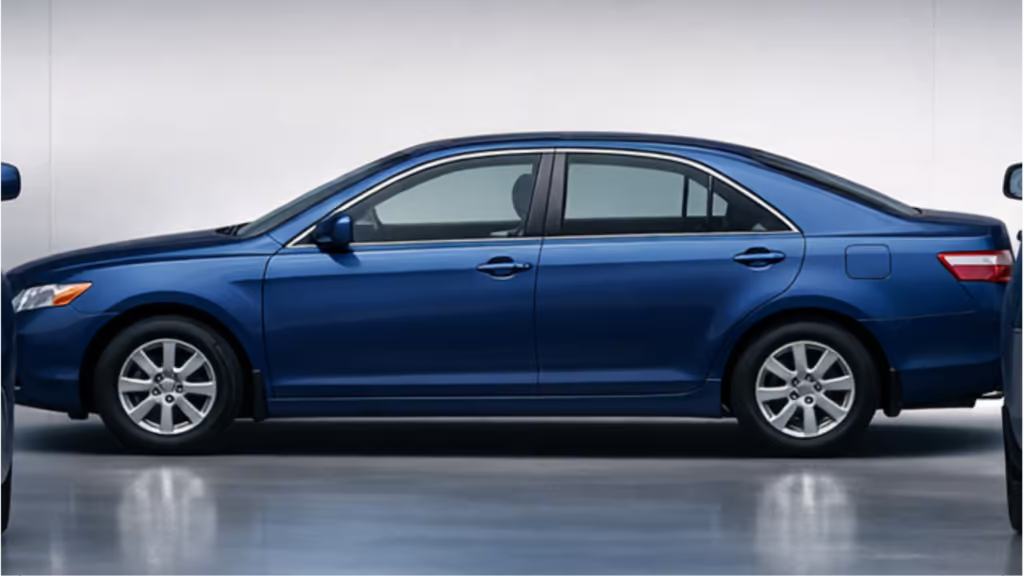
The 2007 Camry features a soft touch upper dash, fitted lower plastics and optional simulated wood trim. Base seats are cloth; LE and XLE have leather trimmed seats; XLE may include power adjustment and heated front seats. Front seats feature broad cushions and lumbar support with manual or power adjustments.
Rear seating retains generous legroom with a mostly flat floor and a fold down centre armrest on many imports. Build quality shows tight fit and finish with polypropylene lower trim and urethane steering surfaces. Noise insulation is good at steady highway speeds though suspension and tyre noise rise on rough urban roads in Nigeria.
Automatic climate control and strong blower fans cool the cabin quickly in high ambient temperatures and deliver airflow to rear vents. Infotainment ranges from AM FM radio with CD and auxiliary input to optional premium multi speaker systems; storage includes centre console, door bins and a practical trunk opening space.
6-10
Yes
Some Trims
With the 2007 redesign, the Camry took a noticeable step forward in safety. The body structure became stiffer, with a stronger safety cage that used high strength steel in the B pillars and rocker reinforcements. Toyota also engineered clearer crumple paths and reinforced the floor cross members to better manage crash forces and limit intrusion into the cabin.
In crash testing, the car performed well. Frontal and side impact tests earned Good ratings from independent testers, especially when the vehicle was equipped with side curtain airbags and seat mounted side airbags. Braking systems included standard four wheel antilock brakes, while Electronic Brakeforce Distribution and Brake Assist were available depending on the market. Stability control was still optional on lower trims but typically standard on higher ones.
The restraint system became more advanced, combining dual stage front airbags, front seat mounted side airbags, curtain airbags and a driver knee airbag. Structurally, the design also included door intrusion beams and energy absorbing steering column mounts, all aimed at protecting the cabin space during a crash.
In Nigerian driving conditions, the improved chassis rigidity helps the car handle potholes and rough roads with less flex. However, corrosion, poor welding repairs and non OEM panel replacements can seriously compromise the structure. For anyone buying one and can afford higher trims, then it makes sense to go for it because they come with full stability control, complete airbag coverage and proper seatbelt hardware.
View: IIHS safety rating
Oil consumption continues on the 2.4L engine, so confirm proper servicing. Many dashboards melt or become sticky under heat, check for cracks and glare.
Inspect suspension for noise, and ensure smooth gear engagement. Window regulators and door lock actuators commonly fail, especially on higher trims.
Below is a balanced breakdown of the key advantages and drawbacks of the Toyota Camry, based on real Nigerian ownership, performance expectations, and typical use cases.
Tell us your budget and location. We’ll connect you with verified dealers in your city.
Dreamcar.ng reviews are produced by a research-driven team with direct exposure to auto market across Nigerian cities. Our analysis is based on dealership interactions, discussions with mechanics, observed market pricing patterns, and independent research. Each review reflects real Nigerian ownership conditions including fuel quality, road conditions, spare parts accessibility, maintenance realities, and long-term running costs, to help buyers make informed and practical decisions.” add this seamlessly “everythin depends on trim level but we talk more on the more rampant trims on Nigerian road.
Stay informed with car reviews, ownership tips, and Nigeria auto market updates.
©2026. Dream Car Nigeria. All Rights Reserved.