
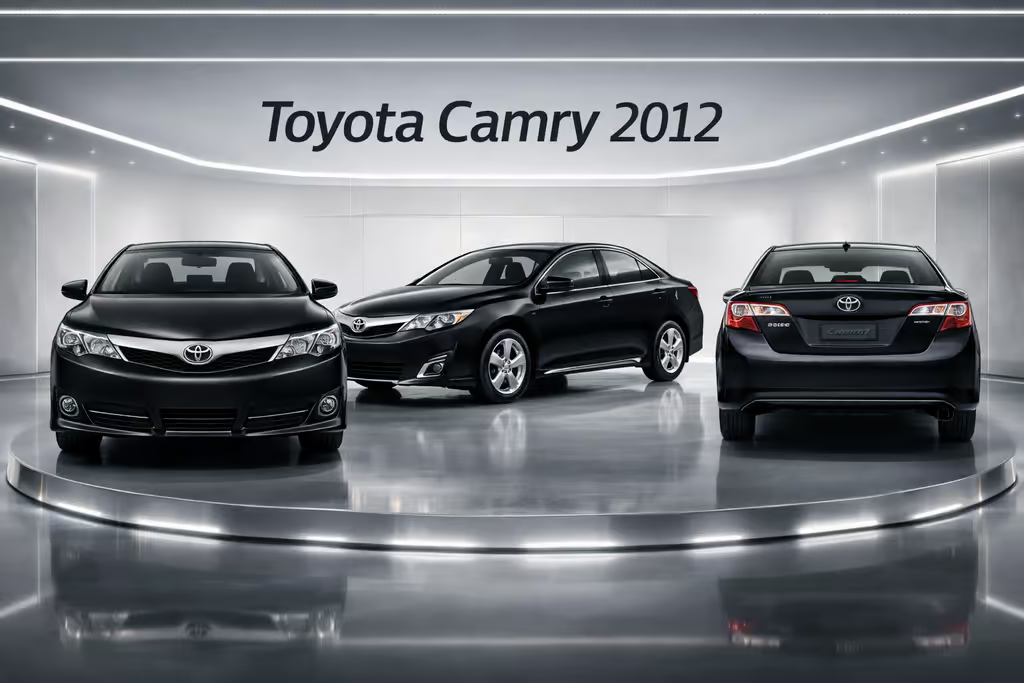
Price, Performance, Spec, Safety, Interior, Fuel Economy, Pros & Cons
The Toyota Camry 2012 marks the introduction of the Toyota Camry XV50 generation, replacing the outgoing XV40 platform. This redesign brought updated exterior styling, a revised interior layout, and improvements in fuel efficiency and chassis build. The model was engineered to improve comfort while enhancing structural rigidity and safety performance.
Dimensionally, the 2012 Camry continues as a front wheel drive midsize sedan positioned above the Corolla in Toyota’s lineup. It offers generous rear passenger space and a large boot capacity suitable for family and executive use. The suspension setup prioritizes ride comfort, with a softer tuning that absorbs rough road surfaces effectively, making it well suited for Nigerian road conditions.
Engine options included a 2.5 liter four cylinder engine and a 3.5 liter V6 engine. A hybrid variant was also available, combining a petrol engine with Toyota Hybrid Synergy Drive and an electronic continuously variable transmission. The four cylinder model typically came with a 6 speed automatic transmission, while the V6 variant also used a 6 speed automatic gearbox.
Inside, the 2012 model introduced a more modern dashboard design with improved material quality and enhanced infotainment integration depending on trim level. Seating capacity is five, with wide cabin proportions and supportive seats. Noise reduction was improved compared to the previous generation, delivering a quieter driving experience.
As the first year of the XV50 series, the 2012 Camry represents a structural and mechanical evolution focused on efficiency, comfort, and updated styling.
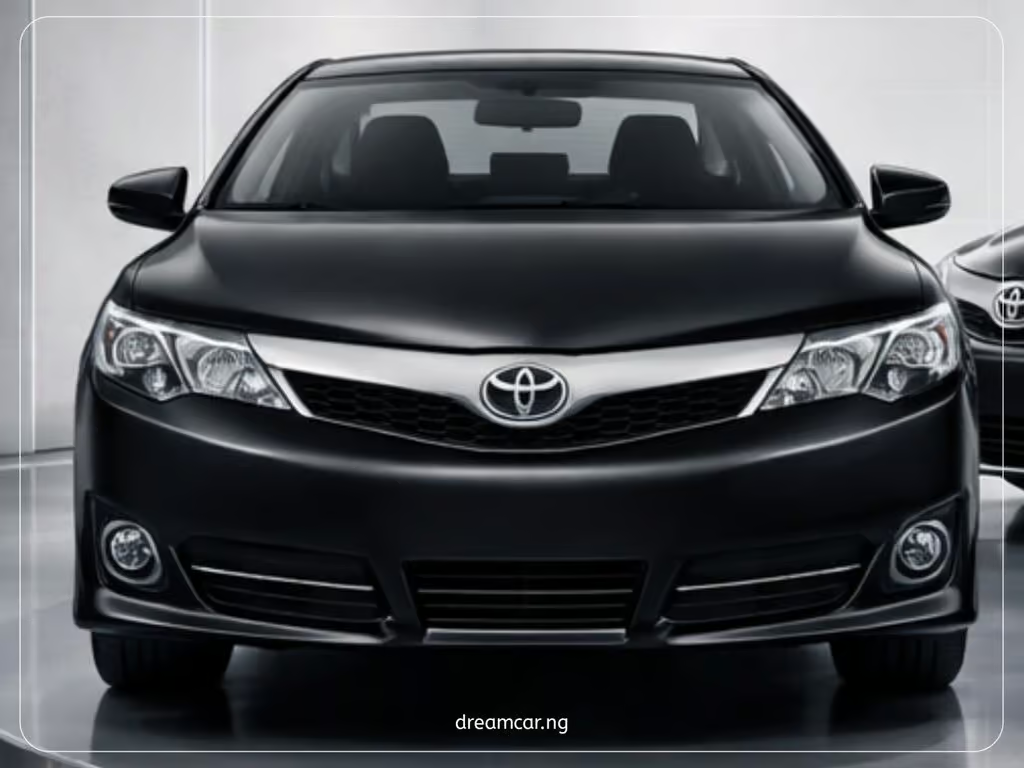
2012 Toyota Camry undergoes a complete redesign, moving to the new XV50 platform. Toyota reengineers the body structure with increased use of high strength steel, targeting improved crash performance and rigidity. The exterior adopts a larger grille, slimmer headlights, and a more upright profile, clearly separating it from the previous generation.
Inside, the cabin is entirely new, featuring a redesigned dashboard, upgraded materials, and expanded touchscreen infotainment availability. The 2.4 litre engine is replaced by a new 2.5 litre 2AR FE four cylinder, while the 3.5 litre V6 continues with efficiency enhancements. Automatic transmission tuning is revised for smoother shifts.
The hybrid system receives updates that improve fuel economy. Trim structure changes to L, LE, SE, XLE, and Hybrid grades. Safety now includes standard stability control and up to ten airbags, marking a substantial generational leap over 2011 models.
The 2012 Camry introduced L, LE, SE, XLE, and two Hybrid trims (LE and XLE), expanding options with good hybrid choices.
₦13M
₦8.6M
The 2012 Toyota Camry represents a newer generation in Nigeria, resulting in higher market prices compared to earlier models. Foreign used units typically range around ₦13,000,000 depending on trim level, mileage, engine type and condition. Premium trims and low mileage vehicles command the highest prices. Nigerian used units generally sell between ₦8,500,000 and ₦9,500,000, with pricing influenced by service history, accident record and cosmetic condition.
Good ones with minimal refurbishment and documented maintenance attract stronger valuations. Exchange rate volatility has a direct impact on Tokunbo pricing, while import duties, shipping costs and clearing charges further influence final prices. Lagos markets often offer more competitive pricing due to higher inventory, while Ondo or Anambra for instance can be more expensive. Official dealership pricing is limited, so most transactions occur through independent dealers and private jiji or Facebook marketplace listings across Nigeria
Petrol
Automatic & CVT
Sedan
The 2012 Toyota Camry introduced a new generation with updated engineering and improved refinement. The base engine became a 2.5-litre four-cylinder producing 178 horsepower and 170 lb-ft, paired with a 6-speed automatic. A hybrid model was also available, combining a 2.5-litre engine (156 hp, 156 lb-ft) with an electric motor (141 hp, 199 lb-ft) for a total output of 200 horsepower.
The gasoline engine delivers smooth, adequate acceleration for both city driving and highway merging. The hybrid provides strong low-end torque and seamless power delivery through its CVT, making it especially effective in stop-and-go traffic.
Ride quality is slightly firmer than previous models but remains comfortable. The suspension absorbs bumps in a controlled manner, and the car feels more stable at higher speeds. Steering remains light, emphasizing ease of use. The 2012 Camry feels stable, refined, and well-suited to varied Nigeran road conditions to offer improved comfort and better structural solidity.
City: 24, Hwy: 34
10.2km/L
14.4km/L
The 2012 Toyota Camry base trim delivers 10.2km/l in city driving and 14.4km/l on a free expressway, showing measurable efficiency gains. With petrol priced around ₦850 per litre, covering 1,500km monthly will cost about ₦125,000 in city use and roughly ₦88,000 with mostly highway driving. These figures position the 2012 model as more fuel efficient than its immediate predecessors.
Routine servicing typically falls at ₦70,000 depending on workshop quality and parts used. Nigerian traffic congestion, inconsistent fuel quality, air conditioning usage, and poor road surfaces can reduce real world km/l results. Consistent maintenance and moderate driving habits are key to controlling long term running costs.
Check: EPA fuel economy by trims
Low
High
Very High
The 2012 Camry introduced the XV50 generation in Nigeria with the 2.5 litre 2AR FE four cylinder and continued 3.5 litre 2GR FE V6. Routine servicing every now and then is advisable under local driving conditions, focusing on oil changes, brake inspection, and cooling system maintenance.
Both engines use timing chains designed for long service life. The 2.5 litre engine has strong durability when oil quality is maintained, while the V6 requires consistent attention to ignition and cooling components. The six speed automatic transmission is generally reliable with periodic fluid replacement. Suspension wear remains a factor on uneven roads, particularly bushings and shock absorbers.
Spare parts availability across Nigeria is strong for engine components, electronic sensors, suspension parts, and transmission assemblies, with both genuine and reputable aftermarket options. Nigerian mechanics are familiar with this generation, and diagnostics are easily handled with or without modern scan tools.
4.5/5
Entune Gen 1, Touchscreen, Bluetooth
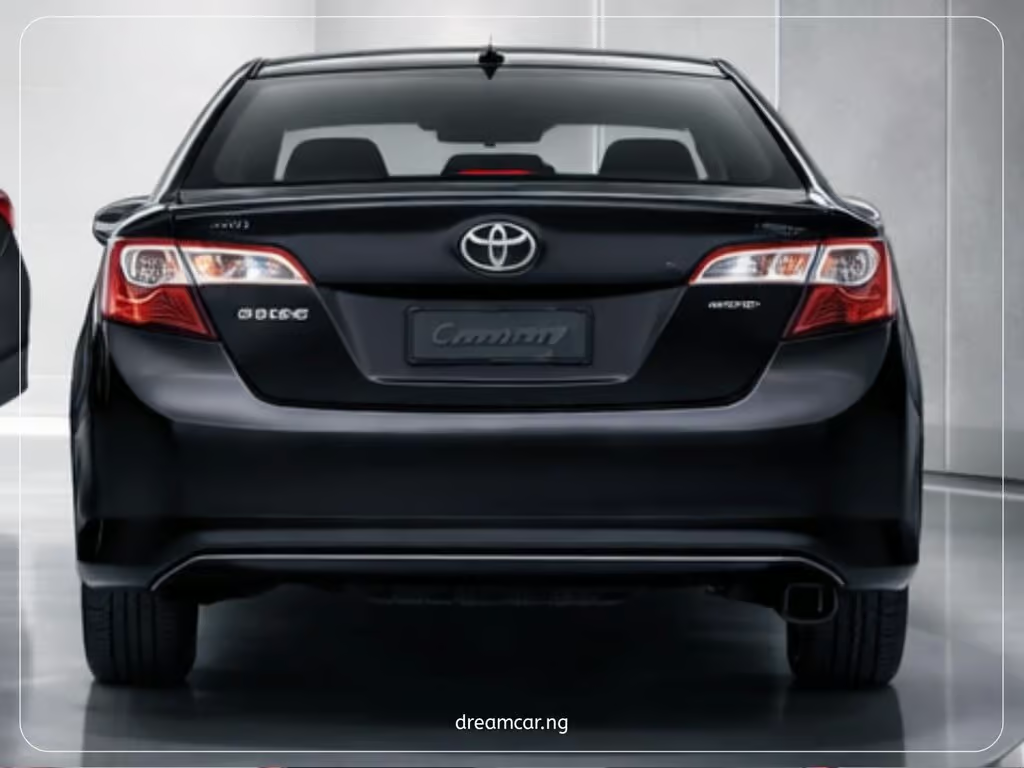
The 2012 Camry introduced a reworked cabin with a more driver focused instrument panel, softer touch materials and improved fit and finish. Base trims use durable cloth seats while higher trims offer leather trimmed seating; XLE includes heated power adjustable leather seats. Dashboard materials include soft touch urethane, stitched trim and simulated wood or metallic accents.
Front seats provide improved lateral support with lumbar adjustment and multi position power on higher variants. Rear seating offers roomy legroom, a flat floor for three and a fold down centre armrest on many imports. Acoustic treatment improved though tyre and suspension noise increases on rough Nigerian roads.
Dual zone climate control cools effectively in high ambient temperatures and vents serve rear passengers. Infotainment introduced touchscreen audio with AM FM CD and auxiliary input, navigation and Entune; storage includes centre console, door bins and a practical trunk plus convenience.
6-10
Yes
Yes
The 2012 model as the introduction to a new generation has a more advanced body structure. Toyota increased the use of high strength and ultra high tensile steels, incorporating ring shaped frame elements, reinforced rocker panels and stronger B pillar reinforcements. All of this was aimed at improving both crash protection and overall rigidity.
This model also introduced Toyota’s Star Safety System as standard. That included Antilock Brakes, Electronic Brakeforce Distribution, Brake Assist, Vehicle Stability Control, Traction Control, Smart Stop brake override and an electronic tire pressure monitoring system. Passive safety was also expanded significantly, with up to ten airbags. These included dual stage front airbags, seat mounted side airbags for both front and rear passengers, full length curtain airbags for both rows and front knee airbags.
Crash testing results were strong, with Good ratings in both frontal and side impacts when the full airbag package was installed. In Nigerian driving conditions, the stiffer cabin offers better protection in high energy crashes. However, there is a trade off. The use of hot stamped and bonded panels makes repairs more complex and expensive. If repairs are not done properly, crash performance can be permanently compromised.
Check: Safety rating on iihs.org
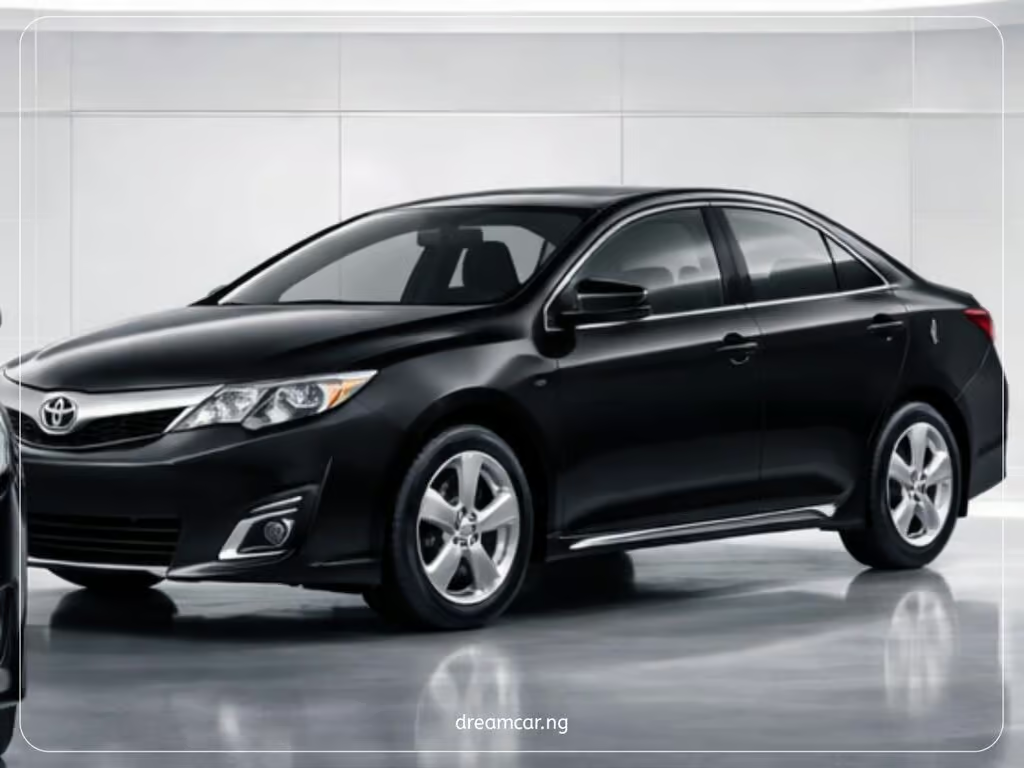
The 2012 Camry improved overall reliability, but some 2.5L engines still show mild oil consumption, especially in poorly maintained imports. Always verify oil level and service records. The six-speed automatic remains generally reliable, yet torque converter shudder or delayed gear engagement can develop if fluid service was skipped. Nigeria’s heat and stop-start traffic make this worse, so confirm that the Takata airbag recall has been completed on any imported unit.
Suspension wear is still the most common local issue worn control arm bushings, tie rods, and struts are frequent on cars driven on rough roads. Brake squeal and rotor glazing appear after heavy traffic use. Interior peeling, especially armrests and soft-touch trims, is common in sun exposed vehicles. A thorough diagnostic scan and proper road test are essential before making payment.
Below is a balanced breakdown of the key advantages and drawbacks of the Toyota Camry, based on real Nigerian ownership, performance expectations, and typical use cases.
Tell us your budget and location. We’ll connect you with verified dealers in your city.
Dreamcar.ng reviews are produced by a research-driven team with direct exposure to auto market across Nigerian cities. Our analysis is based on dealership interactions, discussions with mechanics, observed market pricing patterns, and independent research. Each review reflects real Nigerian ownership conditions including fuel quality, road conditions, spare parts accessibility, maintenance realities, and long-term running costs, to help buyers make informed and practical decisions.” add this seamlessly “everythin depends on trim level but we talk more on the more rampant trims on Nigerian road.
Stay informed with car reviews, ownership tips, and Nigeria auto market updates.
©2026. Dream Car Nigeria. All Rights Reserved.