
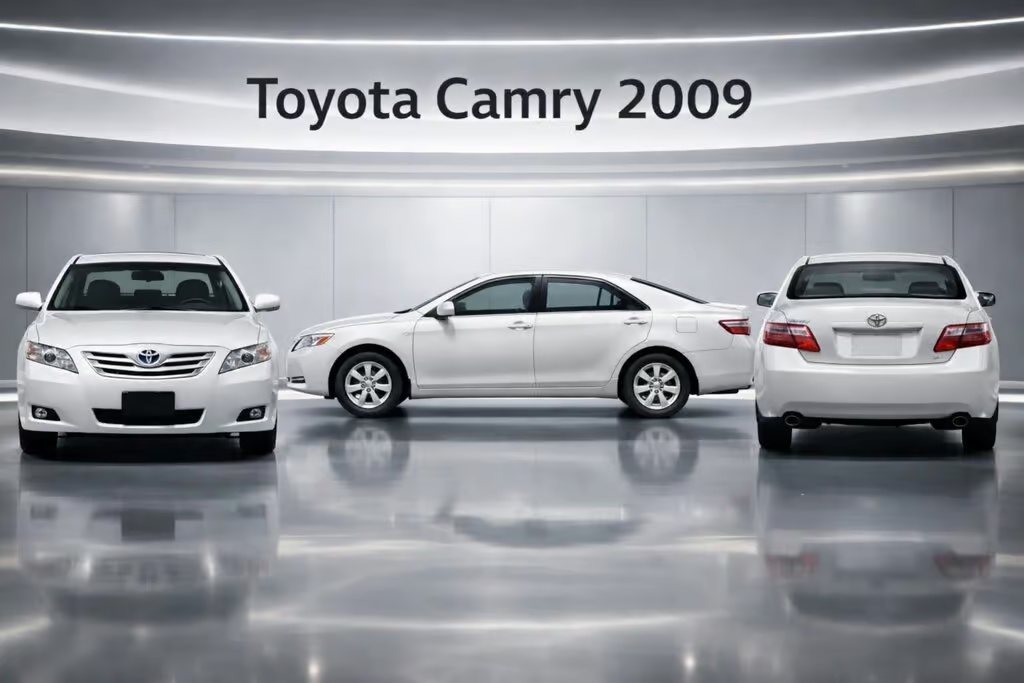
Price, Performance, Spec, Safety, Interior, Fuel Economy, Pros & Cons
The Toyota Camry 2009 remained part of the Toyota Camry (XV40) and carried forward the same core structure and drivetrain options as the 2008 model, with minor feature updates depending on market and trim level.
It is a front-wheel-drive midsize sedan designed primarily for comfort and everyday usability. The suspension setup continued to prioritize ride smoothness over sharp handling, making it suitable for varied road conditions. Compared to smaller Toyota sedans, it offered more cabin space and stronger engine options.
The 2009 model retained the 2.4-liter four-cylinder and 3.5-liter V6 petrol engines. The hybrid version remained available, using a petrol-electric system paired with an eCVT. Transmission options for petrol models included a 5-speed manual (limited availability), 5-speed automatic for the 4-cylinder, and 6-speed automatic for the V6.
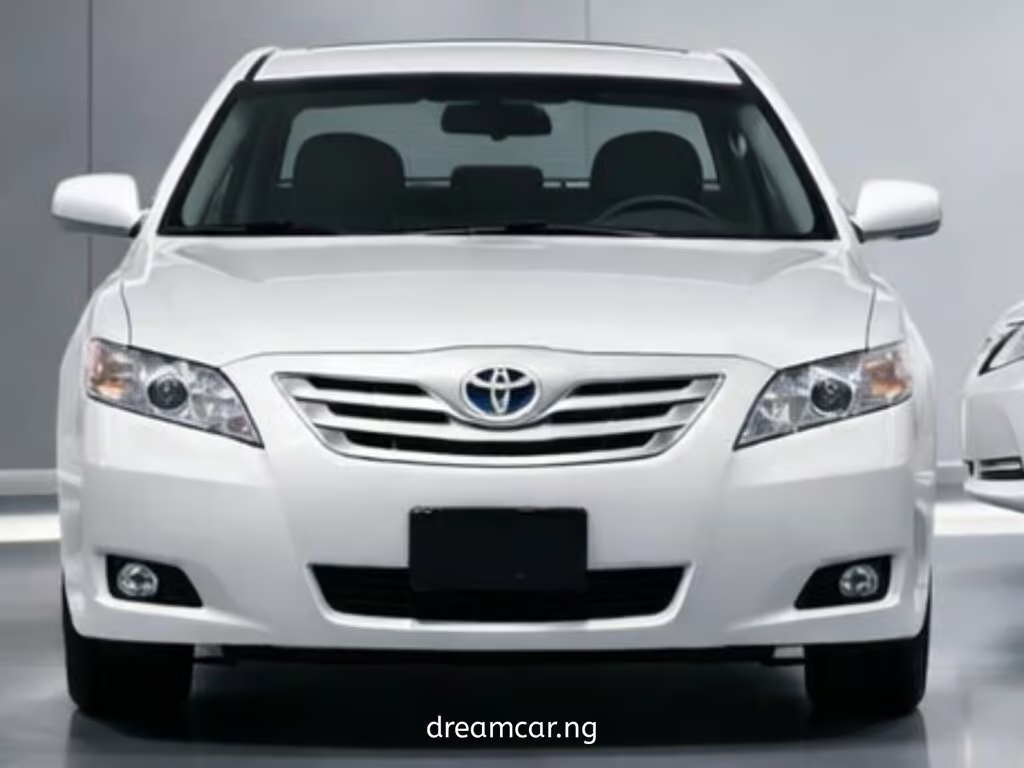
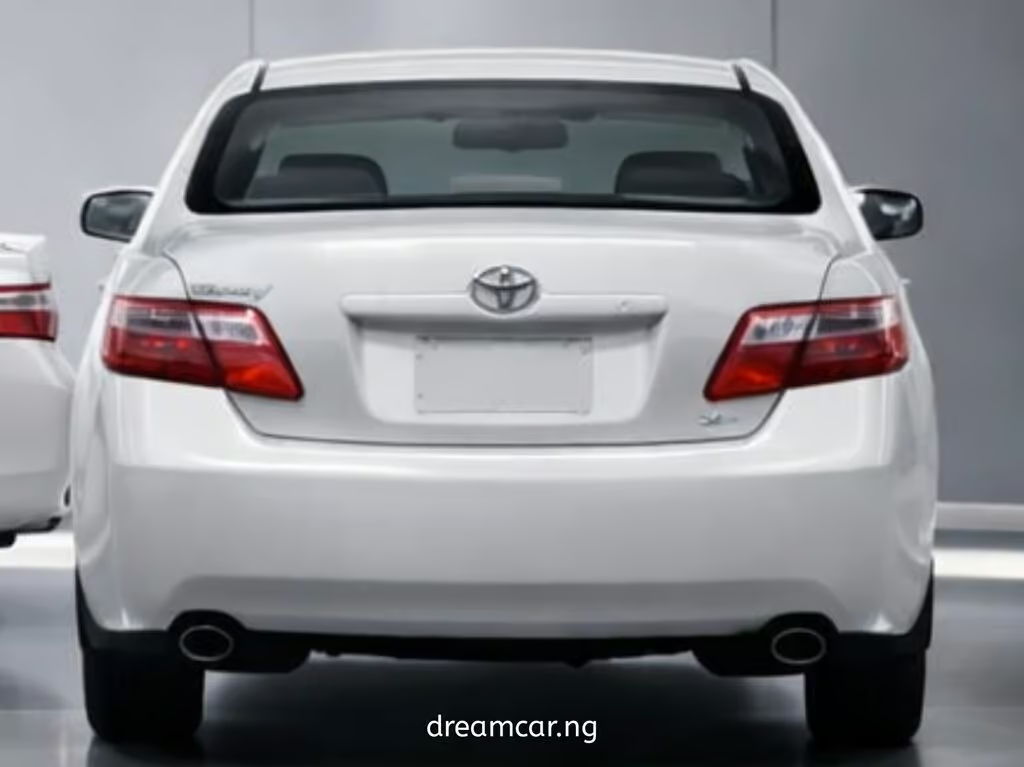
The 2009 Camry receives a clear midcycle refresh that updates both styling and equipment. Up front, a revised grille, reshaped headlights, and a redesigned bumper give the car a sharper, more contemporary look. The SE stands out with a sportier lower grille and darker exterior trim details. At the rear, Toyota subtly revises the tail light design across the lineup.
Inside, the cabin benefits from improved seat materials, refreshed center stack finishes, and upgraded audio systems. Higher trims now add USB connectivity, expanding media options. Safety coverage improves as electronic stability control becomes more widely available, while anti lock brakes remain standard.
The four cylinder engine receives minor tuning aimed at efficiency gains, though core powertrain hardware carries over. Hybrid models get recalibrated control software for smoother response. Trim packaging is reshuffled, adding more standard equipment on LE and XLE variants.
The 2009 Camry maintained CE, LE, SE, XLE, and Hybrid trims, with each level providing different comfort and performance features.
₦11M
₦7M
Pricing for the 2009 Toyota Camry in Nigeria reflects its balance between age and modern features. Foreign used units generally range from ₦10,500,000 to ₦12,000,000 depending on mileage, trim specification and engine type. Well maintained examples with full options command higher prices. Nigerian used units typically sell around the ₦7,00,000 rangewith condition, accident history and maintenance record playing a significant role.
A clean Camry 2009 with original components and minimal wear are valued more highly. Exchange rate fluctuations directly influence Tokunbo pricing, while import duty, shipping and clearing costs also affect final retail prices.
Lagos offers more competitive pricing due to higher supply, while Abuja and Port Harcourt tend to have slightly higher asking prices. Official dealership availability is limited, so most units are sold through independent dealers, importers and private listings, resulting in a broad but consistent pricing range.
Petrol
Automatic & CVT
Sedan
The Toyota Camry 2009 continued unchanged in terms of engines and performance. The 2.4-litre four-cylinder produces around 158 horsepower and 161 lb-ft, while the 3.5-litre V6 remains at 268 horsepower.
Acceleration is similar to previous years, with the four-cylinder taking about 9 seconds to reach 60 mph, while the V6 remains significantly quicker. The ride quality continues to be soft and stable, with a plush suspension that isolates road imperfections. Steering is light and somewhat vague, reinforcing the car’s comfort-focused nature.
In Nigeria, the 2009 Camry feels dependable and composed. The four-cylinder delivers smooth, linear power suitable for city driving, while the V6 provides strong passing power on highways. The suspension’s compliance helps smooth out poor road surfaces, making long journeys more comfortable.
City: 19, Hwy: 28
8.1km/L
11.9km/L
The 2009 Toyota Camry base model records 8.1km/l in city driving and 11.9km/l on the highway. In dense Nigerian traffic, consumption commonly stays near 8.1km/l, especially during prolonged idling. At ₦850 per litre, 1,500km of mostly city driving will require approximately ₦157,000 in fuel monthly, while highway focused driving may cost about ₦107,000. The slight drop in efficiency compared to earlier years increases fuel budgeting requirements.
Routine servicing remains moderate at around ₦50,000 per visit. Owners should also plan for periodic brake pad changes, suspension work, and tyre replacement. Poor fuel quality, neglected spark plugs, and incorrect tyre pressure can further reduce km/l figures and increase overall running cost in Nigerian conditions.
Check: EPA fuel economy by trims
Low
High
Very High
The 2009 Camry continues with the 2.4 litre four cylinder and 3.5 litre V6 paired to a five speed automatic transmission. Maintenance intervals under Nigerian use favour regular oil service with routine inspection of brake pads, suspension joints, and cooling components. The four cylinder requires attention to oil level consistency on higher mileage vehicles, while the V6 benefits from proactive cooling system servicing and spark plug replacement at recommended intervals.
Timing chains reduce scheduled replacement costs. Transmission durability is strong when fluid is changed periodically. Rough roads accelerate wear on lower control arms, tie rods, and shock absorbers.
Spare parts are readily available in major Nigerian markets, including genuine Toyota components and reliable aftermarket alternatives. Because of the model’s widespread adoption, Nigerian mechanics are thoroughly familiar with its systems, and diagnosis using standard scan tools is uncomplicated.
4.2/5
Radio / CD
The Toyota 2009 Camry features a horizontal dash with soft touch upper surfaces and durable lower plastics plus optional simulated wood or metallic trim. Base seats are cloth; LE and XLE have leather trimmed seats; some imports include heated front seats and power adjustments. SE adds firmer front seat bolstering while XLE favours cushioned comfort.
Front seats provide cushioned support and available lumbar adjustment. Rear seating offers ample legroom and a flat floor that supports three passengers. Materials include polyester cloth, leather trimmed seating, soft touch urethane steering surfaces and polypropylene lower trim. Sound insulation performs well at steady speeds though tyre and suspension noise rise on rough Nigerian roads.
Automatic climate control cools the cabin efficiently in high ambient temperatures and rear vents distribute airflow. Infotainment ranges from AM FM radio with CD and auxiliary input to optional premium speakers; storage includes centre console, door bins and a useful trunk opening.
6-10
Yes
Some Trims
The 2009 model largely continued with the same platform but introduced refinements to improve safety. The passenger cell geometry was reinforced further, and the door intrusion beams were made larger. Even the seat frames were engineered to absorb more energy during side impacts.
Across many markets, standard safety equipment for the 2009 Toyota Camry included dual stage front airbags, front seat mounted side airbags, front and rear head curtain airbags, a driver knee airbag, as well as seatbelt pretensioners and force limiters. Antilock brakes with Electronic Brakeforce Distribution and Brake Assist were widely standard, while Vehicle Stability Control and traction control were typically reserved for higher grade trims.
Crash test performance remained strong, with independent testers generally awarding Good ratings for frontal and side impacts when side airbags were present. The structure itself showed consistent and predictable deformation, which is what you want in a crash.
In Nigeria, the Camry’s welded inner structure and treated sheet metal hold up reasonably well against low speed collisions. However, repeated heavy impacts and poor quality panel repairs can weaken the engineered load paths, reducing overall crash protection.
View: IIHS safety rating

The 2009 model still carries oil consumption concerns on the 2.4L engine, so checking oil level and exhaust smoke is very important before payment. Many foreign imports arrive with hidden oil-burning history, and long shipping/storage periods can worsen seals and gaskets.
If ignored, oil burning can damage spark plugs and the catalytic converter. Interior materials also suffer in heat cracked dashboards, peeling armrests, and faded trim are common in Nigerian-used units parked in the sun. Suspension wear is another major issue locally; listen for clunks over bumps and check alignment stability at highway speed.
Brake judder and squeal often show up after heavy city driving. Transmission problems are not widespread, but delayed engagement when shifting into Drive or Reverse may indicate worn fluid or internal wear. Always test-drive long enough for the gearbox to warm up fully.
Below is a balanced breakdown of the key advantages and drawbacks of the Toyota Camry, based on real Nigerian ownership, performance expectations, and typical use cases.
Tell us your budget and location. We’ll connect you with verified dealers in your city.
Dreamcar.ng reviews are produced by a research-driven team with direct exposure to auto market across Nigerian cities. Our analysis is based on dealership interactions, discussions with mechanics, observed market pricing patterns, and independent research. Each review reflects real Nigerian ownership conditions including fuel quality, road conditions, spare parts accessibility, maintenance realities, and long-term running costs, to help buyers make informed and practical decisions.” add this seamlessly “everythin depends on trim level but we talk more on the more rampant trims on Nigerian road.
Stay informed with car reviews, ownership tips, and Nigeria auto market updates.
©2026. Dream Car Nigeria. All Rights Reserved.