
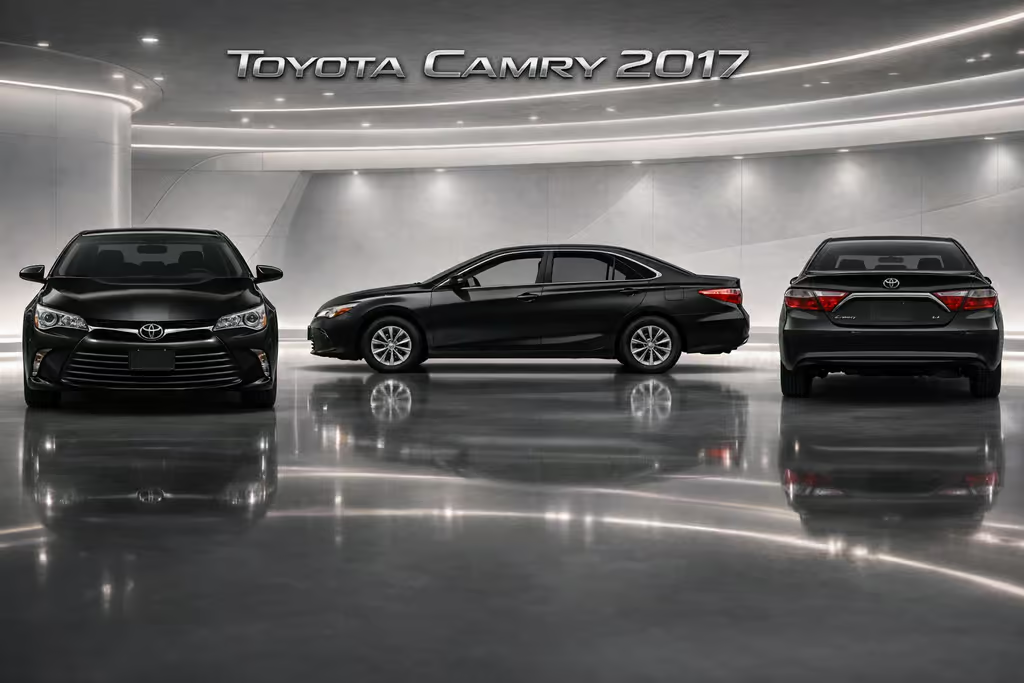
Price, Performance, Spec, Safety, Interior, Fuel Economy, Pros & Cons
The 2017 Toyota Camry capped the outgoing 7th-gen XV50 lineup with similar drivetrain choices: 2.5-liter four-cylinder and 3.5-liter V6 engines with a 6-speed automatic and front-wheel drive. Trim levels continued as LE, SE, XLE, XSE, often with upgrades like alloy wheels, leather seating, heated seats and a slightly refreshed cabin material palette.
Infotainment used the Entune system with Bluetooth audio, optional navigation and USB/AUX ports. Safety wasn’t yet the full modern suite; you’d see standard airbags, ABS, stability control, and on many units optional blind spot monitoring with rear cross traffic alert and adaptive cruise control.
Resale in Nigeria tends to position 2017 models at a slight premium over 2016 due to newer age and better equipment. Regular oil changes, brake servicing and suspension checks on rough local roads define the core maintenance.
The 2017 Toyota Camry sees one of its most significant safety updates, as Toyota Safety Sense P becomes standard across all trims, since it was optional as in 2016. This standardization includes forward collision warning with automatic emergency braking, lane departure alert, adaptive cruise control, and automatic high beams, aligning the Camry with increasing global safety expectations.
The infotainment system received minor updates, including improved voice recognition and app integration, though functionality remained similar to the previous year. Trim levels were simplified slightly, with adjustments to available packages and feature combinations. No major changes were made to the exterior or interior design, as the 2015 refresh carried through.
Powertrain options remained unchanged, including the four cylinder, V6, and hybrid . The 2017 camry focuses on making advanced safety features standard across the range, improving value and competitiveness without introducing major mechanical or design changes.
The 2017 Camry maintained LE, SE, XSE, XLE, and Hybrid LE, SE, and XLE trims, offering reliable and efficient choices for the Camry lovers
₦18.5M
₦13.5M
The 2017 Toyota Camry remains popular in Nigeria, and pricing reflects consistent demand for this final model year of the generation. Foreign used units typically average about ₦18,500,000, influenced by exchange rate volatility and import duties. Nigerian used vehicles usually sell around ₦13,500,000, with condition, mileage, and accident history playing major roles in determining value.
Higher trims like the XSE and XLE attract additional premiums due to enhanced interior features and styling. V6 models also command higher prices due to their performance advantage. A Camry 2016 vehicles with clean records and low mileage tend to retain higher resale value.
Official car dealership offerings, though limited, can exceed ₦18,000,000 because of refurbishment and warranty inclusion. Independent dealers dominate the market with more accessible pricing. Prices are typically higher in location with higher demand while regional markets with low demand may offer slight reductions depending on vehicle availability and exchange rate stability.
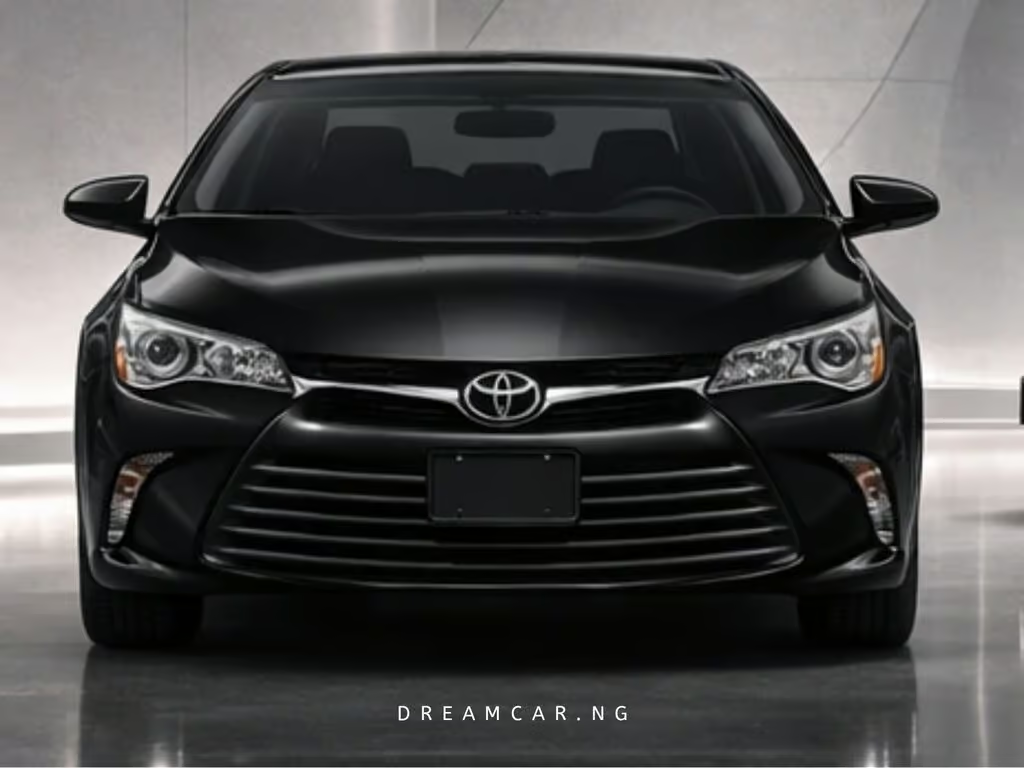
Petrol
Automatic & CVT
Sedan
The 2017 Camry delivers a balanced ride that suits Nigerian roads well. Its composed suspension setup and decent ground clearance help it absorb potholes and rough pavement well. Base models use a 2.5L inline four producing 178 hp and 170 lb-ft of torque, paired with a 6 speed automatic transmission.
The engine is smooth and quiet, offering adequate midrange acceleration for daily driving. An optional 3.5L V6 generates 268 hp and 248 lb-ft, significantly improving performance. Car and Driver recorded about 6.1 seconds from 0 to 60 mph for the V6 model. The hybrid pairs the 2.5L engine with an electric motor for roughly 200 hp total output, delivering instant low end torque and about 7.2 seconds to 60 mph.
SE and XSE trims feature sport tuned springs and sway bars that reduce body roll while maintaining highway comfort. Braking feels firm, steering is well weighted, and the car remains stable and relaxed on highways. The V6 makes overtaking effortless, even in demanding traffic conditions.
City: 21, Hwy: 30
8.9km/L
12.7km/L
The 2017 Toyota Camry base four cylinder returns close to 8.9km/l in city use and around 12.7km/l on a free flowing expressway. In Nigerian cities with dense traffic, most owners should expect consumption near the lower figure.
Ownership costs is relatively affordable for a midsize sedan like the Camry 17, with routine servicing and wear items forming predictable expenses. Suspension components may require attention over time due to rough road conditions. Smooth acceleration, consistent maintenance, and correct tyre pressure are key to sustaining optimal km/l performance.
Low
High
Very High
The 2017 Toyota Camry as the final year of the XV50 generation benefits from a well understood mechanical platform. The I4 and the V6 engines have established maintenance patterns around consistent oil servicing, cooling system integrity, and brake upkeep. The four cylinder continues to demonstrate strong longevity when properly maintained, while the V6 thrives with attentive ignition and coolant system care.
The six speed automatic transmission is generally reliable with scheduled fluid servicing. Nigerian roads can accelerate wear on suspension arms, links, and shock absorbers, therefore regular inspection is important.
Spare parts availability is excellent nationwide, with genuine Toyota components and quality aftermarket replacements widely stocked for engine, suspension, electronic sensors, and transmission systems. Nigerian mechanics are highly experienced with this final year model, and repairs are typically handled easily.
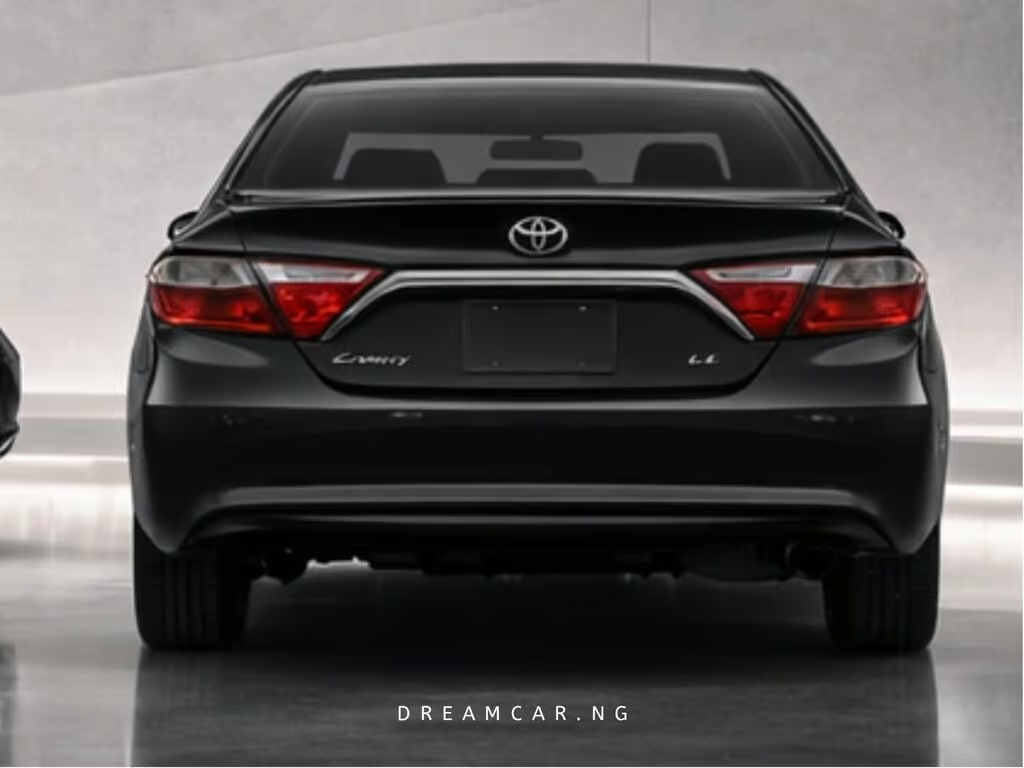
4.6/5
Entune Gen 2, Touchscreen, Bluetooth
The 2017 Camry cabin uses soft touch upper dash materials and tightly fitted lower plastics; seat coverings vary by trim with LE and XLE with woven fabric, SE with fabric and SofTex® trimmed bolsters and higher XLE and Limited trims offering leather trimmed seating. Toyota specifies SofTex® synthetic leather and UltraSuede® on some sport editions.
Front seats include eight way power adjustment and heated seats on higher trims. Dashboard layout is horizontal with clear instrument cluster and simulated wood trim on XLE. Build quality shows consistent panel fit. Acoustic measures include high density dash silencer and improved windshield acoustic glazing on later 2013 hybrids reducing cabin noise; tyre and suspension noise increase on rough Nigerian roads.
Dual zone automatic climate control cools effectively in high ambient temperatures; rear vents aid passenger comfort. Infotainment ranges from AM/FM CD with auxiliary input to Entune™ Audio with JBL® GreenEdge™. Storage includes centre console, door bins and trunk.
6-10
Yes
Yes
The 2017 Camry, being one of the last in the XV50 line, carried over much of the same safety philosophy. Many Western market trims continued to feature multiple airbags, although some export versions were equipped with as few as seven airbags depending on the market.
Standard safety systems still included anti lock braking with electronic brakeforce distribution and brake assist. Electronic stability control and traction control were also widely available. Structurally, Toyota continued to refine the body, using structural adhesives, reinforced cross members and improved rail geometry to better manage crash energy.
Reinforced B pillars and stronger door ring structures helped improve side impact performance and maintain the survival space for occupants. For Nigerian driving, this translates to reliable crash performance on both city roads and highways.
That said, long term safety still depends on how the car is maintained. Repeated underbody impacts, poor quality repairs and corrosion can weaken critical areas like hot stamped steel sections and bonded joints, reducing the car’s protective ability over time.
See: Crash test by iihs
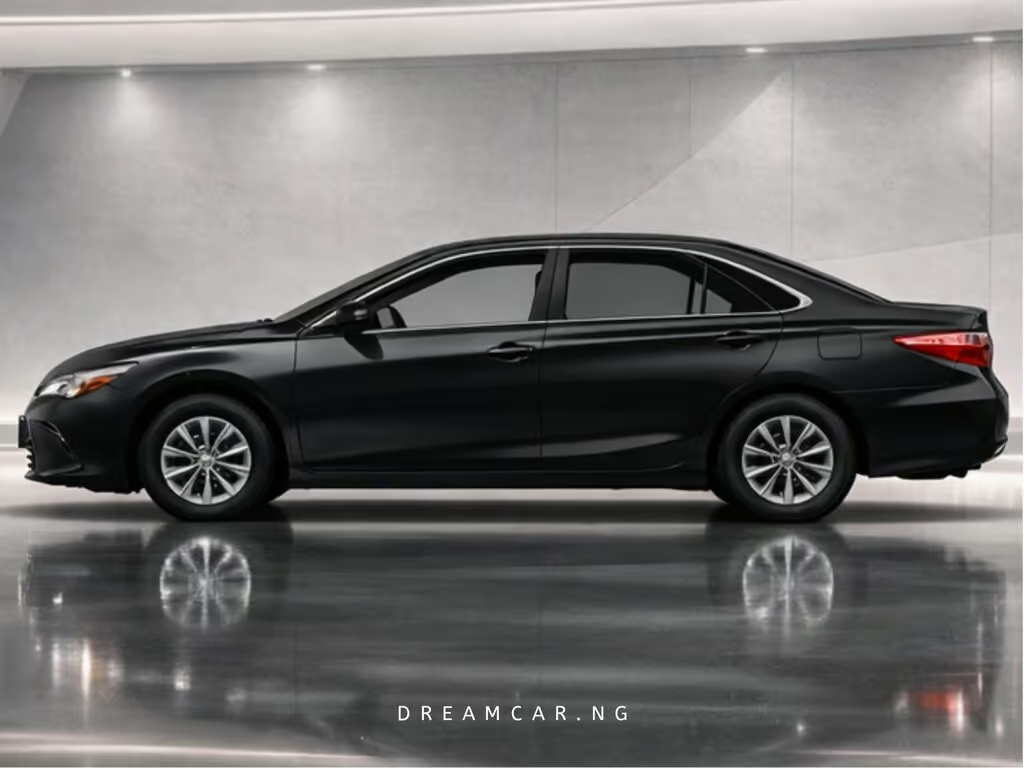
The 2017 Toyota Camry continues to show the transmission and drivetrain wear patterns seen in earlier years, though many owners rate it as slightly cleaner. Recalls include airbag fastener issues and load label corrections; however, in hot, urban Nigerian use the 6-speed automatic can still show hesitation or rough shifts when fluid life is exceeded.
Electrical issues like sensor warnings and accessory faults (power windows, lighting modules) increase with age on high heat, dusty runs. Suspension wear (bushings, strut mounts) may manifest as clunks over potholes common on Nigerian roads. Brake system complaints include screeching noises and occasional caliper freeze leading to uneven pad wear as documented in owner reports.
HVAC cooling diminishes over time with mould/musty air from evaporator drains, leading to reduced comfort in high heat and humidity. Mild interior trim wear and dashboard blemishes accelerate in constant sun exposure. Pre-purchase inspection should verify proper alignment, brake caliper function and completed recall fixes.
Below is a balanced breakdown of the key advantages and drawbacks of the Toyota Camry, based on real Nigerian ownership, performance expectations, and typical use cases.
Tell us your budget and location. We’ll connect you with verified dealers in your city.
Dreamcar.ng reviews are produced by a research-driven team with direct exposure to auto market across Nigerian cities. Our analysis is based on dealership interactions, discussions with mechanics, observed market pricing patterns, and independent research. Each review reflects real Nigerian ownership conditions including fuel quality, road conditions, spare parts accessibility, maintenance realities, and long-term running costs, to help buyers make informed and practical decisions.” add this seamlessly “everythin depends on trim level but we talk more on the more rampant trims on Nigerian road.
Stay informed with car reviews, ownership tips, and Nigeria auto market updates.
©2026. Dream Car Nigeria. All Rights Reserved.