

Price, Performance, Spec, Safety, Interior, Fuel Economy, Pros & Cons
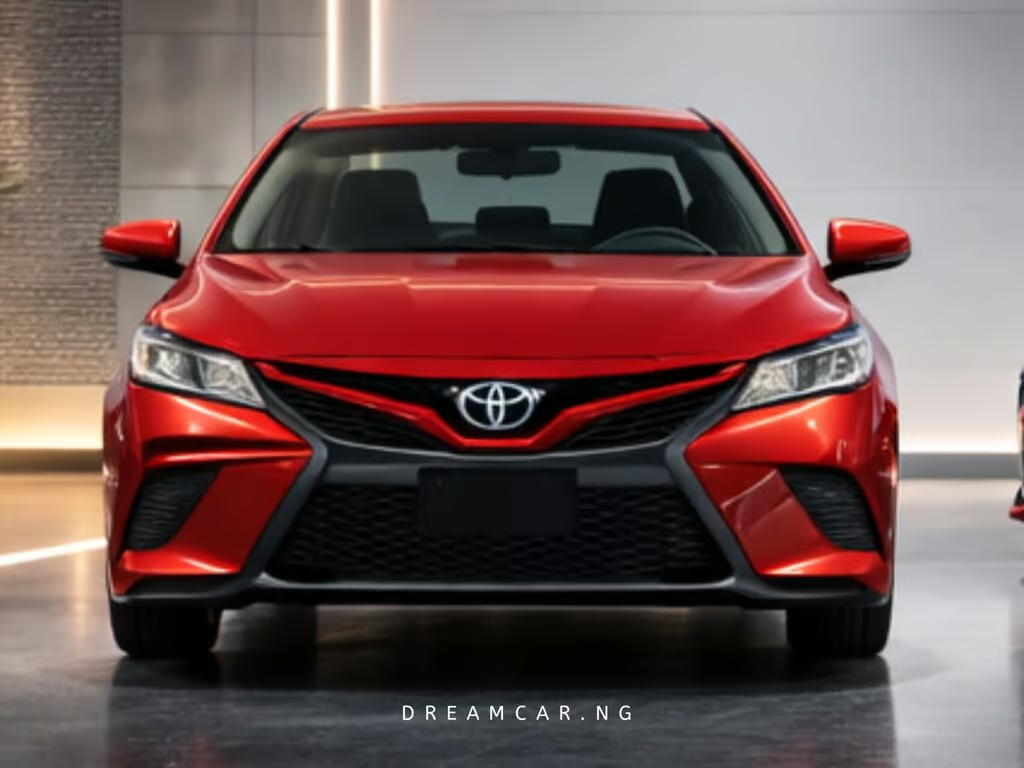
For The Toyota Camry 2020, Toyota refined the XV70 Camry with additional available features including all-wheel drive (AWD) on 2.5-liter trims alongside the usual front-wheel drive. Engine choices remained the 2.5-liter four-cylinder and 3.5-liter V6, both tied to an 8-speed automatic; hybrid models offered the efficient 2.5-liter hybrid powertrain.
Infotainment options improved with larger touchscreens and smartphone integration (Apple CarPlay, Android Auto). Interior materials were upgraded with better seating surfaces and better switchgear. Standard safety retained Toyota Safety Sense with automatic emergency braking, lane tracing assist, adaptive cruise control, and road sign assist; blind spot and cross traffic alert were common on mid/high trims.
In Nigeria, the 2020 Camry command higher resale and maintenance costs remain moderate, mainly oil services, transmissions checks and suspension care on challenging road conditions.
The 2020 Toyota Camry builds on the 2019 model with further improvements to infotainment and safety technology. The most significant update is the addition of Android Auto compatibility, complementing the Apple CarPlay feature introduced in 2019 and making smartphone integration more accessible to a wider range of users.
Toyota also made slight revisions to the infotainment system software to improve usability and responsiveness. Safety features remained strong, with Toyota Safety Sense P continuing as standard equipment across all trims. Minor updates were made to interior and exterior color options, along with small adjustments to trim packaging and feature availability.
The 2020 TRD trim was introduced which included a 3.5-liter V6 engine, a specially tuned suspension, a cat back exhaust system, larger brakes, and an aerodynamic body kit. However, other trims has no major change as they continued to build on the 2018 redesign.
Check: 2021 Camry Official data
The 2020 Camry continued with L, LE, SE, XSE, XLE, TRD, and Hybrid LE, SE, and XLE trims.
₦32M
₦25.5M
The 2020 Toyota Camry sits among the more recent models available in Nigeria, and its pricing reflects both demand and import costs. Foreign used units typically sell around ₦32,000,000, influenced by exchange rate volatility, shipping expenses, and import tariffs. Nigerian used vehicles generally average about ₦25,000,000, with pricing shaped by mileage, accident history, and overall condition.
Higher trims such as XSE, XLE, TRD and hybrid variants attract significant premiums due to enhanced technology and fuel efficiency. Units with low mileage and full service records command higher values, while repaired vehicles see reduced pricing.
Petrol
Automatic & CVT
Sedan
For 2020, all wheel drive was introduced for 2.5L models, improving traction on slippery surfaces. The 2.5L four cylinder produces about 203 to 206 hp, while the 3.5L V6 increases to 306 hp. Both use an 8 speed automatic. The hybrid system continues with approximately 208 hp combined output.
Acceleration stays competitive, with the four cylinder reaching 60 mph in the mid 7 second range and the V6 in about 6 seconds. The new TRD model uses a 301 hp V6 and features firmer sport suspension with a lowered ride height. This sharpens handling but transmits more road imperfections. Standard trims prioritize comfort, absorbing bumps smoothly while maintaining steady steering feel.
City: 22, Hwy: 33
9.3km/L
14km/L
The 2020 Toyota Camry base model continues to deliver around 9.3km/l in city conditions and close to 14km/l on a free flowing expressway. Engine refinements and transmission calibration contribute to smoother power delivery and more consistent fuel usage during daily commuting. In Nigeria, where uneven road surfaces and dense traffic are frequent, drivers should expect efficiency closer to the city rating during routine urban operation.
Expressway travel between major cities allows the engine to sustain higher km/l figures due to reduced braking and steady throttle input. Running costs are considered affordable within its segment, with predictable expenses tied to regular servicing and wear items. Maintaining clean fuel injectors, proper tyre pressure, and accurate wheel alignment plays a significant role in preserving optimal fuel economy over long term ownership.
Low
High
Very High
The 2020 Camry continues the established pattern of straightforward, routine maintenance that has made the model a mainstay in Nigeria. Across petrol and hybrid versions, reliable service depends on disciplined care of engine oil and filters, cooling circuit integrity, brake inspections and regular attention to suspension joints that endure local road challenges.
The hybrid variants, increasingly common in urban areas, benefit from reduced mechanical wear in brake systems thanks to regenerative braking and cleaner combustion cycles, but still require specialist understanding of battery and inverter cooling systems.
Spare parts remain easy to source in Nigerian cities both in OEM form and through reputable aftermarket suppliers, covering pumps, sensors, mounts, clutch assemblies for hybrid systems and transmission components. Because this Camry generation has been widely imported, most Nigerian mechanics know its systems well relative to other brands or model such that problem identification and corrective work is straightforward with common tools and scan devices.
4.7/5
Entune Gen 3, Touchscreen, Bluetooth, WiFi, Apple CarPlay & Android Auto
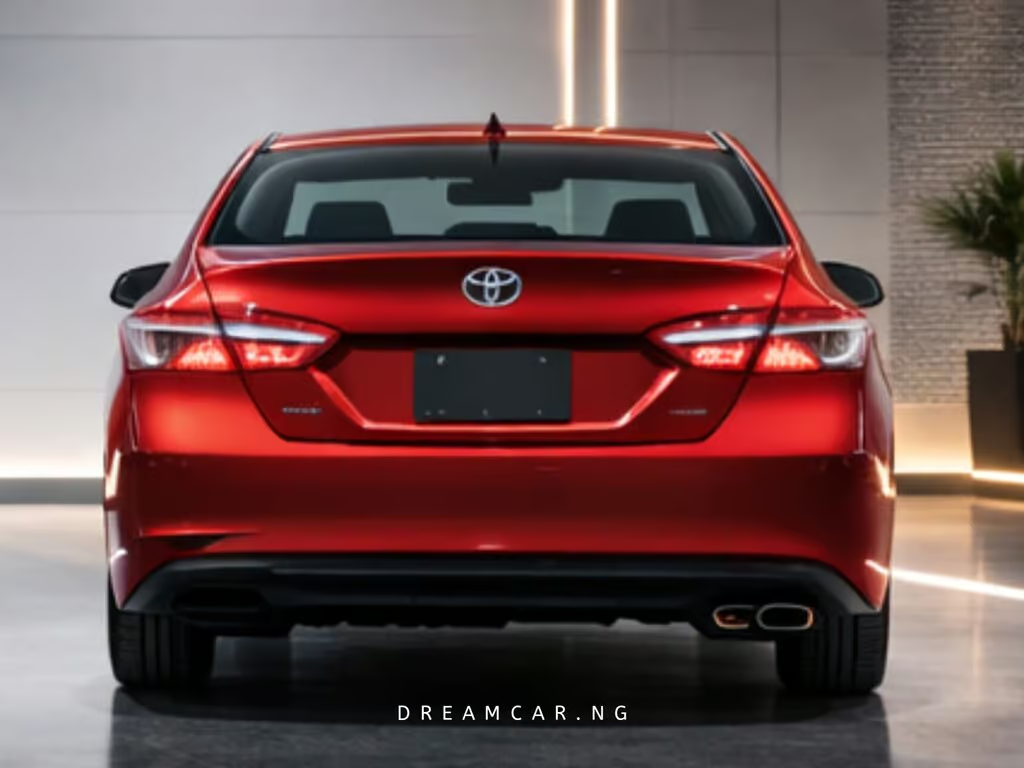
he 2020 Toyota Motor Corporation Camry built on the TNGA platform delivers a lower dashboard with stitched soft touch panels and precise panel fit, improving perceived quality over earlier models. Base trims use fabric upholstery while SE and XSE introduce Sport SofTex® synthetic leather with fabric inserts, and XLE variants use perforated leather seat surfaces.
Front seats offer eight way power adjustment with lumbar support and optional heating and ventilation, providing good long distance comfort on Nigerian highways. Rear seating remains spacious with a wide bench, generous legroom and a flat floor section.
Dual zone automatic climate control with rear vents and an electric compressor cools effectively in hot climates. Infotainment includes Entune™ 3.0 with 7 or 8 inch touchscreen, Apple CarPlay and optional JBL® audio with Clari-Fi. Acoustic laminated windshield glass and improved floor insulation reduce cabin noise, though tyre noise remains noticeable on rough roads.
6-10
Yes
Yes
The 2020 Camry builds on the same TNGA foundation, but with further refinement in how it handles crash energy. Reinforced side sills, cross members and carefully controlled crumple zones help absorb both frontal and offset impacts more effectively.
Passive safety is more comprehensive here, with ten airbags standard in many markets. This includes driver and passenger knee airbags, seat mounted torso airbags and full length curtain airbags that protect both rows. On the active side, the car continues with antilock braking, Electronic Brakeforce Distribution, Brake Assist, electronic stability control and traction control.
Toyota Safety Sense P is widely standard in export models, adding forward collision warning, autonomous emergency braking and lane departure alert. These systems play a major role in preventing accidents before they happen.
Structurally, durability remains strong. Welded joints and improved corrosion protection help the car hold up under repeated road stress. In Nigerian driving conditions, stability control and consistent braking performance are especially useful on uneven surfaces and in stop and go traffic. That said, some imported base trims may not include blind spot monitoring or rear cross traffic alert. Keeping the wheels properly aligned and maintaining the braking system are key to preserving the car’s safety performance.
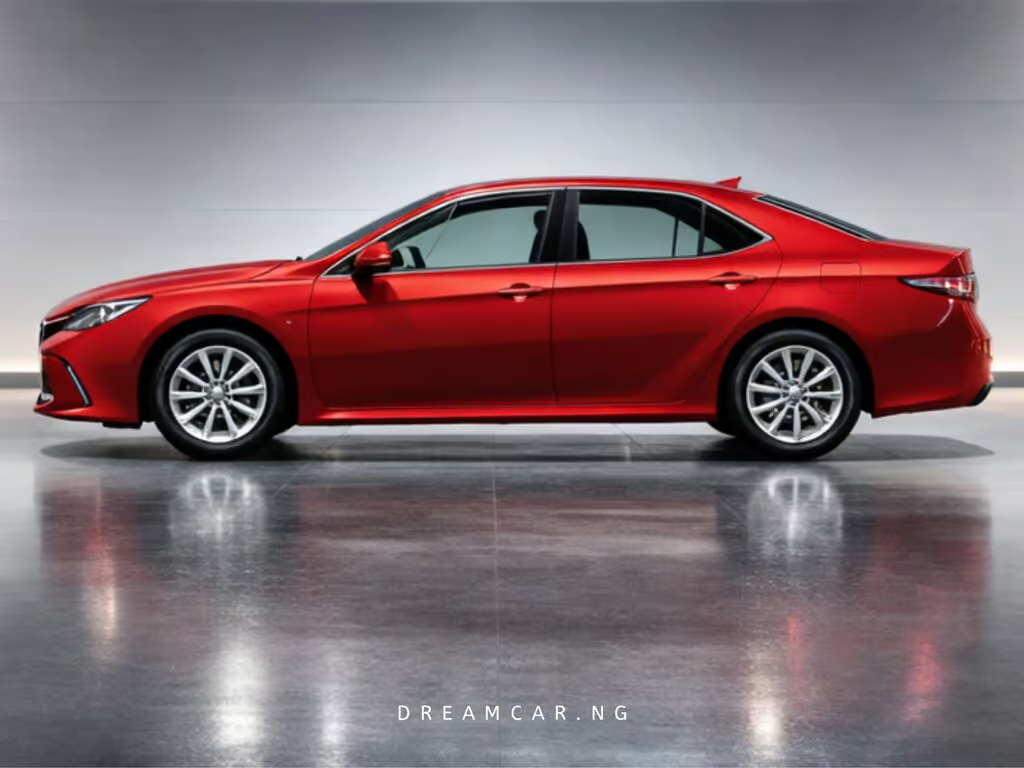
Many owners of the 2020 Camry praise its reliability but several recurring issues show up in forums and user reports. A common complaint is battery drain and premature failure, with some owners having to replace the battery multiple times within the first two year.
There have also been reports of coolant smells and coolant loss without visible leaks, linked to porous engine castings that even led to a recall in some markets. Rear speakers have been noted to rattle and the infotainment system can glitch occasionally.
These aren’t universal, but if you’re browsing listings in Nigeria, expect to check battery health and electrical accessories carefully before buying.
Below is a balanced breakdown of the key advantages and drawbacks of the Toyota Camry, based on real Nigerian ownership, performance expectations, and typical use cases.
Tell us your budget and location. We’ll connect you with verified dealers in your city.
Dreamcar.ng reviews are produced by a research-driven team with direct exposure to auto market across Nigerian cities. Our analysis is based on dealership interactions, discussions with mechanics, observed market pricing patterns, and independent research. Each review reflects real Nigerian ownership conditions including fuel quality, road conditions, spare parts accessibility, maintenance realities, and long-term running costs, to help buyers make informed and practical decisions.” add this seamlessly “everythin depends on trim level but we talk more on the more rampant trims on Nigerian road.
Stay informed with car reviews, ownership tips, and Nigeria auto market updates.
©2026. Dream Car Nigeria. All Rights Reserved.