
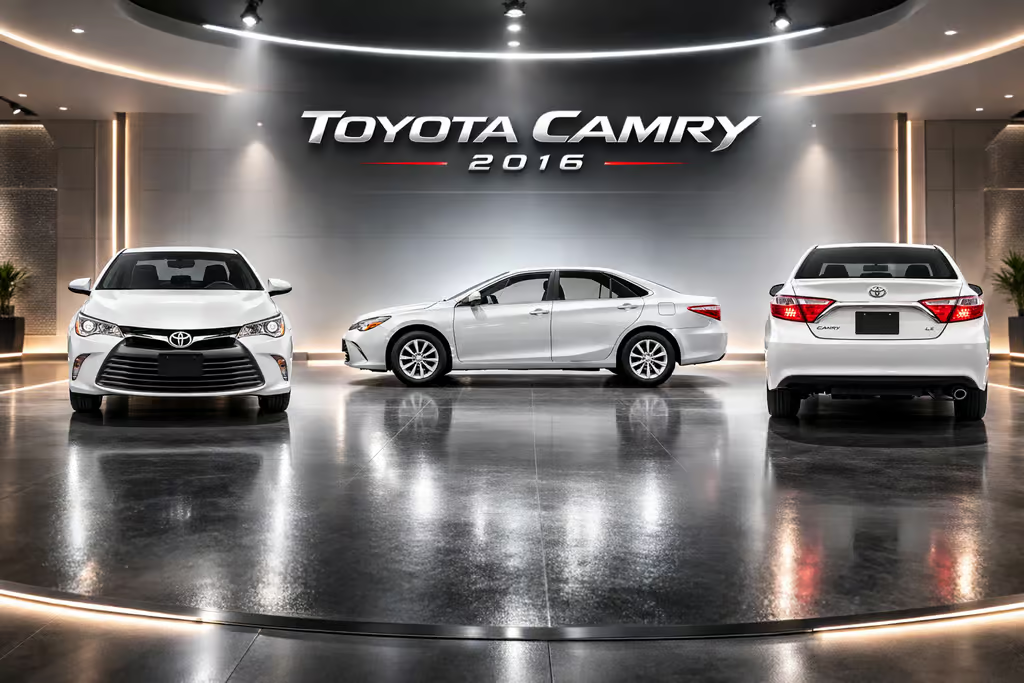
Price, Performance, Spec, Safety, Interior, Fuel Economy, Pros & Cons
The Toyota Camry 2016 represents one of the final production years of the XV50 generation before the transition to a new global platform. By this stage, the mechanical systems had been better, and most early generation concerns had been addressed. It uses front-wheel drive, offered with either a 2.5-liter inline-4 (approx 178–203 hp) or a 3.5-liter V6 (~268 hp) paired to a 6-speed automatic transmission.
Trims range from LE, SE, XLE, XSE, with Hybrid versions available in LE/SE/XLE badges. Interiors have quality cloth or leather depending on trim, a 6.1-inch Entune touchscreen, Bluetooth phone integration, optional navigation, dual-zone climate and premium SofTex surfaces on higher trims. Safety includes Toyota Safety Sense P on many units with lane departure alert, pre-collision with auto-brake, blind spot monitoring and rear cross-traffic alert on higher trims, plus up to 10 airbags and ABS.
Resale remains strong in Nigeria with Nigerian used price selling between ₦11m up to ₦20m. Routine maintenance is relatively inexpensive and parts are widely available.
For 2016, the Toyota Camry builds on the 2015 refresh with a focus on safety technology expansion. The most important update is the introduction of Toyota Safety Sense P as an available package, bringing features such as pre collision braking, lane departure alert, adaptive cruise control, and automatic high beams to more buyers.
This marked a significant step in active safety for the Camry lineup. The infotainment system was updated with revised software, improving response times and usability, while additional USB ports were added to enhance device connectivity. Trim structure remained largely the same, though equipment availability was adjusted, with more features becoming standard or bundled differently.
There were no changes to engine options or transmissions, as the 2.5 litre four cylinder, 3.5 litre V6 and hybrid system continued unchanged. 2016 is defined by the expansion of driver assistance technologies and incremental tech improvements.
The 2016 Camry continued with LE, SE, XSE, XLE, and Hybrid LE, SE, and XLE trims.
₦17.5M
₦12.5M
The 2016 Toyota Camry continues to command strong resale value in Nigeria due to reliability and moderate modernization. Foreign used units are commonly priced around ₦17,500,000, driven by exchange rate fluctuations, shipping expenses, and import tariffs. Nigerian used examples typically sell near ₦12,500,000, with pricing highly dependent on mileage, accident history, and maintenance quality.
XSE and XLE trims carry noticeably higher prices, especially when equipped with leather interiors and advanced infotainment features. Vehicles with verified service history and minimal wear command stronger pricing, while poorly maintained units see reductions. Official dealership listings can reach ₦19,000,000 or more, reflecting reconditioning standards and warranty offerings.
Independent dealers remain the dominant source of inventory, often offering more competitive pricing depending on condition and regional market dynamics.
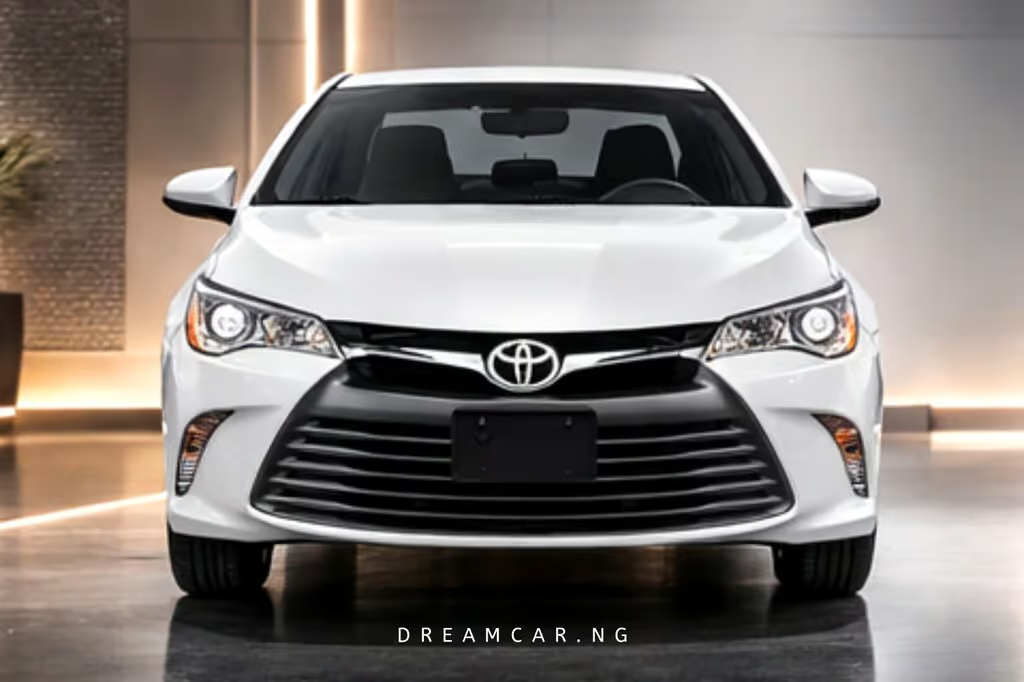
Petrol
Automatic & CVT
Sedan
The 2016 Toyota Camry 2016 largely carried over the 2015 model’s setup. It retained the 2.5-litre four-cylinder (178 hp), the 3.5-litre V6 (268 hp), and the 200-hp hybrid system, all paired with automatic transmissions. The V6 delivers strong performance, with 0–60 mph times around 5.8 seconds, while the four-cylinder and hybrid offer smooth, efficient power delivery. Acceleration is linear and updated.
Ride quality remains comfortable, with well-damped suspension that absorbs rough surfaces effectively. Steering is light and predictable, though not very engaging. In Nigerian driving conditions, the Camry provides a stable and comfortable experience. The hybrid excels in city traffic with excellent fuel efficiency and near-silent operation.
City: 25, Hwy: 34
10.6km/L
14.4km/L
The 2016 Toyota Camry base trim continues to average about 10.6km/l in city traffic and 14.4km/l on the highway under steady conditions. In Nigeria, frequent congestion and prolonged idling often push real consumption toward the city rating. Driving 1,500km per month will cost roughly ₦125,000 in urban conditions and about ₦88,000 on mostly open highways using ₦850/l.
Running costs of the 2016 Camry remain affordable compared to many rivals in the same segment. Regular servicing, brake components, tyres, and occasional suspension work form the main expenses. Things like fuel quality, engine health, air conditioning usage, and driving behavior significantly affect achievable km/l figures and overall monthly fuel budgeting.
Low
High
Very High
The 2016 Camry continues the established mechanical formula with the 2.5 litre four cylinder and 3.5 litre V6 engines. Maintenance demands disciplined oil servicing, routine brake and cooling system care, and periodic suspension inspection to withstand local driving conditions.
The four cylinder engine is generally durable over high mileage when maintained correctly, while the V6 requires consistent ignition and cooling system oversight. Both engines rely on timing chains built for extended durability. The six speed automatic transmission remains dependable when fluid changes are observed. Suspension components such as bushings and dampers may require replacement over time due to road conditions.
Spare parts supply in Nigeria remains extensive and competitive, covering engine internals, sensors, transmission assemblies, and chassis components through both genuine and aftermarket sources. Most mechanics across the country are familiar and comfortable working on this model, ensuring efficient fault diagnosis and repair.
4.6/5
Entune Gen 2, Touchscreen, Bluetooth
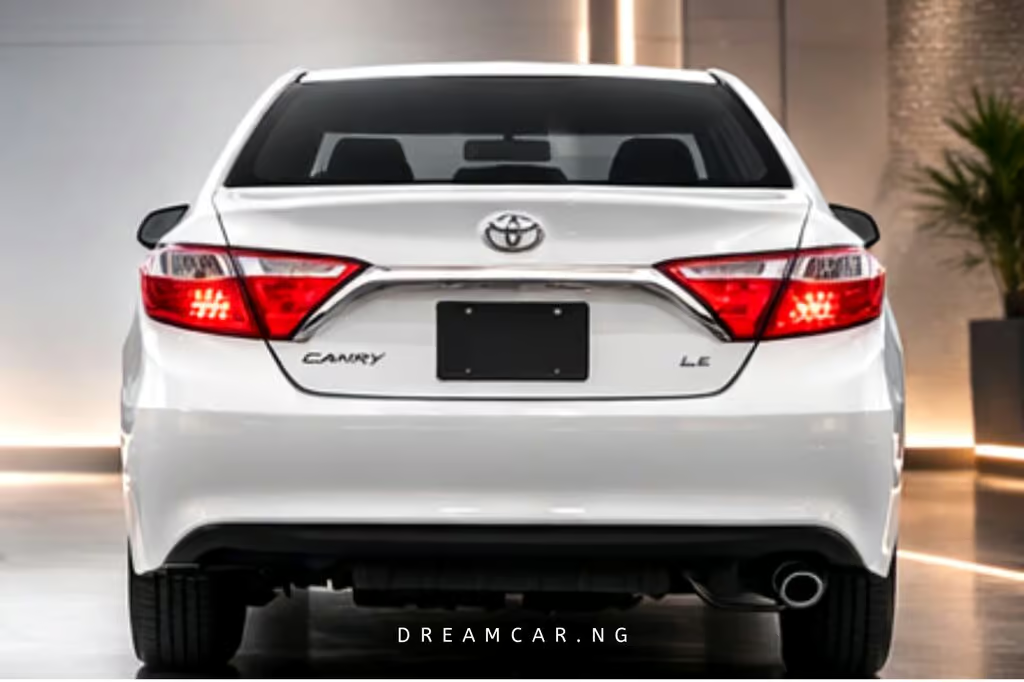
The 2016 Camry cabin uses soft touch upper dash materials and tightly fitted lower plastics; seat coverings vary by trim with LE and XLE with woven fabric, SE with fabric and SofTex® trimmed bolsters and higher XLE and Limited trims offering leather trimmed seating. Toyota specifies SofTex® synthetic leather and UltraSuede® on some sport editions.
View: Interior photos
Front seats include eight way power adjustment and heated seats on higher trims. Dashboard layout is horizontal with clear instrument cluster and simulated wood trim on XLE. Build quality shows consistent panel fit. Acoustic measures include high density dash silencer and improved windshield acoustic glazing on later 2013 hybrids reducing cabin noise; tyre and suspension noise increase on rough Nigerian roads.
Dual zone automatic climate control cools effectively in high ambient temperatures; rear vents aid passenger comfort. Infotainment ranges from AM/FM CD with auxiliary input to Entune™ Premium JBL® audio available. Storage includes centre console, door bins and trunk.
6-10
Yes
Yes
By 2016, the STAR Safety System had become standard in many markets. This included ABS, electronic brakeforce distribution, brake assist, vehicle stability control and traction control. Toyota also made improvements to chassis tuning and body construction to better manage crash energy.
In some regions, more airbags were added and stability control became more widely available across trims. The body structure increasingly used higher tensile strength steel, along with more advanced construction methods like laser screw welding and structural adhesives. These techniques help strengthen the body, improve rigidity and manage crash forces more effectively.
The benefit of these changes is better control of cabin intrusion during both offset and side impacts. In Nigerian conditions, the stronger joints help reduce fatigue caused by rough roads. However, there is a trade off. The use of ultra high strength steel means repairs are more complex. If damaged sections are not repaired using proper OEM welding and bonding procedures, the car may not perform as designed in a crash.
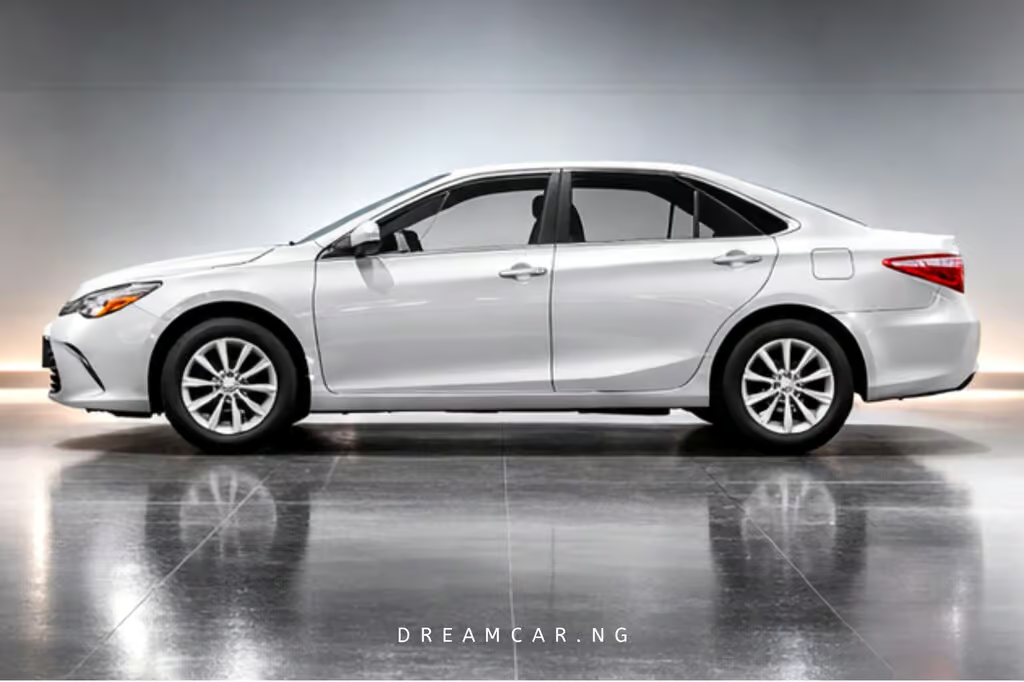
The 2016 Camry has two notable recalls: occupant classification system miscalibration affecting airbag deployment and incorrect load-carrying labels, but ownership issues extend further. Transmission performance under heat and heavy stop-start use shows rough shifting and delayed engagement when fluid service is neglected, though this is less frequent than prior years.
Infotainment and electrical systems are commonly reported as unresponsive displays or freezing, particularly with age and heat exposure. Suspension components (shocks, struts and control arm bushings) exhibit accelerated wear under poor road conditions, causing increased vibration and steering looseness. Brake pad and rotor wear escalate with frequent city braking; some owners note rear brake sticking if caliper slides corrode in dusty environments.
HVAC and climate control units often require servicing for weak airflow after heavy use under high ambient temperatures. Minor interior trim and switch failures (power windows, door locks) are typical as the car ages. Nigerian fuel quality and heat can induce check engine lights from fuel and emissions sensor faults.
Below is a balanced breakdown of the key advantages and drawbacks of the Toyota Camry, based on real Nigerian ownership, performance expectations, and typical use cases.
Tell us your budget and location. We’ll connect you with verified dealers in your city.
Dreamcar.ng reviews are produced by a research-driven team with direct exposure to auto market across Nigerian cities. Our analysis is based on dealership interactions, discussions with mechanics, observed market pricing patterns, and independent research. Each review reflects real Nigerian ownership conditions including fuel quality, road conditions, spare parts accessibility, maintenance realities, and long-term running costs, to help buyers make informed and practical decisions.” add this seamlessly “everythin depends on trim level but we talk more on the more rampant trims on Nigerian road.
Stay informed with car reviews, ownership tips, and Nigeria auto market updates.
©2026. Dream Car Nigeria. All Rights Reserved.