
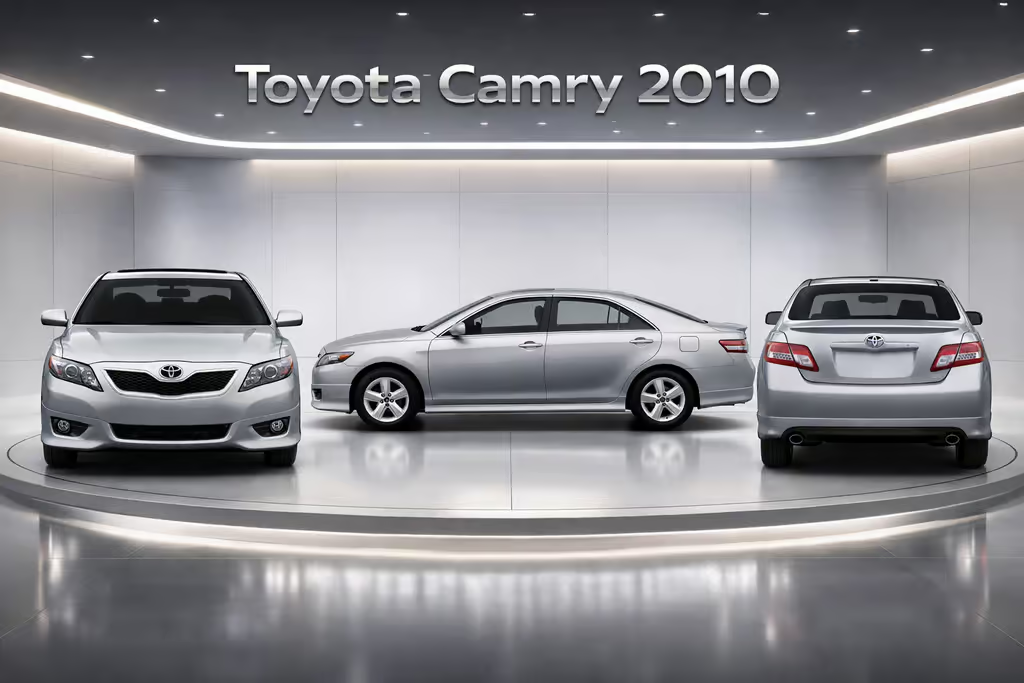
Price, Performance, Spec, Safety, Interior, Fuel Economy, Pros & Cons
The Toyota Camry 2010 continued under the Toyota Camry (XV40) and represented one of the later pre-facelift models before the 2010–2011 minor refresh in some markets. As a midsize five-seater sedan with front-wheel drive, the 2010 Camry maintained its focus on interior comfort, cabin space, and predictable road manners. It remained positioned above the Corolla in terms of size, engine power, and ride upgrade.
The 2010 model was available with a 2.4-liter four-cylinder engine or a 3.5-liter V6 engine. The hybrid version continued as well, pairing a petrol engine with an electric motor system and using an eCVT transmission. Petrol variants came with a 5-speed manual (select markets), a 5-speed automatic for the 4-cylinder, and a 6-speed automatic for the V6.
Inside, the cabin retained its spacious layout, supportive seating, and practical controls. By 2010, the XV40 Camry had established itself as a common midsize sedan option in Nigeria’s used market due to its blend of updated styling, comfort-oriented suspension, and available hybrid technology in certain imports.
Toyota Camry builds on the refreshed design with targeted equipment upgrades. Most notably, the LE and XLE now offer integrated Bluetooth handsfree functionality as standard in many markets, widening factory connectivity. USB input becomes more broadly available across the 2010 Camry trims addressing growing demand for digital media support.
Hybrid models adopt updated brake control software, which improves pedal feel and smooths the transition between regenerative and conventional braking. In certain markets, Toyota adds a driver knee airbag, enhancing frontal crash protection. Navigation systems receive interface improvements and expanded voice control where fitted. Externally, the styling remains unchanged, though new paint colors join the palette.
The SE continues with its sport tuned suspension without mechanical revisions. Powertrains remain the same four cylinder and V6 engines paired with existing transmissions, yet Nigerian imports often reflect these infotainment upgrades that the 2010 models becomes easier to identify in the used market.
Compare with: Toyota Camry 2009
The 2010 Camry still offered CE, LE, SE, XLE, and Hybrid trims, similar to previous years.
₦11.5M
₦7.5M
The 2010 Toyota Camry commands stronger pricing in Nigeria due to its facelift design and higher desirability. Foreign used units typically range around ₦11,500,000 depending on trim level, mileage, engine variant and condition. Higher specification models with leather interior and navigation systems often sit at the top of the range. Nigerian used units are usually priced around the ₦7,500,000 mark with pricing influenced by maintenance history, accident records and overall condition.
2010 Camry with low mileage and verified service records attract premium offers. Exchange rate changes significantly impact Tokunbo pricing, alongside import duties and shipping costs. Lagos tends to offer slightly lower prices due to higher market volume, while places like Kaduna and Owerri may show higher averages.
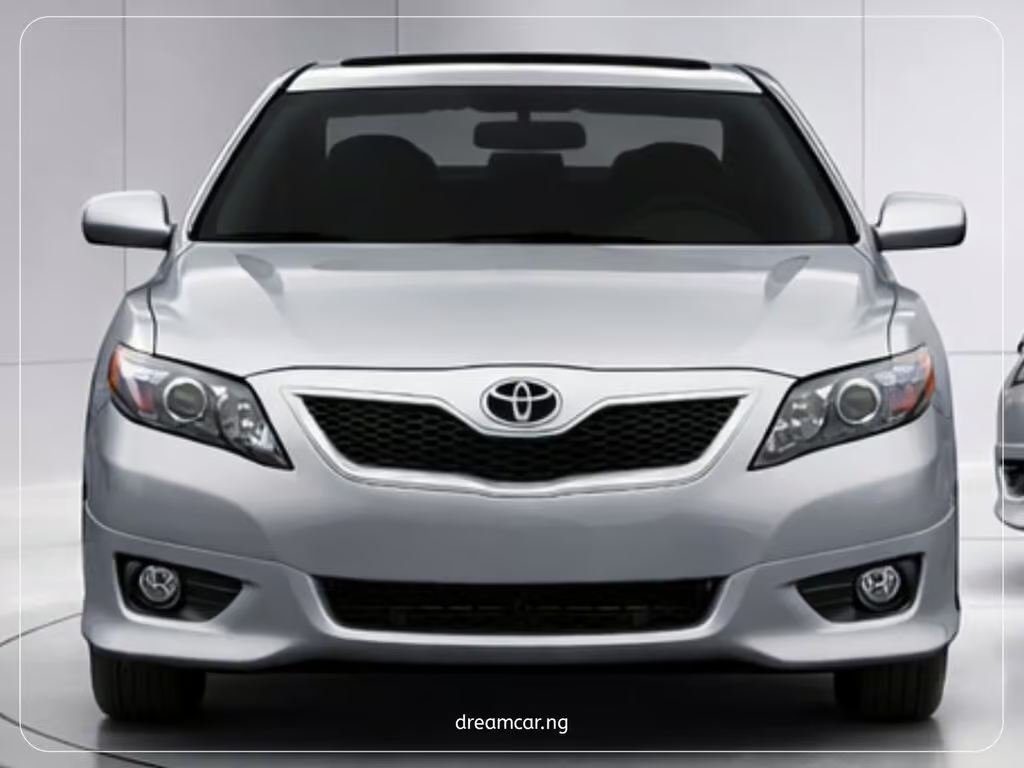
Petrol
Automatic & CVT
Sedan
The Toyota Camry 2010 introduced an upgraded 2.5-litre four-cylinder engine producing 169 horsepower and 167 lb-ft of torque, paired with a new 6-speed automatic transmission. The 3.5-litre V6 remained unchanged at 268 horsepower, also with a 6-speed automatic.
The increased displacement noticeably improves performance, with the four-cylinder achieving 0–60 mph in about 8.3 seconds. The driving experience is highly fine tuned. The car delivers a very smooth and quiet ride, with the engine and transmission operating seamlessly. Throttle response is responsive but not aggressive. Steering remains lightly weighted, with a slight delay in response.
In Nigerian driving conditions, this translates into effortless city driving and comfortable highway cruising. The suspension absorbs bumps effectively, providing a smooth ride even on rough roads.
City: 22, Hwy: 33
9.3km/L
14km/L
The 2010 Toyota Camry base trim improves efficiency to 9.3km/l in city use and 14km/l on a free flowing expressway. With petrol selling at about ₦850 per litre, 1,500km of city driving will cost roughly ₦137,000 monthly, while predominantly highway driving may reduce fuel spending to about ₦91,000. This improvement is noticeable for owners who commute long distances.
Regular servicing typically costs about ₦50,000 depending on a number of factors, though. Nigerian road conditions often lead to suspension maintenance and wheel balancing expenses. Driving style, load weight, air conditioning demand, and engine health significantly affect real world km/l figures, making proper maintenance essential for keeping running costs stable.
Check: EPA fuel economy by trims
Low
High
Very High
The 2010 Camry maintains the established 2.4 litre and 3.5 litre engines with proven reliability when serviced consistently. In Nigeria, oil and filter changes at intervals are advisable, along with periodic brake servicing and cooling system checks. The four cylinder benefits from careful oil level monitoring on older examples, while the V6 requires attention to ignition components and cooling efficiency.
Both engines use durable timing chains. The automatic transmission remains dependable provided fluid is replaced at reasonable intervals. Suspension wear is common due to uneven roads, particularly bushings, links, and struts.
Spare parts availability across Nigeria is excellent, with strong supply of engine components, electronic sensors, suspension parts, and transmission assemblies in both genuine and aftermarket options. The model is deeply understood by local technicians such that troubleshooting is efficient and repair turnaround times is generally short.
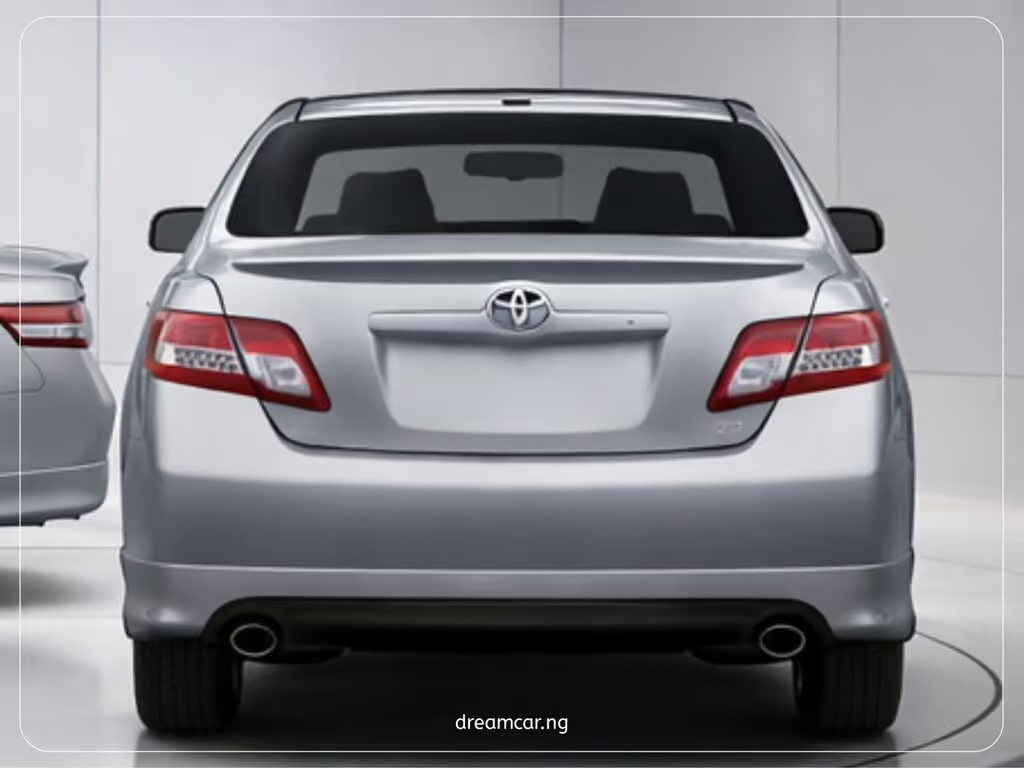
4.3/5
Radio / CD / Aux
The 2010 Camry keeps a calm cabin design with a soft touch upper dash and durable lower plastics with optional simulated wood or metallic accents. Base seats are cloth; LE SE and XLE offer upgraded cloth or leather trimmed seating and higher trims add power adjustment and heated front seats. SE provides firmer front seat bolstering while XLE emphasises cushioned comfort.
Front seats supply solid cushion support and lumbar adjustment. Rear seating maintains competitive legroom and a flat floor for three passengers. Materials include polyester cloth, leather trimmed seats, urethane steering surfaces and polypropylene lower panels. Acoustic insulation is effective at highway speeds though tyre and suspension noise rises on poorly surfaced Nigerian roads.
Dual zone climate control cools effectively in high ambient temperatures and rear vents assist passenger comfort. Infotainment ranges from AM FM with CD and auxiliary input to navigation and premium speaker audio; storage includes centre console, door bins and a wide trunk.
6-10
Yes
Yes
By 2010, Toyota made a major push to standardise safety features across the Camry range. Active systems like antilock brakes, Electronic Brakeforce Distribution, Brake Assist, Vehicle Stability Control and traction control became standard in many markets. This made a noticeable difference in overall safety and handling.
The unibody structure was also refined, with increased use of high tensile steel in key areas and improved reinforcement of the frame rails. This helped reduce cabin intrusion during impacts. On the passive side, the car came equipped with dual stage front airbags, front seat mounted side airbags, full length curtain airbags and a driver knee airbag.
Crash testing results were strong, with both federal testers and independent evaluators giving Good ratings when the full airbag package was present. In real world Nigerian driving, this setup helps significantly. The braking systems reduce the chances of wheel lock, especially on wet or uneven roads, while stability control helps maintain control during sudden manoeuvres.
The car’s durability is still a strong point, thanks to its stiff cabin. However, repairs need to be done properly. High strength steels and bonded joints require OEM repair procedures, and cutting corners can weaken the structure. If you are buying one, it is important to confirm the trim level and ensure that stability systems are present. Also, check the airbag system and sensor service history.
Check: Safety rating on iihs.org
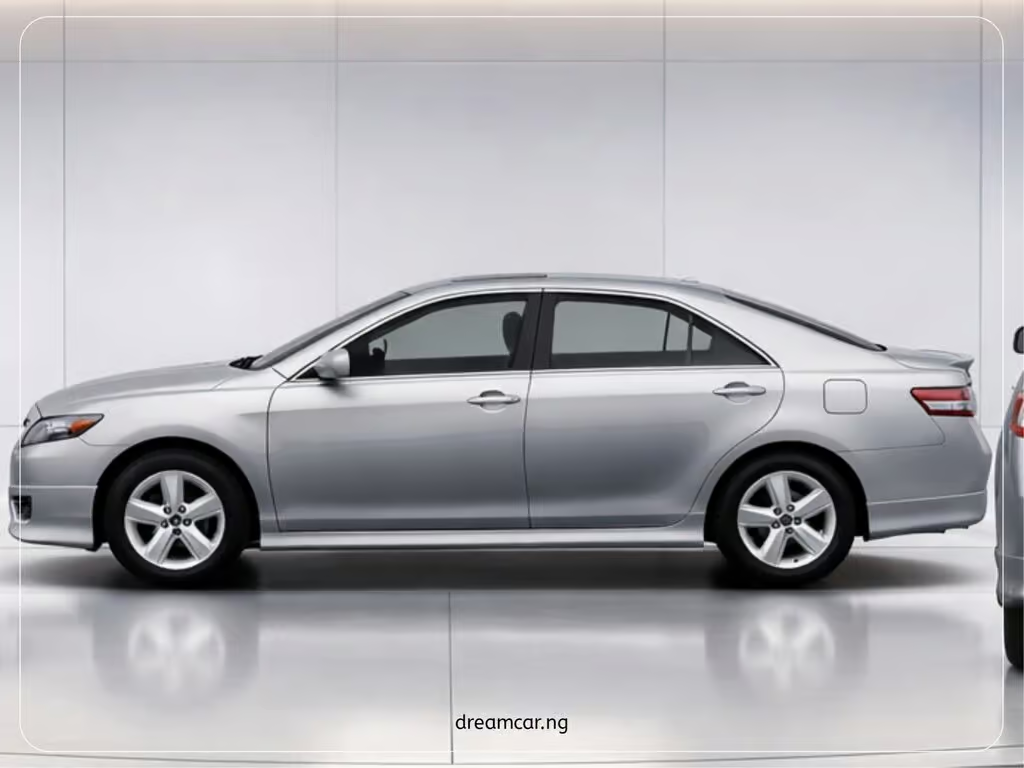
The 2010 Camry introduced the 2.5L engine and six-speed automatic transmission, and this is where shifting complaints became more noticeable. Some foreign-used imports develop torque converter shudder, delayed acceleration, or harsh 2-3 shifts, especially if fluid service was ignored abroad.
In Nigeria’s heavy traffic and heat, these symptoms can worsen quickly. During inspection, drive at low and moderate speeds to feel for vibration or hesitation. Oil consumption is less severe than earlier 2.4L engines but still worth checking. Suspension components like the tie rods, control arm bushings, and struts, wear quickly on rough roads and cause steering looseness.
Brake vibration remains common after prolonged city use. Electrical faults such as failing window regulators, weak door lock actuators, and occasional alternator strain are still reported, especially on higher trims with more electronics.
Below is a balanced breakdown of the key advantages and drawbacks of the Toyota Camry, based on real Nigerian ownership, performance expectations, and typical use cases.
Tell us your budget and location. We’ll connect you with verified dealers in your city.
Dreamcar.ng reviews are produced by a research-driven team with direct exposure to auto market across Nigerian cities. Our analysis is based on dealership interactions, discussions with mechanics, observed market pricing patterns, and independent research. Each review reflects real Nigerian ownership conditions including fuel quality, road conditions, spare parts accessibility, maintenance realities, and long-term running costs, to help buyers make informed and practical decisions.” add this seamlessly “everythin depends on trim level but we talk more on the more rampant trims on Nigerian road.
Stay informed with car reviews, ownership tips, and Nigeria auto market updates.
©2026. Dream Car Nigeria. All Rights Reserved.